Quick Answer
Upgradeability matters for first-time PC builders, but mini PCs only allow two upgrades: RAM and the NVMe SSD. The CPU and GPU are soldered. So buy a mini PC with SO-DIMM slots (not soldered RAM) and a spare M.2 slot, and choose the APU carefully up front, because that part is permanent.
Know the real upgrade ceiling
A mini PC is not a tower; you cannot swap the processor, add a graphics card or expand much. The two things you can usually upgrade are the memory (if it uses SO-DIMM slots rather than soldered RAM) and the storage (via the M.2 NVMe slot, sometimes with a second slot or a 2.5-inch bay). For a first-timer, that means the APU you buy is the performance you keep.
Choose for headroom
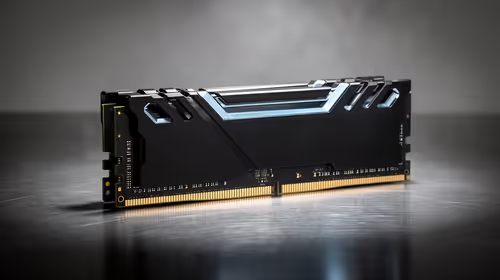
Pick a model with two SO-DIMM slots so you can run 32GB dual-channel now or later, and a spare M.2 slot so you can add storage without cloning. A Radeon 780M-class APU gives the most future-proof base since you cannot upgrade the graphics afterwards.
When you need more, build a tower
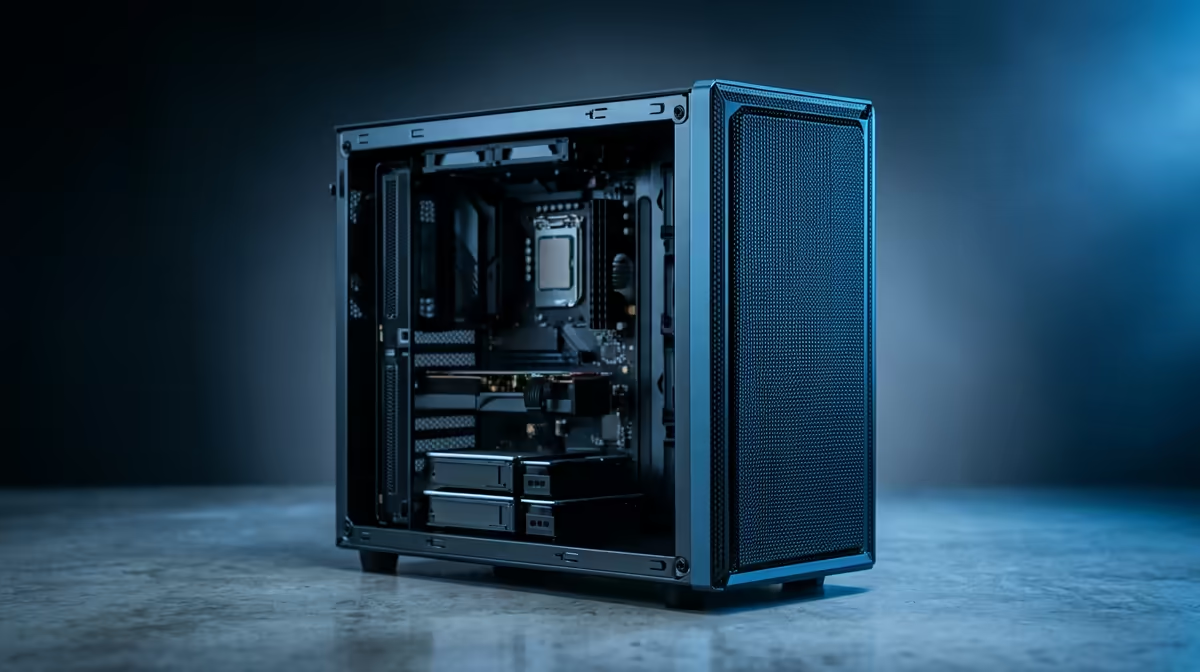
If genuine upgradeability matters to you, long term, a Mini-ITX or micro-ATX desktop is the better first build; it lets you swap GPU, CPU and add cards. A mini PC trades that flexibility for size and simplicity.
FAQ
Can you upgrade a mini PC's graphics?
No. The GPU is integrated into the soldered APU, so it cannot be changed. If graphics upgradeability matters, choose a small desktop with a discrete GPU instead.
What upgrades does a mini PC actually allow?
Usually RAM (if it uses SO-DIMM slots) and storage (via M.2 NVMe, sometimes a second slot or 2.5-inch bay). Confirm both are user-accessible before buying.
What does an upgradeable mini PC cost at Evetech?
Mini PCs with SO-DIMM RAM and a spare M.2 slot currently run about R12,000 to R18,000 at Evetech. Check the spec sheet says SO-DIMM, not soldered memory.
confirm the mini PC uses SO-DIMM RAM slots and has a free M.2 slot. Those two details decide whether you can ever upgrade it, since the CPU and GPU are fixed for life.