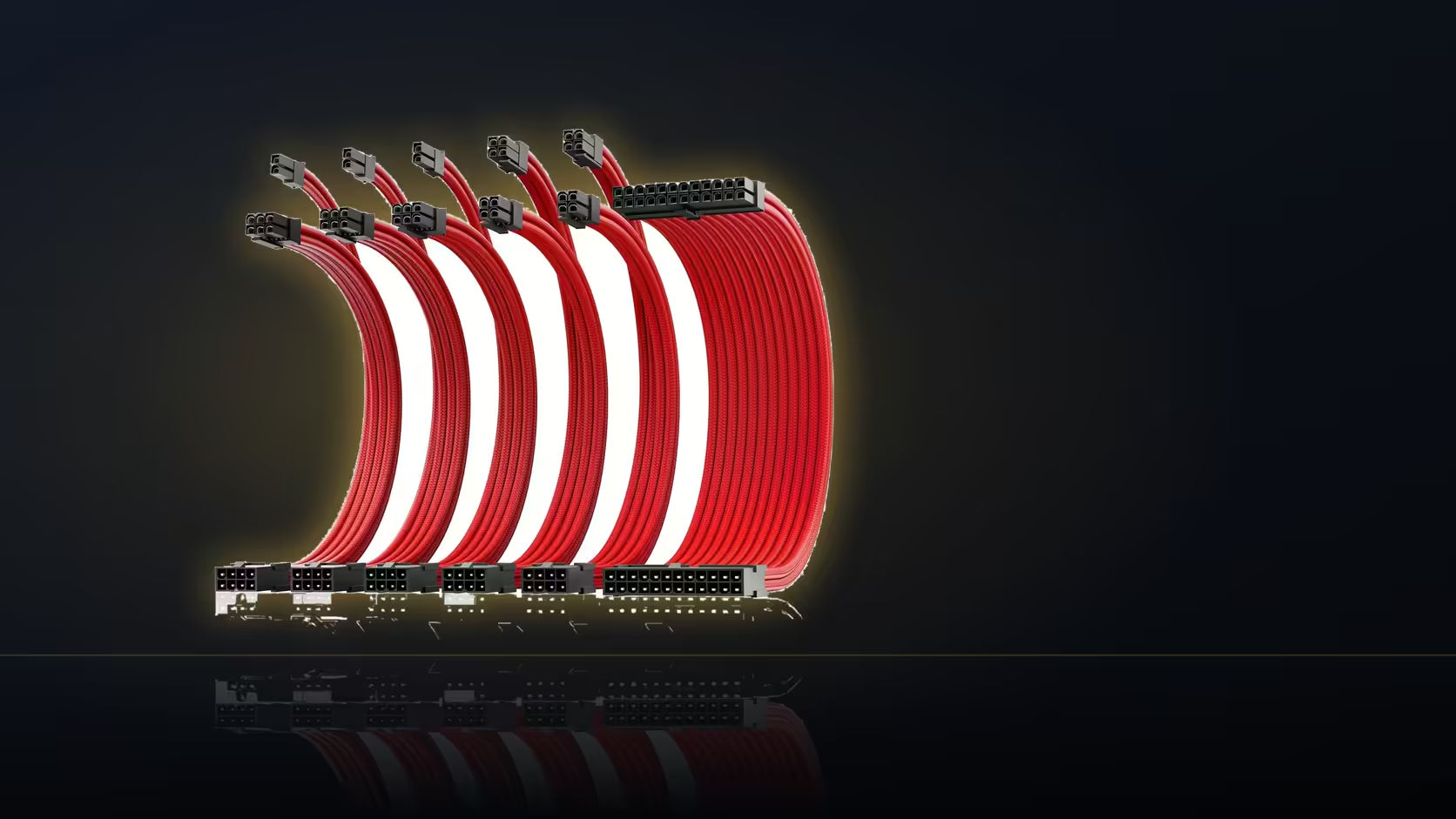
Dual EPS is a phrase that trips up a lot of builders the first time they read it on a spec sheet, conjuring an image of a board fitted for two entirely separate processors rather than what it actually describes.
Quick Answer
Two processor power sockets on a board means two power inputs feeding one processor, not a machine with two chips in it. The wording trips people up. AsiaHorse supplies two EPS extensions for exactly that layout, which is common on boards built for heavier processors.
🔌 What a second power input actually does
A second processor socket shares the current feeding a single chip across two separate connections rather than pushing it all through one. Boards aimed at heavier, more power-hungry processors use this layout to spread that electrical load more evenly, which is a stability and thermal consideration rather than anything to do with running two chips at once. It is purely a power-delivery detail, invisible to how the machine actually operates day to day.
🚫 It does not mean two processors
Boards genuinely built to hold two separate processors exist, but they are an entirely different class of product - server and workstation hardware, typically - and the power socket count on your motherboard is not the feature that identifies them. A gaming or mainstream desktop board with two EPS sockets is running one processor exactly as normal; the second socket is a power-delivery choice, not a second processor slot in disguise.
🏗️ Which boards tend to carry two inputs
Higher-tier boards aimed at heavier processors and overclocking are where a second EPS socket shows up most often, since those are the configurations that draw the most sustained current through the processor's power delivery. Mainstream boards more commonly expose a single eight-pin socket, which is exactly why this configuration surprises some builders the first time they encounter it on a higher-end purchase - it is a genuine step up in what the board expects from its power supply and cabling.
🔧 Filling both, labelling both, and routing both
Whether both inputs need to be connected is a question for the board's own manual rather than a general rule - some designs run correctly with just one seated, while others expect both filled before the processor is pushed under sustained load. The two extensions supplied in the kit are entirely identical 4+4 leads, meaning either one can serve either socket interchangeably with zero consequence to how the connection performs. The second lead does need its own dedicated route planned out though, since two cables converging on the same cramped top corner of the board is where most untidy-looking processor runs actually originate - plan the paths separately rather than routing them as a single bundle. It is worth noting too that a four-piece kit cannot cover this layout at all: its single processor lead leaves a second input in its factory finish unless a further extension gets bought separately. A dual-EPS board's needs are covered somewhere in cable solutions's range, and a bespoke quote for this exact layout can come from individually sleeved premium cables.
Frequently Asked Questions
What does a second power input actually do?
It shares the current feeding the processor across two connections, which boards aimed at heavier chips use to spread the load.
Does it mean the board takes two processors?
No. Boards that hold two processors are a different class of product entirely, and the power socket count is not what identifies them.
Which boards tend to carry two inputs?
Higher-tier boards aimed at heavier processors and at overclocking. Mainstream boards more often expose a single eight-pin socket.
Do both inputs have to be connected?
Check the board manual. Some designs run correctly on one, while others expect both filled before the processor is pushed hard.
Are the two extensions in the kit identical?
Yes, both are 4+4 leads, so either can serve either socket and they can be swapped without consequence.
Does the second lead need its own route?
It does, and that is worth planning, because two cables crossing the same cramped corner is where most untidy top runs come from.
Would a four-piece kit ever cover this?
Not fully. It carries one processor lead, so a second input stays in its factory finish unless another extension is bought.
Confirming what dual EPS means for your build?
Have a look at Evetech's power supply range and check your board's manual for exactly what its second socket expects.