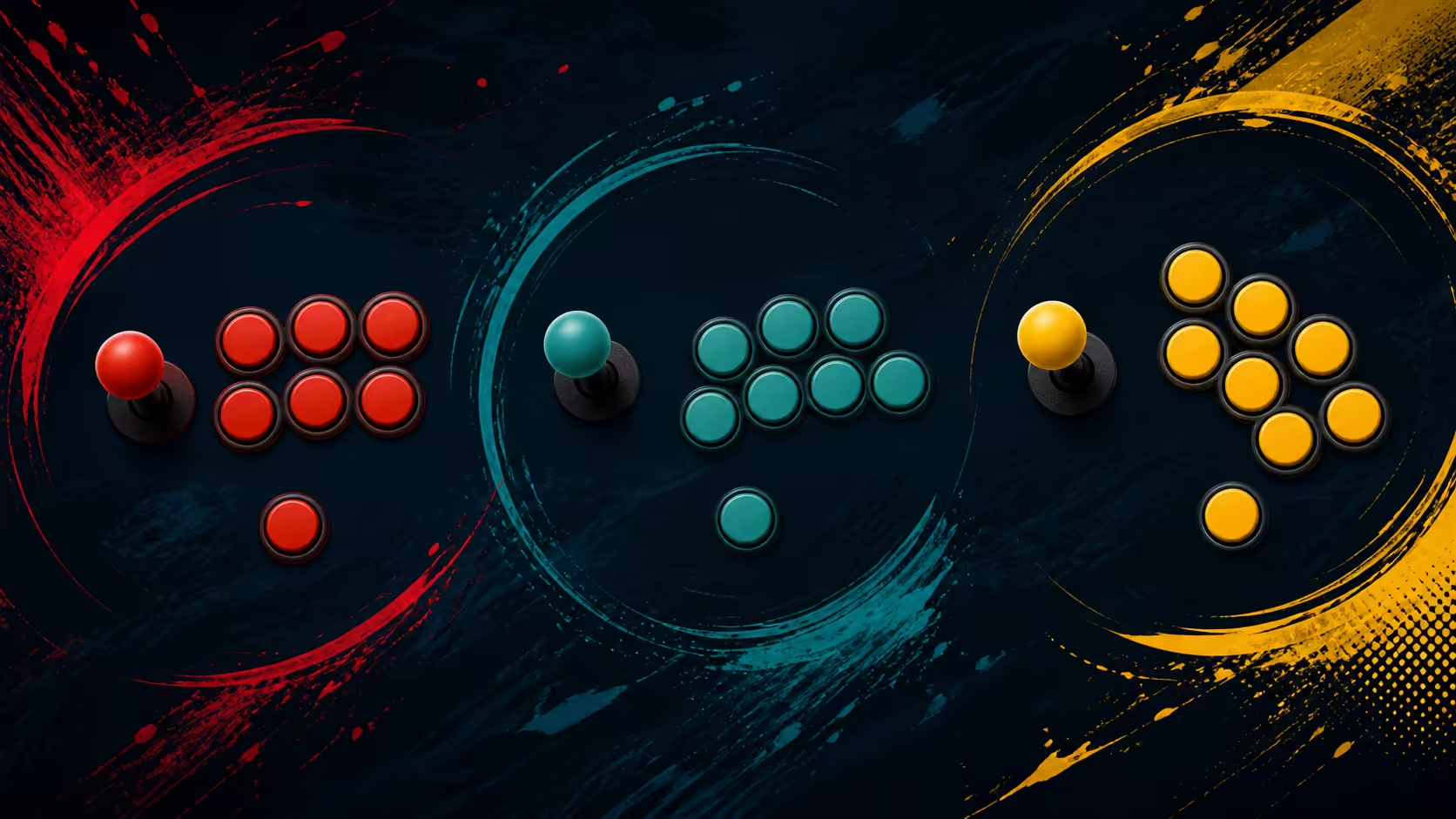
A familiar diagram of buttons tells only part of the story. The right fightstick layout for fighting games also depends on reach, wrist position, directional technique and whether the controller matches the platform where practice happens.
Quick Answer
The C2 uses a true arcade-cabinet layout across a 400 x 250mm top, with short-travel Sanwa buttons and a light-throw lever.
Choose a layout that lets you reach direction and action controls repeatedly without strain or unwanted hand movement. For R1,799, the GameSir C2 supplies a Sanwa Denshi arcade arrangement covering PC, Xbox One and PS4. Performance still comes from fit, familiarity and practice rather than the layout name.
📐 Map the working zones, not just the button count
Think of the top panel as two main areas: direction control and actions. Position the fightstick as it would sit during play, relax both shoulders and see whether either hand must stretch or rotate sharply. The useful question is whether common sequences remain comfortable after repetition.
Exact button count and spacing should be confirmed at model level if they affect the decision. The C2 uses an arcade layout; its dimensions and complete component map still need a model-level check.
The gaming-controller selection helps compare broad form factors once the player's reach requirements are written down.
🧭 Include directional configuration in layout fit
The GameSir model has a multi-functional directional toggle. That makes directional setup part of the layout evaluation; test the exact modes through the C2 instructions before adding them to the map. Choose the intended function and verify all four directions before judging comfort or execution.
A lever can feel natural to one player and unfamiliar to another. Give the chosen selection a consistent practice window; frequent toggle changes can make a layout seem unpredictable when the real problem is an unstable configuration.
🥊 Test with commands that expose reach
Build a short practice exercise containing a direction change, two separate action buttons and one repeated combination. Run it slowly, then at the player's comfortable pace. Note missed reaches, accidental presses and wrist tension as different observations rather than combining them into "bad layout".
Repeat on the same platform and game settings. A fair trial avoids switching character, mapping and controller position between attempts. It does not need to prove competitive improvement; it needs to reveal whether the physical arrangement supports the player's method.
Desk mats, seating additions and nearby storage belong in Evetech's gaming-accessory category only after the test identifies a concrete comfort or organisation issue.
🎨 Keep appearance and mechanics in separate columns
The C2 faceplate can carry custom artwork, which can make a setup distinctive. That does not change control spacing, platform support or player reach. Likewise, the Sanwa Denshi maker name gives component identity without promising a particular feel or lifespan.
Use a two-column buying note: mechanical fit on one side, personal presentation on the other. This prevents attractive artwork from compensating for an uncomfortable reach, while still giving customisation honest value.
If two positions both feel workable, extend the trial instead of forcing an instant choice. Alternate complete practice blocks on different days while keeping control assignments fixed. Note when discomfort begins, which actions require hand relocation and whether errors reduce with familiarity. A time-based log distinguishes a layout that merely feels new from one that remains physically awkward.
That full-size arrangement gives the hands more separation than a compact gamepad. At 3.5kg, the case is designed to stay planted on a lap or table. Layout value still depends on reach, hand position and practice rather than the arcade convention alone.
Measure the lap or table space before treating full size as an automatic advantage.
Frequently Asked Questions
What makes an arcade arrangement comfortable?
Neutral shoulders, manageable wrist angles and reliable access to essential controls are useful signs. The answer varies with hand size and play position.
Does the C2 have a confirmed complete button map?
No exact count, spacing or panel measurement should be assumed. Confirm model-level layout details when those measurements affect fit.
How should the directional feature be tested?
Select the documented function and run a centred four-direction check. Keep that choice fixed during the first practice comparison.
Can a preferred layout improve consistency?
It can support consistent technique when it fits the player, but the controller cannot guarantee a game result. Practice and software handling still matter.
Does faceplate art alter the working arrangement?
It changes the visual presentation only. Control placement stays independent from compatibility spanning Nintendo Switch, computer use, two Sony generations and Microsoft's One-to-Series family.
What price anchors this layout decision?
The C2 costs R1,799. Evaluate that figure against platform coverage, comfortable reach and the setup features the player will use.
Ready to match an arcade layout to your hands?
Explore Evetech's controllers and supporting accessories after defining your platform, posture and essential control reach.