Motherboard spec sheets rarely make addressable headers easy to find, and that is exactly why so many lighting plans stall halfway through a build. Count the actual ARGB headers your board offers before assigning a single device to any of them, because the number varies far more between boards than most people expect.
Quick Answer
Find the addressable header count in your board's own specification, then assign every planned lit device to a specific header before ordering anything. Boards vary widely, from one header to three or four, so a build with four lit accessories and only two headers needs chaining, a splitter, or a hub such as the ASH-S1 to actually work.
📋 Where the real number lives
Addressable ARGB headers are listed separately from the standard 4-pin PWM fan headers in a motherboard's specification sheet, usually labelled something like "5V 3-pin ARGB" or "ADD_HEADER." They are easy to overlook because they are typically outnumbered on the board by fan headers, and a first-time builder scanning a spec sheet quickly can genuinely miss that the board only offers one addressable connection while listing four or five fan headers.
🎲 Why the count varies so much
Some boards ship with a single addressable header near the top edge, while others carry three or four spread across the board. There is no reliable rule of thumb tied to price or chipset that predicts this accurately enough to skip checking - budget boards occasionally surprise with multiple headers, and premium boards occasionally ship with fewer than expected. Counting is the only dependable method, and it takes a few minutes against the board's actual manual rather than an assumption based on its price bracket.
🔗 What counts as one device, and what chains
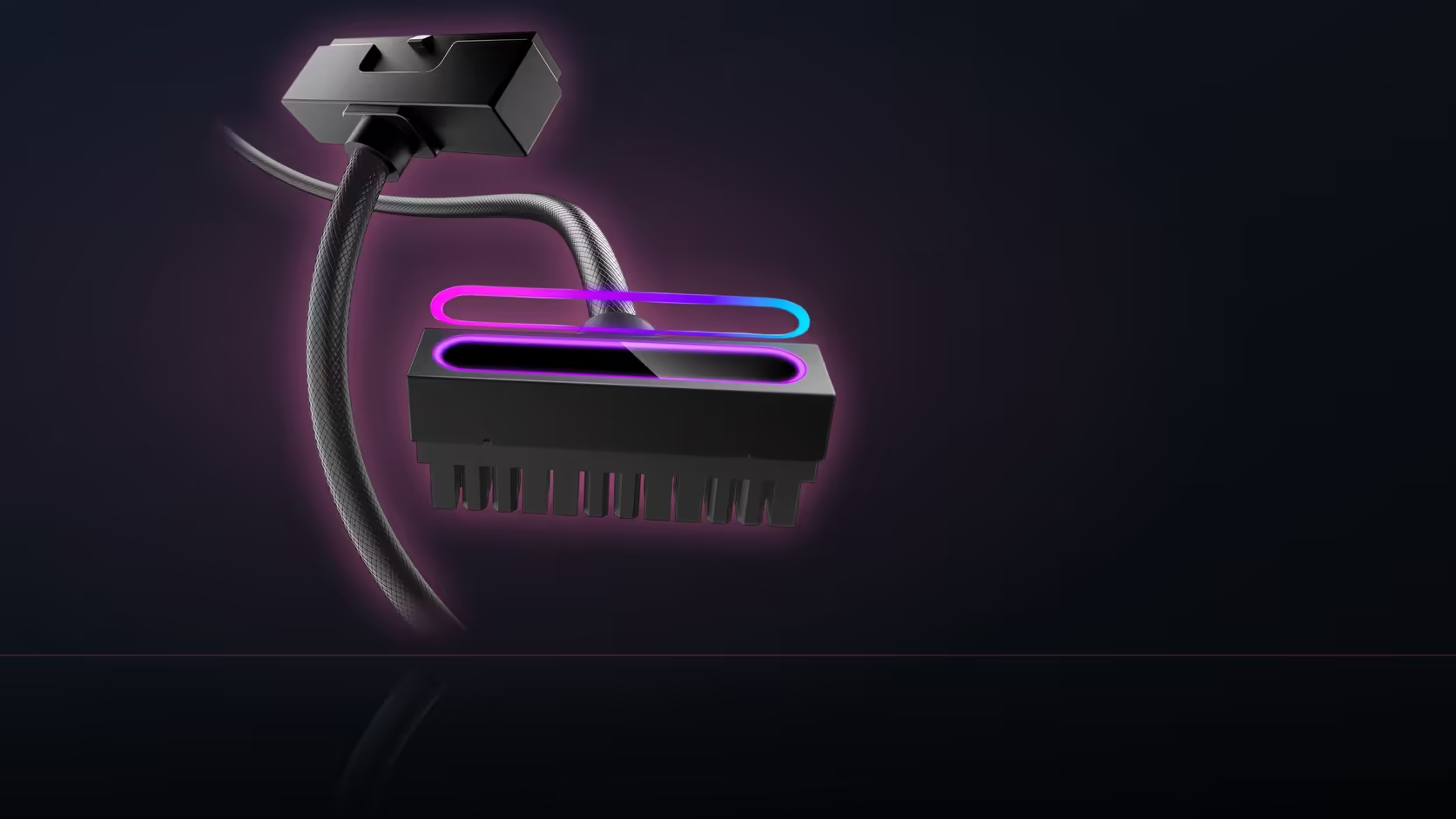
Anything needing its own independent addressable connection counts as one device against the header total. Several AsiaHorse accessories are built specifically to chain, however - the RAM cover and the M.2 heatsink both carry male and female ends designed for exactly that purpose, letting two or three lit accessories share a single header rather than each needing its own. That distinction matters enormously when totting up whether a plan actually fits the board: four accessories that chain in pairs might only need two headers, not four, and lit fans from the case fan range chain the same way in threes.
🎛️ When a hub becomes the right answer
Once the planned device count clearly outstrips what chaining can tidily manage - and stacking too many devices on one chain starts introducing its own signal and length problems - the ASH-S1 hub is the cleaner fix. At R349, it adds nine dedicated addressable ports on its own side, which comfortably covers almost any realistic build's lighting plan without relying on long, fragile daisy chains strung across the case.
🔢 The hub's own limit still applies
It is worth remembering that the hub is not an unlimited answer either - a combined 377-LED cap sits over everything plugged into it, entirely separate from the nine physical ports. A build assigning several high-density accessories to the hub should check that combined LED total against the ceiling, rather than assuming nine free ports automatically means nine devices' worth of headroom.
⚙️ Fan headers are a separate count entirely
It is easy to conflate ARGB headers with fan headers since both sit on the board close together, but they serve entirely different jobs - fan speed control on one side, lighting sync on the other - and a shortage of one does not necessarily mean a shortage of the other. A board can be comfortably stocked with fan headers while offering only a single addressable connection, so both totals need checking independently before finalising a parts list from the case accessories range.
Frequently Asked Questions
Where do I actually find the addressable header count?
In the board's own specification, which lists addressable ARGB headers separately from the standard four-pin fan headers.
How many addressable headers do boards typically carry?
It varies considerably, from as few as one to three or four, which is exactly why counting matters more than assuming.
What counts as needing its own header?
Anything requiring an independent addressable connection, though devices built to daisy-chain can share one header between two or three units.
Which AsiaHorse accessories are built to chain?
Several carry male and female ends for exactly that purpose, including the RAM cover and the M.2 heatsink cover.
At what point does a hub become the sensible answer?
Once the planned device count clearly outstrips what a tidy chain can manage, the ASH-S1 hub adds nine addressable ports for R349.
Does the hub have its own separate limit?
Yes - up to 377 LEDs total, combined across every device on the hub, which is a different ceiling from the nine physical ports.
Should fan headers be counted separately from ARGB headers?
Yes, since fan speed and lighting sync use different connections entirely, and a build can be short on one while having plenty of the other.
Counting headers before your next build?
Check Evetech's case accessories range to see which AsiaHorse products chain and which need their own dedicated header.