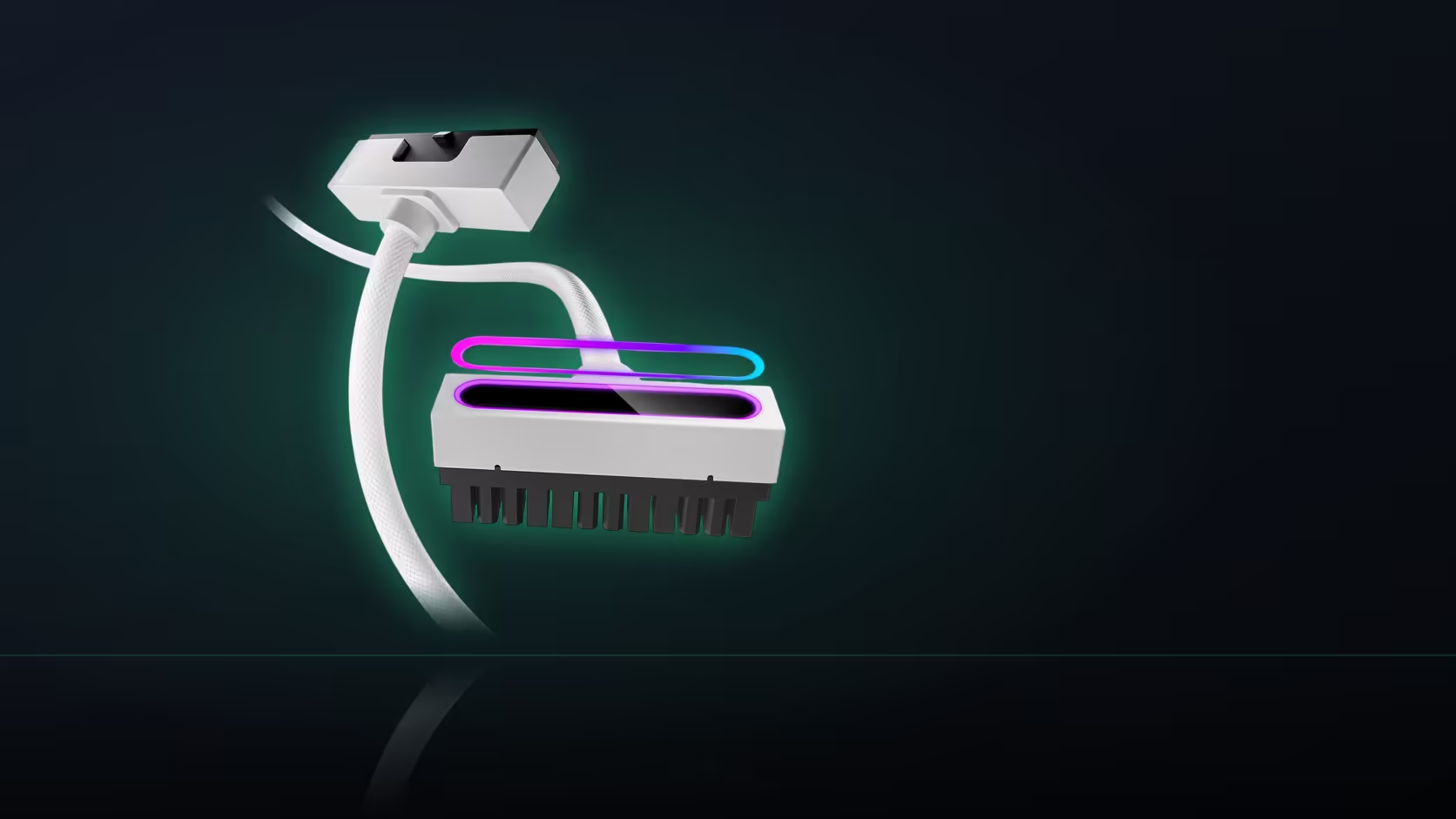
Two AsiaHorse products both claim the same piece of real estate: the 24-pin ATX run. The Hydrus ARGB cable lights that lead at its connector head, and the Aurora cover kit clips a lit shell over the whole length of it, and buying both without thinking it through means one covers the other for no benefit.
Quick Answer
They occupy the same cable, so fitting both is wasted money - the Aurora shell would sit over a Hydrus cable it cannot show off. Pick one effect for the 24-pin run: the Hydrus cable at R599 lights a single connector head, or the Aurora cover kit at R699 lights a 205mm span down the whole length. Put the other budget toward the graphics run instead.
🔌 What each product actually does
The Hydrus ARGB 24-pin cable is a male-to-female extension with its ARGB window built into a 90-degree right-angle connector head, so the light shows at one point where the cable meets the board. It plugs onto whatever lead your power supply already has, works on modular and non-modular units alike, and needs no cable combs since it is a single moulded piece.
The Aurora cover kit works completely differently. Its 24-pin cover is a 205mm two-piece shell that clips over an existing cable run - whether that is the factory lead or a sleeved extension - and lights more than 80 addressable LEDs along its length, styled as individually glowing strands. It draws power and sync from one motherboard header with no controller box to hide, and the covers carry no current themselves.
⚡ Why fitting both defeats the point
A 205mm cover wrapped around a Hydrus extension hides the greater part of that cable under an opaque shell. The Hydrus cable's own lit head sits at the connector, so depending on exactly where the Aurora cover ends, the Hydrus window might peek out beyond it - but you would then be running two separate ARGB effects competing for attention on one run, rather than one considered look. Neither product is designed with the other in mind, and there is no version of this pairing that reads as more deliberate than picking a single approach.
🎨 Where the other budget is better spent
If the plan was always to have two lit accents in the build, the graphics power run is the natural second target rather than doubling up on the board cable. An Aurora GPU cover clips over the 8-pin or 16-pin leads feeding the card, giving the build two distinct focal points - one at the board, one at the card - instead of one run trying to do two jobs at once. Both products connect over the same 5V 3-pin standard, so a board with two spare addressable headers can run both cleanly without a hub in between, and a lit row from the case fan range gives a third accent if the build wants more than two.
Frequently Asked Questions
What does each product actually do?
The Hydrus cable is a lit 24-pin extension with its ARGB window built into the connector head. The Aurora cover is a 205mm shell that clips over an existing run.
Why do the two conflict on one cable?
The cover encloses a length of the run, so a lit extension fitted underneath is hidden along that entire section rather than adding to the effect.
Would the Hydrus connector still be visible?
Its window sits at the connector head, so a cover stopping short of that point could leave it showing, though the two effects would still be competing on the same run.
Which one gives more visible light along the cable?
The Aurora cover, since it lights a 205mm span, where the Hydrus places its glow at a single point at the connector.
Where could the second accessory go instead?
The graphics power run takes its own Aurora GPU cover, letting each run in the build carry one distinct lighting effect rather than stacking two on the board cable.
Do both products connect the same way?
Yes. Both use 5V 3-pin motherboard headers for power and sync, so running one on each cable just needs two spare addressable connections.
Which costs less to start with?
The Hydrus cable comes in at R599 against R699 for the two-piece Aurora kit, so the two options sit close together on price.
Planning your ARGB cable layout?
Browse Evetech's case accessories to see how the Hydrus and Aurora ranges compare before choosing which run gets the lighting.