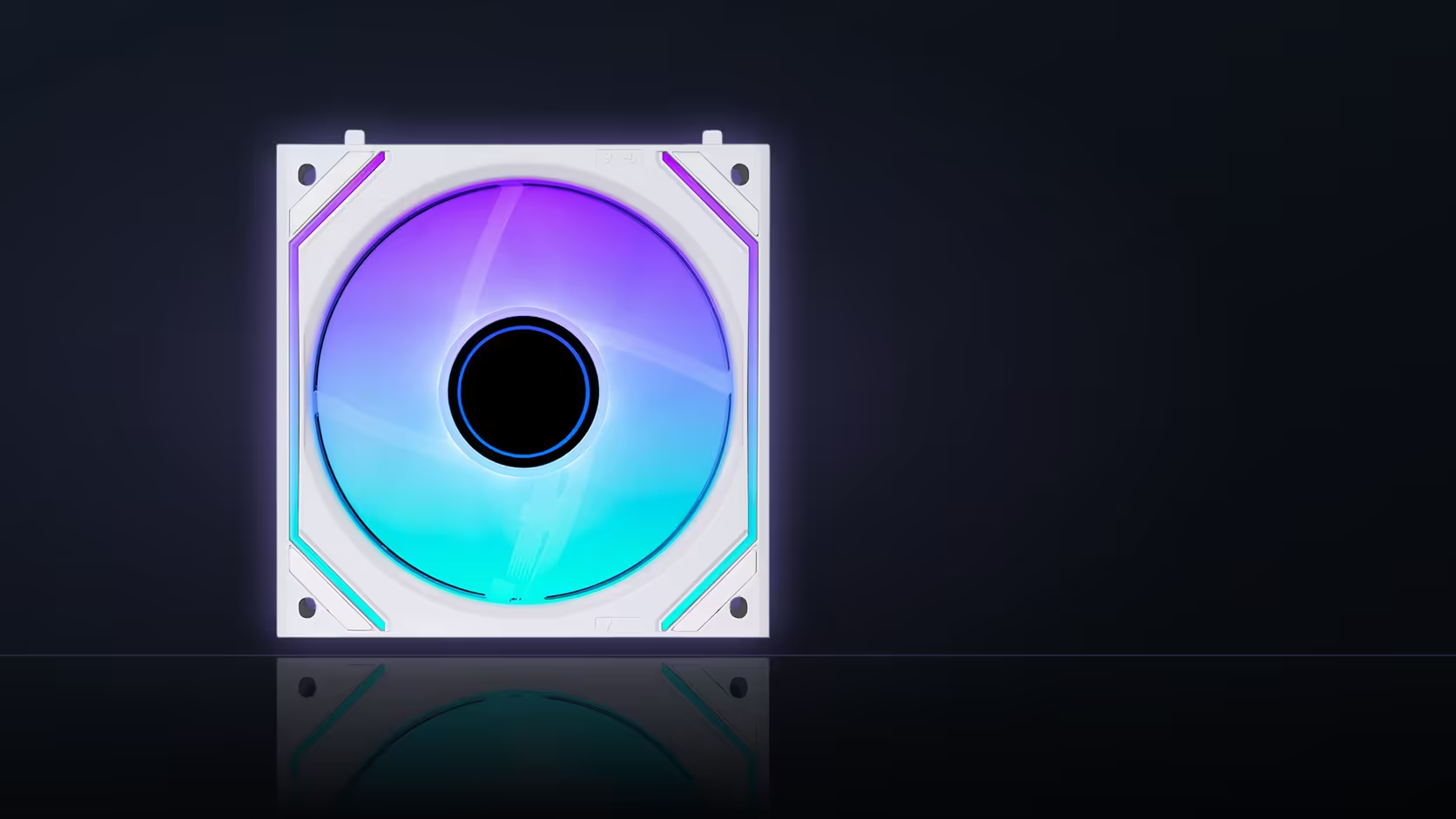
An infinity mirror only performs its trick from certain angles. Look straight into the ring and you get genuine visual depth, layer after layer receding backward. Catch the same fan edge-on from across a room and most of that illusion simply disappears, which makes where you mount a Dawn Pro row almost as important as buying it in the first place.
Quick Answer
AsiaHorse's Dawn Pro 120mm ARGB fans rely on an infinity-mirror lighting effect that depends heavily on viewing angle, so a fan wall only shows its full depth from positions that face it more or less directly. Fans seen edge-on lose most of the effect regardless of how good the lighting hardware is. R699 VAT-inclusive buys the three-pack, and planning where that row sits relative to where you actually sit or where a window shows the case matters as much as the purchase itself.
👁️ Why the angle changes everything
The infinity-mirror effect comes from reflections bouncing between two layered surfaces, and that illusion is strongest when you are looking directly into the ring rather than glancing across it. Seen head-on, the fan appears to have real depth behind the frame. Seen from the side, that same depth compresses into something closer to a flat glowing ring, because the reflective layering only reads correctly along its intended viewing axis.
🪟 Positions that show it best
Fans mounted where a side window faces your normal seated position tend to show the effect most convincingly, since you are looking into the ring rather than past it. A front-mounted row seen through a tempered-glass side panel usually works well for this reason, particularly compared with a top-mounted row that is mostly seen from above rather than straight on.
Front row seen through a side panel
A front-mounted row viewed through the side glass is typically seen at a slight angle rather than dead-on, so the effect reads a little softer than a fan mounted directly behind a side window would. It is still usually the strongest practical option in a standard case layout, just not quite as dramatic as a true head-on view.
What a mesh front panel does to the effect
A solid or mesh front panel reduces how visible the fans are from outside the case entirely, though the same row viewed through a side window remains unaffected by whatever the front panel is doing. If your case has a closed front, plan the lighting payoff around the side view rather than the front.
🔝 Is a top row worth lighting at all?
A top-mounted row still lights the case interior and is visible looking down into an open desk setup, but the mirror depth effect reads less clearly from a normal seated position than a side-facing row does. It is not wasted, just a different kind of payoff than a front or side installation gives you.
🔄 Reverse blades and viewing direction
The reverse-blade versions of Dawn Pro change which face of the fan looks finished, which matters specifically where the fan's rear is what a viewer actually sees. Matching blade direction to viewing angle is a small detail that affects how tidy a visible row looks, separate from the mirror effect itself. A trip through case accessories covers the cable dressing that keeps a showcase row looking as tidy from the side as it does head-on.
Frequently Asked Questions
Why does viewing angle change the infinity-mirror effect so much?
The depth comes from reflections between layered surfaces, and that illusion is strongest when looking directly into the ring rather than across it.
Which mounting positions show the effect best?
Fans facing a side window, typically viewed from a normal seated position, generally show the strongest depth effect compared with fans seen only from above or the side.
Does a front row still work if viewed through a side panel?
Partly. It is usually seen at an angle rather than straight on, so the effect reads a little softer than a dedicated side-facing row would.
What happens to visibility with a mesh front panel?
A solid or mesh front reduces what is visible from outside the case, though a side-window view of the same fans is unaffected.
Is a top-mounted row worth lighting?
It lights the case interior and is visible from above, though the mirror depth reads less clearly from a normal seated position than a side-facing row.
Does the reverse-blade version affect the viewing experience?
Reverse blades change which face of the fan looks finished, which matters wherever the fan's rear side is what a viewer actually sees.
How many fans typically make up a visible wall?
Three fans across a front or side is the common arrangement, which is why the three-pack at R699 is sized for exactly that layout.
Planning where an infinity-mirror row should actually sit?
Browse Evetech's case fan category to see options built with a side window in mind.