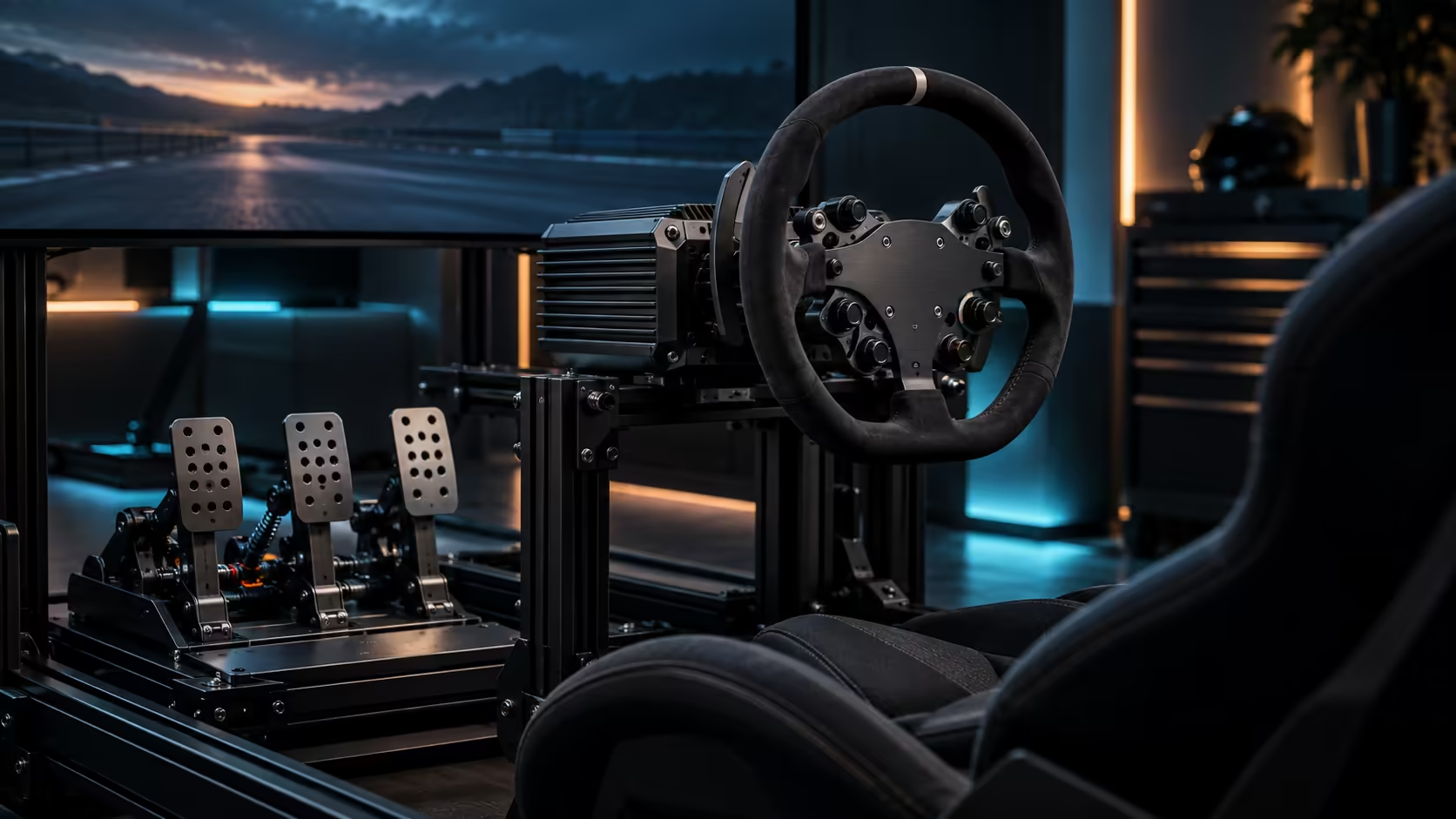
Ask any driver who has switched from a spring-loaded pedal to a load cell one whether it was worth it, and the answer almost never mentions the price difference. A 150kg load cell brake changes what braking actually is, from a distance you guess at to a pressure you can repeat, and that shift is worth more to most drivers than any other single upgrade in the hobby.
Quick Answer
Yes, for anyone racing regularly enough to care about lap-to-lap consistency. A load cell measures the force of your push rather than how far the pedal travels, and the P700 pedals in the R14,999 Green Flag bundle carry a 150kg-rated sensor, well above what a normal braking effort ever reaches, which keeps every press comfortably inside the sensor's accurate working range.
🦵 What changes the moment you switch
A spring-loaded pedal asks your foot to find the same travel distance every time, which the body is genuinely bad at doing without looking. A load cell asks your leg to find the same pressure every time, which trained muscle memory is far better at reproducing. That single change is why threshold braking, holding a car right on the edge of lock-up, becomes something you can actually practise and improve rather than a lottery each corner.
The 150kg figure is not a push target, it is simply the sensor's upper measurement limit, and most drivers stay well under it, which means the sensor spends its time reading in a comfortable middle band rather than near the extreme edge of what it can register.
💰 Weighing it against a cheaper travel pedal set
A basic spring-loaded pedal set costs less, and if you are driving casually for 1 or 2 hours a week with no particular interest in shaving lap times, that saving is real and the load cell's advantage matters less. The gap widens specifically as your driving gets more competitive: online league racing, close wheel-to-wheel battles, and time trial chasing all reward the exact consistency a load cell provides, in a way casual solo laps simply do not stress-test.
Buying a load cell set once tends to cost less over time than buying a cheaper set and upgrading later, since the pedal plate, spring or elastomer, and sensor on a basic set are usually replaced together during any meaningful upgrade rather than piece by piece.
🔧 What it actually needs to deliver on the promise
A load cell only pays off if it is calibrated properly and mounted somewhere rigid, since the sensor cannot tell your leg force apart from the pedal itself sliding or flexing under the same push. A pedal set that moves during a hard brake undoes the exact consistency advantage you bought it for, so pairing it with a solid mount from the gaming setups or racing simulation range is not optional if you want the upgrade to actually show up in your lap times. Buying the set locally is worth the same attention, since a warranty issue on the sensor itself is a far easier fix through a domestic retailer than through an overseas return.
Frequently Asked Questions
Do I need to push with 150kg of force to use a load cell brake?
No. That figure is simply the sensor's upper limit. Most drivers stay well under it, which keeps braking in a comfortable, repeatable range rather than near the sensor's extreme.
Is a load cell brake worth it for casual driving?
The benefit is smaller for casual, low-pressure driving. It matters most once you are racing competitively or chasing consistent lap times, where repeatable pressure directly translates into faster, more reliable laps.
Does a load cell brake need a special mounting?
It benefits from one. A pedal set that shifts under a hard press blends genuine leg effort with the pedal's own wobble inside the same reading, which quietly undoes the accuracy a load cell is meant to provide.
Ready to brake on purpose instead of by feel alone?
Check the Racing Simulation shelf for a set built around a load cell sensor and bolt it down properly.