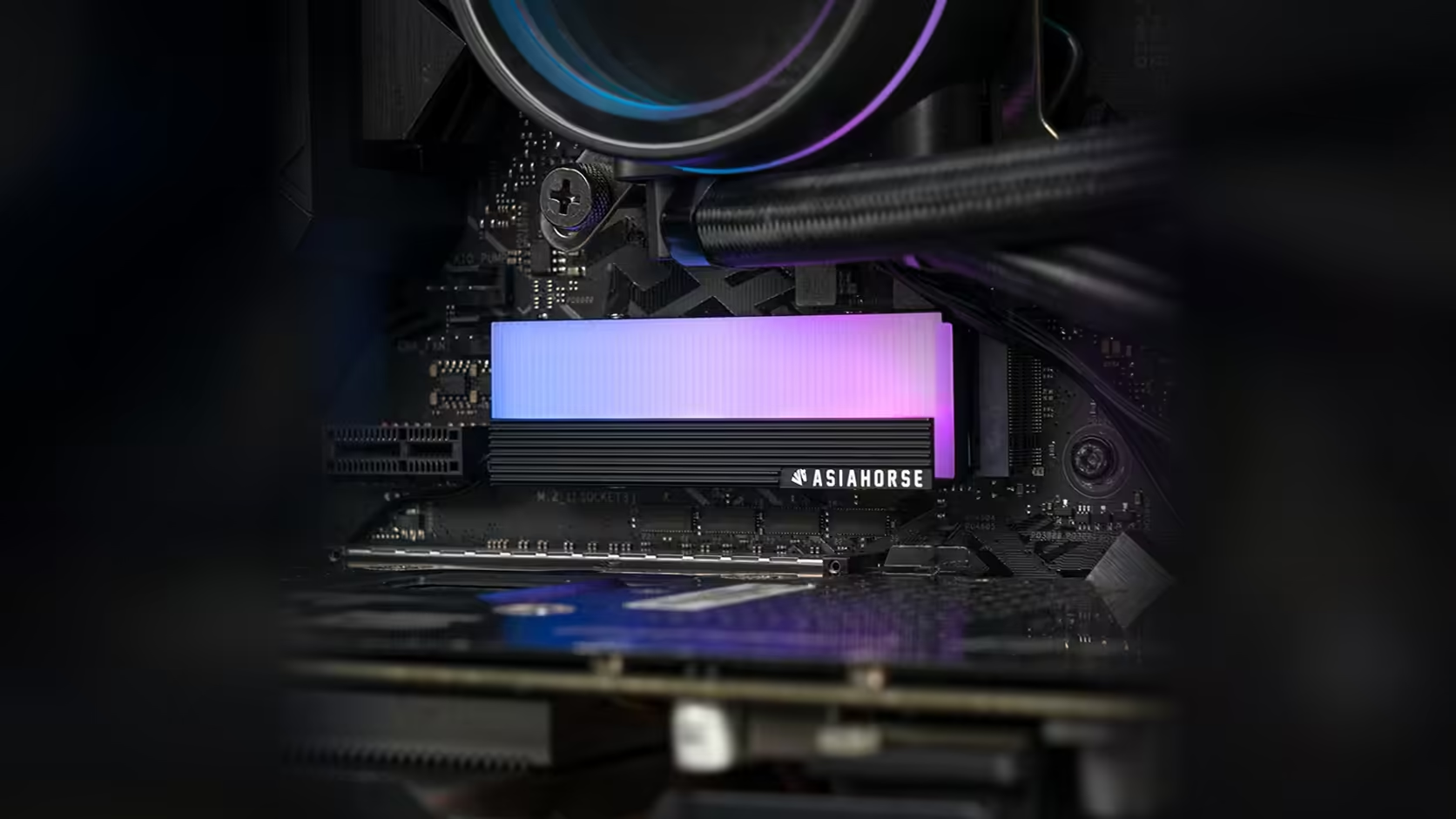
A lighting lead with two different connector types on either end is not an accident of manufacturing, it is a deliberate design choice. The male and female ends on the AsiaHorse M.2 cover's ARGB lead exist so the accessory can sit inside a chain of other lit devices rather than demanding a header entirely to itself.
Quick Answer
The AsiaHorse M.2 2280 heatsink connects over a 5V 3-pin lead carrying both a male and a female end, which lets it sit within an addressable lighting chain rather than requiring a dedicated header. Priced at R199 with VAT counted in, and open to change at Evetech's end, that small design detail matters most on boards offering only one or two addressable connections for an entire build.
🔗 What the two ends actually do
One end of the lead accepts an incoming addressable signal from whatever sits earlier in the chain, and the other end passes that same signal onward to the next device in line. This is what lets the cover occupy a position in the middle of a run rather than needing to be the last or only thing connected to a given header.
It does not have to be chained
If a build only has this single cover to connect, the lead works perfectly well on its own, plugged directly into a header with the second end left unused. Chaining is an option this design supports, not a requirement it imposes.
🧩 Why chaining matters on real boards
Many motherboards, particularly in the mid-range, provide only one or two addressable headers, which quickly becomes a constraint once fans, strips and covers all want a connection. Chaining lets several devices share one header connection, solving that limitation without needing every accessory to have its own dedicated port.
⚡ One detail chaining does not change
It is worth being clear that chaining shares the signal connection between devices, not the current each one draws. Every device on the chain still pulls its own load from the same header, so the total current has to be added up across the whole run rather than assumed to be shared or reduced by the chaining itself. Have a look through case accessories for other addressable devices worth chaining in, and pick up a compatible drive from Evetech's solid state drive range while it is still on your shopping list.
Frequently Asked Questions
What do the male and female ends on the lead allow?
One end accepts an incoming addressable signal and the other passes it on, so the cover can sit in the middle of a lighting chain.
Does the cover have to be chained with other devices?
No. It can connect directly to a header on its own, with the unused end simply left disconnected.
Why would chaining be useful on a given build?
It lets several addressable devices share one header connection, which matters most on boards offering only one or two such headers.
Does chaining reduce the total current draw?
No. Every device on the chain still draws its own current from the shared header, so the totals still need to be added up.
What happens if a device partway through the chain is disconnected?
Anything downstream of that break loses its signal, which is worth checking first when diagnosing lights that stay dark unexpectedly.
Running more than one addressable device off a single header?
Check Evetech's NVMe drive range and plan your lighting chain before the case gets crowded.