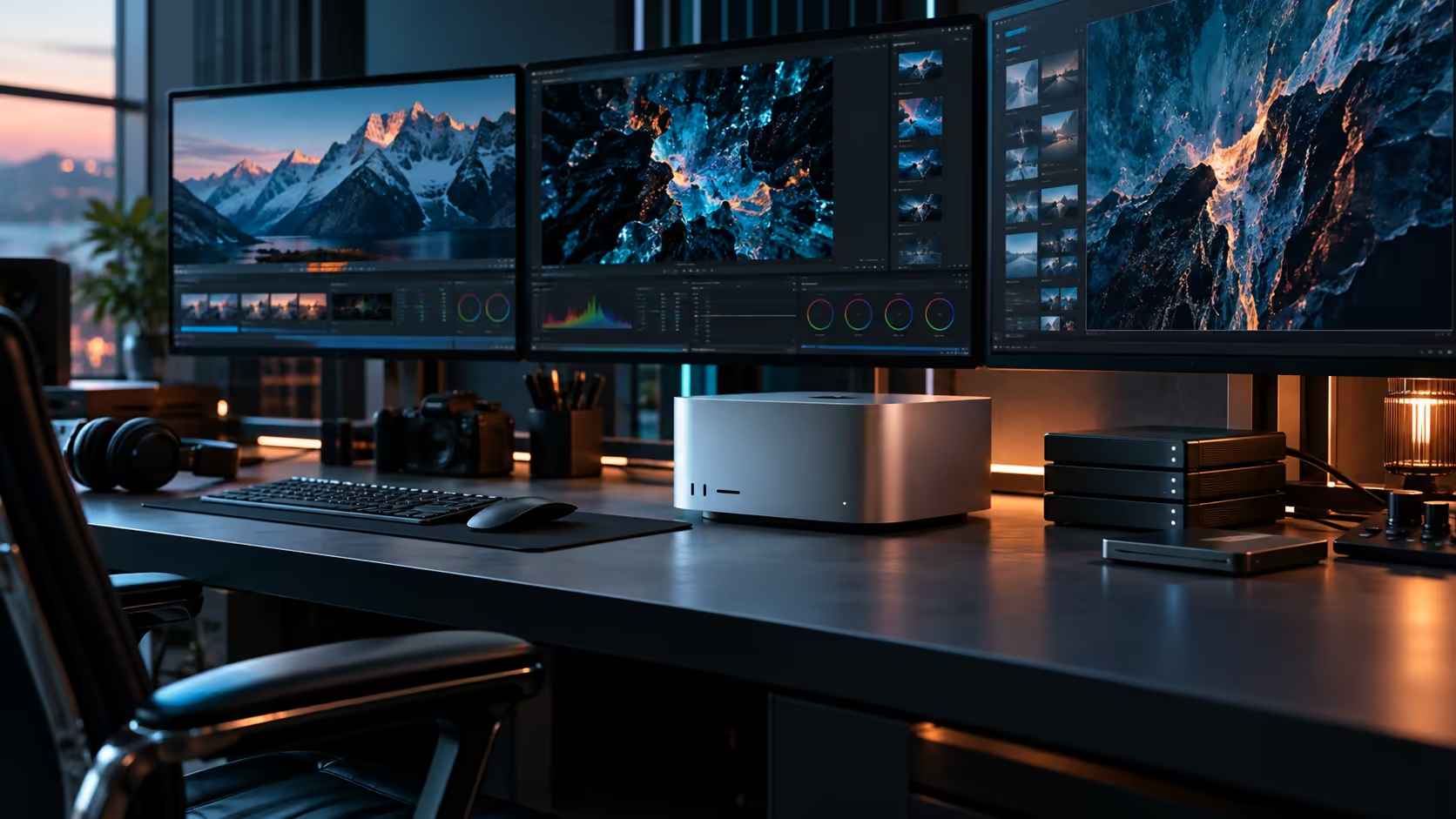
Editing, simulation and AI work each lean on a Mac Studio M5 Ultra's ports differently, and treating "Thunderbolt versus USB-C" as one generic question misses that the right answer actually depends on which of the three you're doing.
Quick Answer
Editing needs Thunderbolt for fast scratch storage and high-resolution displays. Simulation work needs it for moving large datasets and results between machines. AI work needs it mainly for loading and storing large model files quickly. Plain USB-C covers lower-bandwidth accessories in all three cases. This machine carries six Thunderbolt 5 ports and lists at R108,999.
🎬 Editing: where the display and storage link matters most
Video work is the most visibly affected by the cable choice, since a slow link shows up immediately as a stuttering timeline.
A Mac Studio M5 Ultra monitor and a scratch drive both need genuine Thunderbolt bandwidth, since a plain USB-C cable on either can cap resolution, refresh rate or read speed well below what the panel or drive is actually capable of. Keyboards, mice and other editing-adjacent peripherals happily share a dock over standard USB-C without any visible cost to the workflow.
⚙️ Simulation: where the network link does the heavy lifting
For CFD, structural analysis and similar work, the Thunderbolt question matters most at the point of moving data between machines, not necessarily on the desk itself.
Direct-attached fast storage for active datasets benefits from Thunderbolt the same way editing does, but simulation work often adds a second consideration: moving results to shared storage or a second workstation, which is really a 10Gb Ethernet question rather than a Thunderbolt-versus-USB-C one. Get the direct storage link right first, then treat networking as its own separate decision.
🤖 AI: where model loading speed is the real question
Large model files have to move from storage into memory, and that step benefits from the same bandwidth distinction as everything else here.
A model stored on a fast, properly cabled Thunderbolt drive loads noticeably quicker than one sitting behind a generic USB-C connection, which matters most when switching between several models in a working session rather than loading one and running it for hours. Beyond the initial load, the ongoing bandwidth need is lower, so this is one case where the cable choice matters more at specific moments than continuously throughout the session.
🔌 The one certification that decides all three
Regardless of which workload you're running, the actual decider is the same every time.
Check for an explicit Thunderbolt certification on the cable or hub itself, not just the USB-C connector shape, since the two look identical but perform very differently. A comprehensive cable range built specifically around Thunderbolt certification removes the guesswork that a generic cable drawer creates.
Frequently Asked Questions
Does editing need Thunderbolt more than simulation or AI work does?
It's the most immediately visible when the cable is wrong, since a stuttering timeline shows up instantly, but all three genuinely benefit from proper Thunderbolt cabling for their storage-heavy moments.
Is a 10Gb Ethernet connection the same thing as a Thunderbolt storage link?
No. Thunderbolt handles direct-attached devices on your desk; 10Gb Ethernet is a separate wired network for moving data between machines, relevant mainly to simulation and shared AI workflows.
Does AI work need Thunderbolt continuously, or just at specific moments?
Mainly at specific moments, particularly when loading a large model from storage. Once running, the ongoing bandwidth demand is generally lower than during that load.
What's the quickest way to tell a Thunderbolt cable from a plain USB-C one?
Check for an explicit Thunderbolt certification marking on the cable or its packaging, since a plain USB-C cable uses the identical connector shape without the same capability.
Ready to cable your editing, simulation or AI workflow correctly?
Shop Thunderbolt-certified cables and docks built for exactly this kind of demanding work.