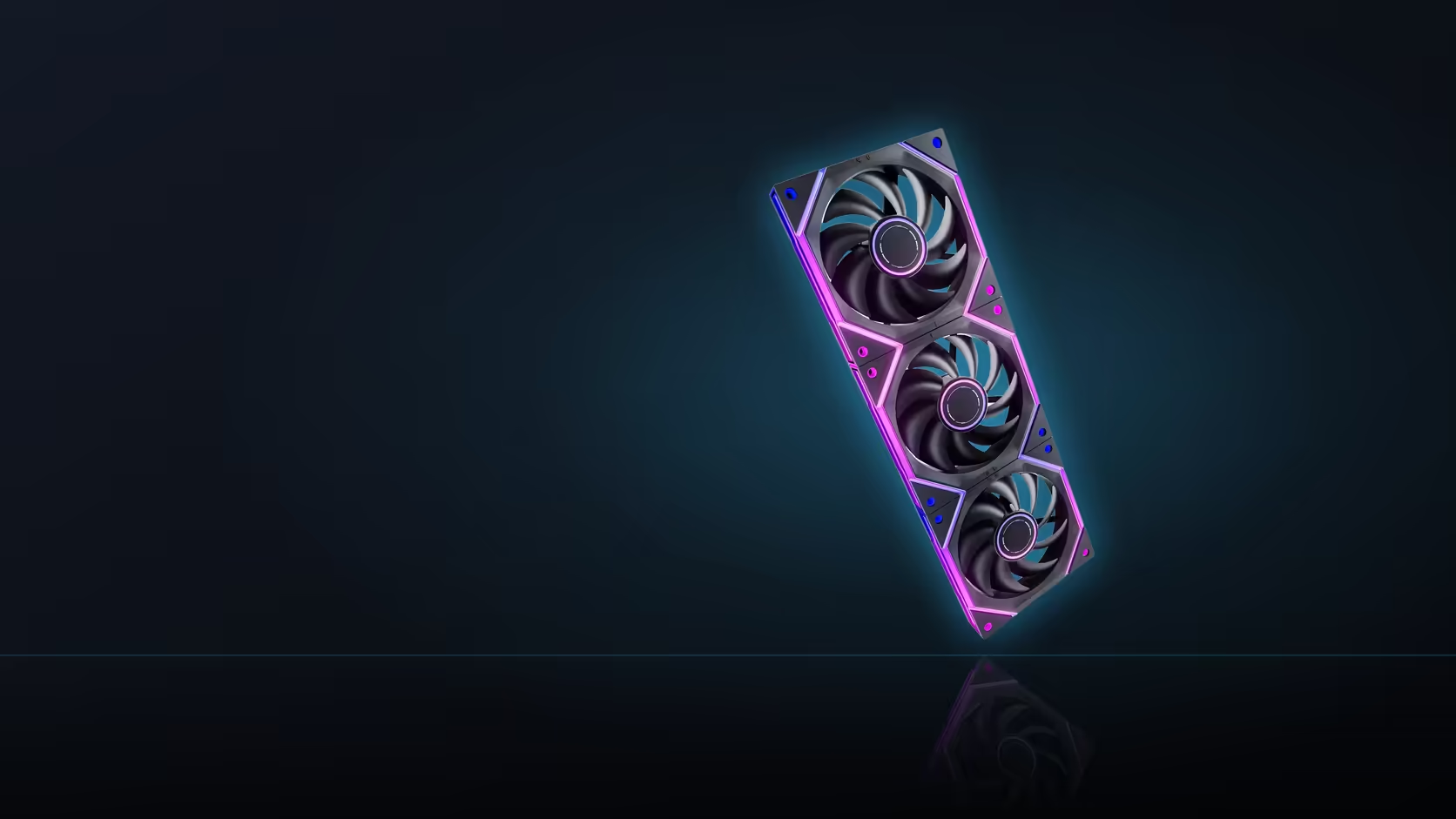
Choosing reverse blades often feels like it should trade something away, whether that is airflow, noise, or speed range, in exchange for the appearance change. With the Nyota Ultra, none of that trade actually happens. The performance figures printed for the reverse version match the standard one exactly, which makes the decision purely visual rather than a compromise.
Quick Answer
Reverse-blade Nyota Ultra fans carry the same 58.5 CFM airflow figure and the same 800 to 2000 RPM PWM range as the standard version, at the same R249 single or R649 three-pack price. Nothing about the published performance changes between the two blade directions.
📊 Reading the two listings side by side
Line up the standard and reverse listings for this fan and the specification block is identical: 58.5 CFM airflow, an 800 to 2000 RPM speed range under PWM control, a nine-blade design on a hydro bearing, and a 6 to 30 dBA noise window. The only line that differs is the description of which way the blades face and which position that orientation suits. There is no separate, lower figure printed anywhere for the reverse version.
🧭 What blade direction is actually deciding
Since the numbers stay level, choosing reverse comes down entirely to which side of the fan a case window shows. A fan mounted where its rear would normally face the viewer benefits from the reverse version, which puts the finished face outward instead. In a position with no such sightline, either version does the identical job, so the decision there is really about which one happens to be in stock or already part of a matched row.
⚙️ Why this differs from how some fans handle reverse blades
On some fans, a reverse-blade impeller is a genuinely different design tuned for the opposite spin direction, which can shift airflow or noise slightly from the standard version. AsiaHorse has not published a separate figure for the Ultra's reverse blades, and the listed specification is identical across both, so nothing in the published information points to a performance difference here. The lighting stays level too: both versions use the same infinity-mirror ring layering 16 addressable ARGB LEDs, so the visual result away from blade shape itself is unchanged.
🎯 When reverse is worth reaching for
Reach for the reverse version specifically where the rear face of a standard fan would be the one on display, typically certain intake positions seen from inside the case. Everywhere else, the forward version does the identical job at the identical price, so there is little reason to default to reverse blades across a whole order rather than choosing per position. Weigh up the two versions in the case fan range, and check the case accessories range for the cabling a mixed order might need.
Frequently Asked Questions
Does the reverse Nyota Ultra list a different airflow figure?
No. Both directions carry the same 58.5 CFM figure across the whole range.
Is the RPM range different for reverse blades?
No, both run 800 to 2000 RPM under PWM control, matching the standard version exactly.
Does the noise rating change with blade direction?
The listed range is 6 to 30 dBA across the Ultra fans generally, not split by blade direction.
So what does reverse actually change?
Only which face of the fan looks finished, which matters where the rear side would otherwise be visible.
Is the lighting identical between the two versions?
Yes, both use the infinity-mirror ring with 16 addressable LEDs, so the lit element does not differ.
Should I default to reverse blades for the whole build?
Only where the rear face is actually visible. Elsewhere the standard version performs identically at the same price.
Ready to choose blade direction on looks alone, without a performance trade-off?
Check Evetech's case fan range and pick whichever version suits each position's sightline.