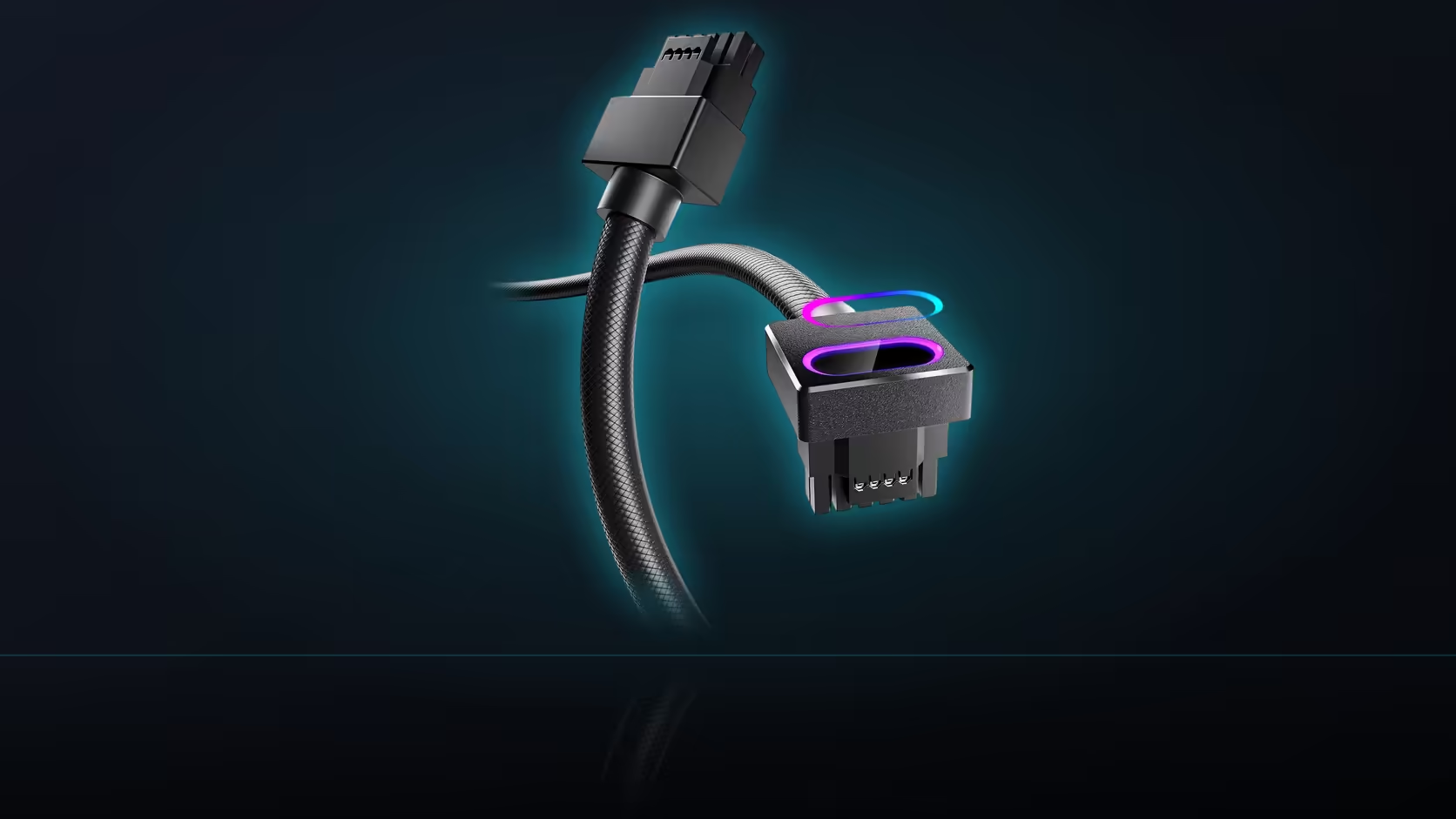
Turning a graphics card sideways changes exactly where its power connector points, and for a vertically mounted card, that is usually straight at the glass. A right-angle Hydrus head clearance check is worth doing before assuming a vertical mount setup will simply work the way it looked in the photos.
Quick Answer
A vertically mounted card points its power connector directly at the side panel, which is exactly the tightest gap in most builds. A 90-degree Hydrus head, priced at R699, helps by turning the cable at the connector rather than letting it stand straight out into that gap, but it does not remove the need to actually measure the depth available before assuming it will clear.
📐 Why vertical mounting tightens everything
A card sitting in its normal horizontal slot has the whole depth of the case behind it before reaching anything. Rotate that same card onto a vertical bracket, and its power connector - and whatever cable is plugged into it - now points into whatever gap exists between the card and the side panel, usually the smallest dimension anywhere in the case. That shift in orientation is what turns a routine cable connection into a genuine clearance question.
What a right-angle head actually buys you
Turning the cable immediately at the connector, rather than letting it run straight out toward the panel, uses considerably less of that limited depth - the 90-degree head on the Hydrus cable is specifically built for exactly this kind of tight, sideways-facing connection.
📏 Measuring is still the deciding step
A right-angle head helps, but it is not automatically enough on its own, since the available gap varies significantly by case model and by the specific vertical mount bracket being used. Measure from the card's power connector to the inside surface of the closed side panel with the card actually sitting in its vertical position, not estimated from the card sitting flat on a bench.
🚫 What a tight fit actually looks like
If the panel presses against the connector or the cable when closed, that is a genuine fit failure rather than an acceptable tight squeeze - pressure on a power connection is worth avoiding entirely rather than tolerating, since it can disturb a seating that was correct before the panel went on.
If the depth is just slightly short
Some vertical mount brackets allow a small amount of depth adjustment, which can be enough to resolve a shortfall that is genuinely marginal rather than severe. Returning the card to its standard board slot removes the clearance question altogether where the gap simply is not there, and it remains the fallback whenever depth is genuinely too short for any bracket adjustment to fix. The case accessories category is where the vertical-mount hardware sits, and right-angle cable options for the same setup are stocked in the cable solutions range.
Frequently Asked Questions
Why is a vertically mounted card's clearance tighter?
Because it sits closer to the side panel than a horizontal card would, pointing its power connector into the smallest available gap in the build.
What does a right-angle head actually give you?
It turns the cable at the connector rather than letting it stand straight out, using far less of that limited depth than a straight connector would.
Is that always enough to guarantee a fit?
Not necessarily - the available gap varies by case and by bracket, so the depth still has to be measured for the specific build.
Which gap needs to be measured here?
From the card's power connector to the inside of the closed side panel, with the card mounted in its actual vertical position.
What does it mean if the panel presses against the connection?
That counts as a fit failure rather than a tight fit, since pressure on a power connection is something worth avoiding entirely.
Can the mounting bracket position help with a shortfall?
Some brackets allow a small amount of depth adjustment, which can be enough where the shortfall is genuinely small rather than severe.
Is there a fallback if depth is genuinely too short?
Returning the card to its standard board slot removes the clearance problem entirely, which is the practical fallback in that case.
Setting up a vertical GPU mount for the first time?
Check vertical mount hardware in the case accessories range and right-angle cable options in the cable solutions category before fitting.