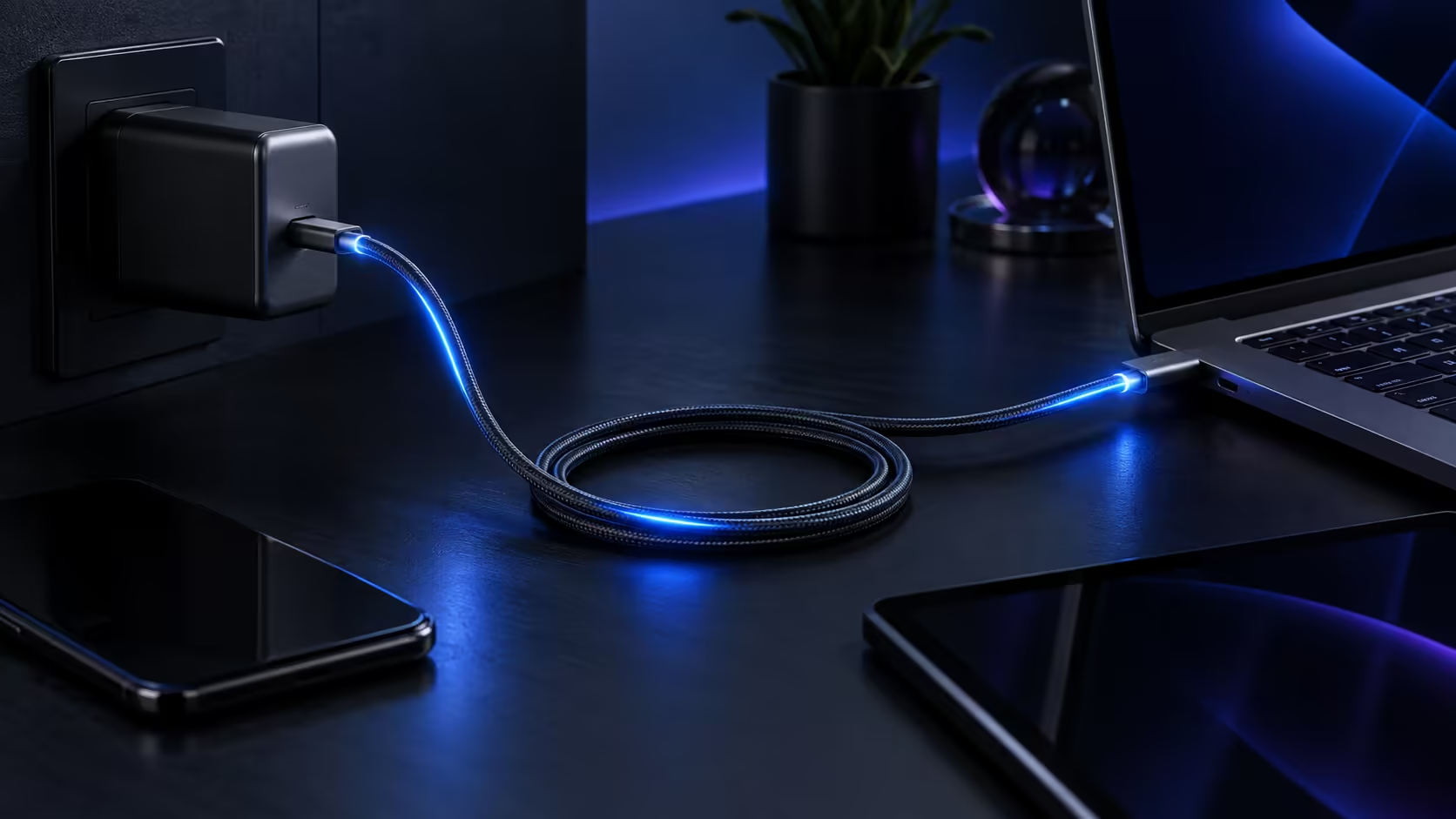
The short answer to what USB-C cable you need for 140W laptop charging comes down to a single chip most buyers never think to check, sitting quietly inside the connector rather than anywhere visible on the outside.
Quick Answer
You need a 5A e-marked USB-C to USB-C cable carrying USB-IF certification, and nothing less will do it. The Anker 544 meets that at R399 over 1.8m of bio-nylon, and any cable without the chip caps the same charger at 60W.
🔢 The specification that actually matters
A 5A rating, the kind found in the comprehensive cable range, is the current class that unlocks 140W charging, since power is current multiplied by voltage, and 20V at 5A is exactly where the 140W figure comes from. USB-IF certification confirms an independent test house verified that rating against the cable's actual build, closing the gap an uncertified cable can otherwise exploit by printing a wattage figure the wiring does not actually support.
🔌 Why a lower-rated cable caps everything below 140W
Any cable missing that correct 5A e-marker chip settles for 3A instead, and 3A at 20V is exactly where 60W comes from, a ceiling that holds firm no matter how capable your charger and laptop both individually are. That is why swapping in a genuinely powerful charger while leaving the wrong cable in place solves nothing, since the bottleneck was never the charger to begin with.
🧵 What the Anker 544 adds beyond the bare minimum
Beyond meeting the 5A and certification requirements, the Anker 544 runs 1.8m of bio-nylon braid at R399, rated for 30,000 bends, which addresses durability for a cable that gets handled or moved regularly rather than left permanently plugged in. None of this changes the core requirement though: the 5A rating and certification are what unlock 140W in the first place, and everything else is a bonus on top of that baseline. Check your own charger rating, and if the machine itself is still an open question, the Intel Core Ultra 7 laptop range sits comfortably within what this cable is built to handle.
Frequently Asked Questions
Is USB-IF certification separate from the 5A rating?
Yes. The 5A rating describes what the cable is built to carry, while certification confirms an independent test house verified that claim against the actual product.
Does a 1.8m cable lose any charging speed compared with a shorter one?
No, provided both meet the same 5A rating. Length within normal ranges does not affect charging speed on a properly built cable.
Can I identify a 5A cable just by looking at the connector?
Not reliably. Some manufacturers print the rating on the connector housing, but checking the packaging or product description remains the more dependable method.
Will any 140W charger work with a certified 5A cable?
Yes, provided the laptop itself also supports that charging wattage, since all three components, charger, cable and laptop, need to align for the full speed to be reached.
Ready to buy the cable that actually unlocks 140W?
Check for the 5A rating and USB-IF certification specifically, not just a wattage number.