The best-value ergonomic office chair features are the ones that solve a repeatable fit or task problem for the fewest Rand. Advanced movement, structural material and price should occupy separate columns so one impressive detail does not decide the purchase.
Quick Answer
At R9,599, the E3 Ultra's best-value features are measurable lumbar movement, adjustable seat depth, five-way arms, a ranged headrest and four-level recline.
Prioritise essential fit, then value lumbar range, arm positioning, head support and recline according to how often they help. Construction matters but cannot replace capacity information. At R9,599, the HBADA E3 Ultra offers a broad adjustment package that should be tested against these practical outcomes.
🎯 Connect each feature to a task
Write one job beside every requested control. Lower-back adjustment may serve different working postures; armrests may help typing and pointer work; a headrest may support certain reclined tasks. Remove any feature that has no defined use.
This prevents feature count from becoming value. A simpler chair that fits every essential task can be the better purchase.
🎚️ Assess support range in practice
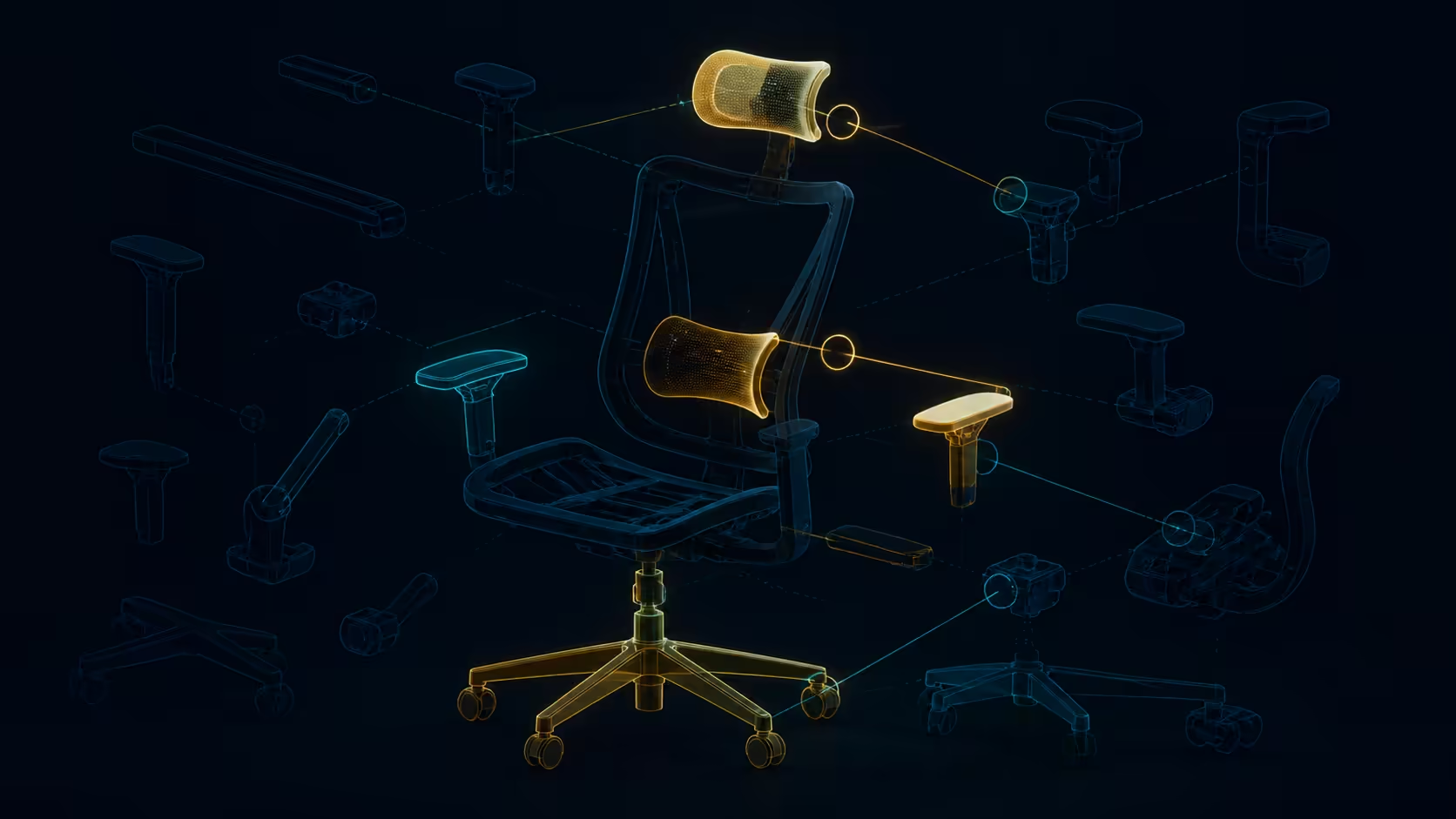
The E3 Ultra carries 8D adjustable lumbar support. Its armrests provide omni movement described by a 720-degree range. Test these controls separately with relaxed shoulders and the torso naturally against the backrest.
Compare alternatives through Evetech's HBADA office-chair selection. Reward clear operation, useful positions and easy restoration rather than maximum theoretical travel.
🧭 Price head support and recline
HBADA uses a biaxial 4D headrest with 70 degrees of rotation and tilt. It adds value when contact supports a natural gaze after the screen is positioned. More movement cannot guarantee comfort.
The backrest reclines as far as 140 degrees. Include only task-appropriate angles that fit the room and workstation, not the maximum merely because it exists.
🧱 Treat construction as one input
Aluminium alloy is used for the support bar and across the five-star base. Record that accurately, but seek a separate load rating and dimensions before judging suitability. Material alone does not prove longevity or stability.
Use Evetech's office chairs department to compare complete packages around R9,599. Best value means required fit plus frequently used adjustment at a defensible price, not the lowest Rand total.
Estimate feature frequency over an ordinary month. A control used each morning or between regular users deserves more weight than movement explored once after assembly. This converts "advanced" into a measurable contribution to the work routine.
Note whether the benefit belongs to one task or several. A specialised position can still justify value, but its limited use should be visible beside more frequent adjustments.
Add reset time and control confidence to the Rand table. Wide adjustment can lose value when users cannot restore a position or fear moving the mechanism. A smaller, well-understood range may provide the stronger everyday result for that household.
Recheck the ranking after the chair has served each recurring task. A feature score based on one typing trial may overvalue arm support and miss head or recline needs that appear during reading.
Capacity and dimensions remain gates, not bonus points. An advanced model that lacks a suitable fit should leave the shortlist before its control package is priced.
Keep personal preference visible without turning it into a universal claim. Two users can assign different value to the same range while both observations remain valid for their routines.
Mesh airflow and an aluminium base add material value, while gravity sensing adapts movement. Rank each by weekly use, giving fit-critical adjustments more weight than a maximum angle visited only occasionally.
The three-zone lumbar system supplies especially strong value when fixed support has failed to fit.
Frequently Asked Questions
What makes one chair feature more valuable than another?
The feature solving the user's most frequent, clearly defined fit problem creates the most value. There is no universal winning control.
How can 8D lumbar support be valued?
Test whether its usable settings improve lower-back contact and can be repeated. Ignore the dimension count if the range does not suit the user.
When do omni armrests add value?
They add value when separate task positions support the forearms, relax the shoulders and clear the desk without pushing the chair away.
What does the headrest contribute?
The E3 Ultra's biaxial head support is 4D with 70-degree rotation and tilt. Its contribution depends on natural contact in intended tasks.
How should aluminium construction be judged?
Record the alloy base and support bar as material details. Evaluate capacity, geometry, floor interaction and fit through their own evidence.
What price connects these adjustments?
The white HBADA E3 Ultra costs R9,599. Compare its complete usable package with alternatives meeting the same measurements and tasks.
Ready to rank ergonomic features by real Rand value?
Explore Evetech office seating after matching every control to a recurring task and separating construction from capacity.