Staring at a loading bar while your 50-layer Photoshop file grinds to a halt… we’ve all been there. For South African graphic designers, your laptop’s storage isn’t just a place to save files; it’s the engine room for your creativity. The wrong drive can bottleneck your entire workflow, costing you time and inspiration. Choosing the best laptop storage for graphic design is one of the most crucial decisions you'll make for your career. Let's get it right. 🚀
Why Your Laptop Storage is a Creative Superpower
Think of your laptop's storage drive as its short-term memory and filing cabinet combined. It's where your operating system lives, your Adobe Creative Suite launches from, and where that massive client project gets saved. A slow drive means slow everything.
When you're working with high-resolution images, complex vector illustrations, or multi-page InDesign documents, your laptop is constantly reading and writing data. The speed of this process directly impacts:
- Application Launch Times: How quickly Photoshop or Illustrator opens.
- File Operations: Saving, opening, and exporting large files.
- Scratch Disk Performance: Apps like Photoshop use free storage space as temporary "scratch" memory. A faster drive makes this process seamless.
- Overall System Responsiveness: A zippy drive makes the entire laptop feel faster and more fluid.
For designers, the difference between a good and a bad storage solution is the difference between flow state and pure frustration.
SSD vs. HDD: The Non-Negotiable Choice
Let's cut to the chase: if you're a professional designer in 2024, you need a Solid-State Drive (SSD). The old-school Hard Disk Drives (HDDs) with their spinning platters are simply too slow for a modern creative workflow.
An SSD has no moving parts. It uses flash memory, making it exponentially faster, more durable, and quieter than an HDD. Imagine fetching a file from an HDD is like a librarian having to walk through aisles to find a specific book. An SSD is like having that book instantly appear in your hands. This speed is essential, which is why you'll find top-tier SSDs in most high-performance gaming laptops—machines built for demanding tasks. ✨
Choosing the Right SSD for Your Design Workflow
Okay, so SSD is the answer. But not all SSDs are created equal. The best laptop storage for graphic design depends on two key factors: the type of connection and the capacity.
NVMe: The Gold Standard for Speed
Within the world of SSDs, you'll mainly see two types: SATA and NVMe.
- SATA SSDs: These are a huge leap from HDDs and are perfectly fine for general use.
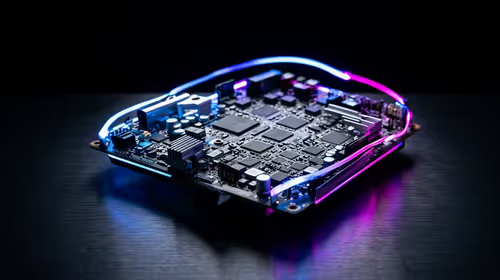
- NVMe SSDs: These plug directly into the motherboard (via a PCIe slot) and offer mind-blowing read/write speeds, often 5-7 times faster than their SATA counterparts.
For a graphic designer, an NVMe SSD is the ultimate choice. It means your apps load in a blink, and saving that 2GB PSB file takes seconds, not minutes. Most modern powerful AMD laptops are equipped with NVMe slots, unlocking this incredible performance.
Archive Smartly 🗄️
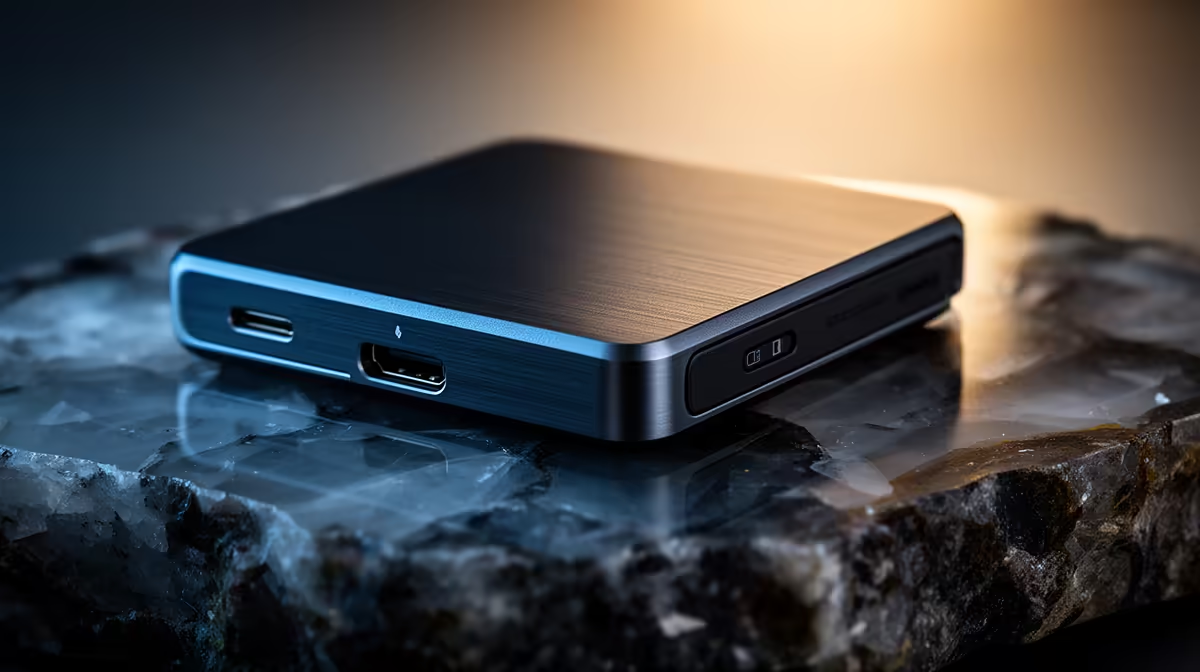
Your laptop's internal NVMe SSD should be for your OS, applications, and current projects only. Don't clog it up with old work! Invest in a large, affordable external HDD or a NAS (Network Attached Storage) to archive completed projects. This keeps your primary drive lean, fast, and organised.
How Much Space Do You Really Need?
Capacity is the next big question. It’s tempting to go small to save a few Rand, but this can backfire quickly. Here's a quick guide for designers:
- 512GB: The bare minimum. It will work, but you'll constantly be managing space, especially after installing the full Adobe suite and a few other key apps.
- 1TB (Terabyte): This is the sweet spot. It provides ample room for your OS, all your creative applications, and multiple large projects without you having to stress about free space. Many Intel-powered machines come with a 1TB NVMe SSD as a standard, high-performance option.
- 2TB or more: If you also dabble in video editing, 3D rendering, or simply want peace of mind for years to come, a 2TB drive is a worthy investment.
Ultimately, the best laptop storage for graphic design in South Africa is an NVMe SSD with at least 1TB of space. It’s an investment that pays you back every single day with a faster, smoother, and more enjoyable creative process.
Ready to Speed Up Your Workflow? The right storage isn't just a component; it's a creative unlock. Stop waiting and start creating. Explore our massive range of laptop specials and find the perfect machine with the storage you need to bring your vision to life.