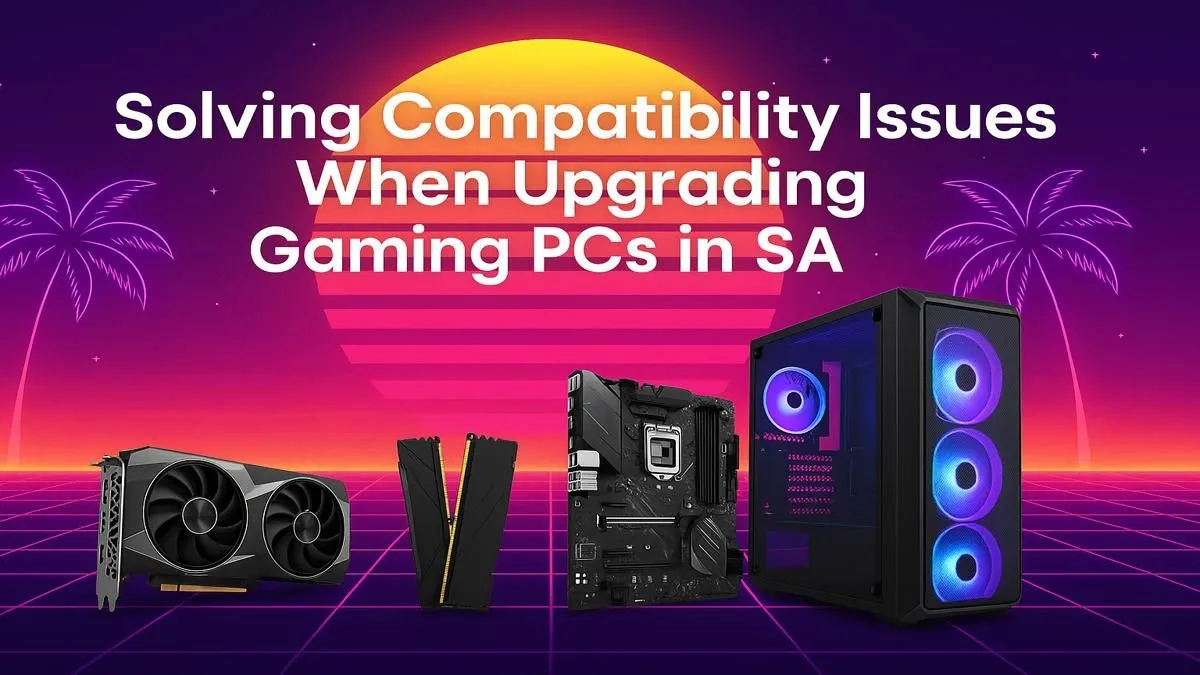
You’ve got the box. Inside is that beastly new graphics card or a lightning-fast CPU you’ve been saving for. The excitement is real. But then a cold thought hits you… will it actually work with your current setup? For South African gamers, a proper PC upgrade compatibility check isn’t just a good idea; it’s the essential step that saves you from costly returns and frustrating downtime. Let’s make sure your next upgrade is a victory. 🚀
Why a PC Upgrade Compatibility Check is Non-Negotiable
Think of your PC not as a collection of parts, but as a team. For the team to win, every player needs to communicate perfectly. If your new CPU can't talk to your motherboard, or your power supply can't handle the new GPU, your game is over before it begins.
A thorough compatibility check prevents the most common upgrade disasters in South Africa:
- The Socket Mismatch: Buying a CPU that physically doesn't fit your motherboard.
- The Power Shortage: Installing a power-hungry GPU that your PSU can't support, leading to crashes.
- The RAM Roadblock: Getting DDR5 RAM for a motherboard that only accepts DDR4.
- The "It Won't Fit" Fiasco: Realising your new graphics card is too long for your PC case.
Taking ten minutes to check these things ensures your investment pays off in frames-per-second, not frustration.
The Heart of Your Rig: CPU, Motherboard & RAM Compatibility
Getting this trio right is the foundation of any successful PC upgrade. They are deeply interconnected, and a mismatch here is often the hardest to fix.
CPU and Motherboard: The Perfect Pair
This is the most critical relationship in your build. The motherboard's "socket" is the physical mount for the processor. They must match. For example, modern Intel CPUs often use the LGA 1700 socket, while AMD's latest processors use the AM5 socket. They are not interchangeable.
Before you even think about performance, your first step in a PC upgrade compatibility check is confirming the socket type of your motherboard and matching it to any potential new CPU processors you're eyeing. You can usually find your motherboard's model number printed directly on the board itself. A quick Google search of that model will tell you its socket type and supported CPU list.
RAM: Mind the Generation Gap
Memory compatibility is simpler but just as crucial. The main thing to check is the DDR generation. Most modern motherboards support either DDR4 or DDR5—not both. The modules are physically different and will not fit in the wrong slot. Check your motherboard’s specifications to see which generation it uses before buying a new RAM kit.
Quick Compatibility Check Tool 🔧
Before you buy, pop your current and desired components into a tool like PCPartPicker. It’s a fantastic first-pass to flag major incompatibilities, like CPU sockets or RAM types. However, always double-check the physical dimensions of your case and the new component on the official manufacturer's website. A few extra minutes of checking can save you weeks of hassle!
Will It Fit? Power Supply and Case Considerations
Once the core components are sorted, you need to ensure you have the space and power to run them. This is where many gamers get caught out after buying a shiny new GPU.
Power Supply Unit (PSU) Check
That powerful new graphics card needs a lot of juice. Check the recommended PSU wattage on the GPU’s product page (e.g., "750W recommended"). Your PSU must meet or exceed this. Also, check for the correct power connectors. Newer high-end cards might require a specific 16-pin (12VHPWR) connector, which older PSUs may not have without an adapter. A reliable power supply is the unsung hero of a stable gaming rig. ✨
Physical Case Clearance
This is the final physical check. Get out a measuring tape! Check your case's specifications for "maximum GPU length" and "CPU cooler height clearance." Compare these numbers to the dimensions of the new components you want to buy. There’s nothing more heartbreaking than an expensive new part that’s just 5mm too long to fit.
Simplifying Your Upgrade with Barebone Kits
Feeling a bit overwhelmed? There's an easier way. If you're planning a major overhaul of your core components, a barebone kit is an excellent shortcut that removes the compatibility guesswork.
A barebone kit typically includes the case, motherboard, and power supply, all pre-selected for guaranteed compatibility. You just add your CPU, RAM, storage, and graphics card. This approach provides a solid, reliable foundation, letting you focus on the fun parts. It's a popular choice for builders who want a head start. For example, you can build your system around a solid foundation with pre-vetted Intel barebone kits that ensure your core components work together seamlessly from day one.
Similarly, if you're on Team Red, a selection of AMD barebone kits can give you that same peace of mind, built around the powerful Ryzen architecture. This path makes the PC upgrade compatibility check process incredibly simple.
Performing a careful component check is the mark of a smart PC builder. It’s the difference between a smooth, successful upgrade and a box of expensive, incompatible parts. Take your time, do the research, and get ready to enjoy your new-and-improved gaming rig.
Ready to Upgrade with Confidence? The PC upgrade journey can seem tricky, but getting the compatibility right is the key to unlocking next-level performance. Don't guess... get the right gear from the start. Explore our massive range of PC components and find the perfect parts to conquer your world.