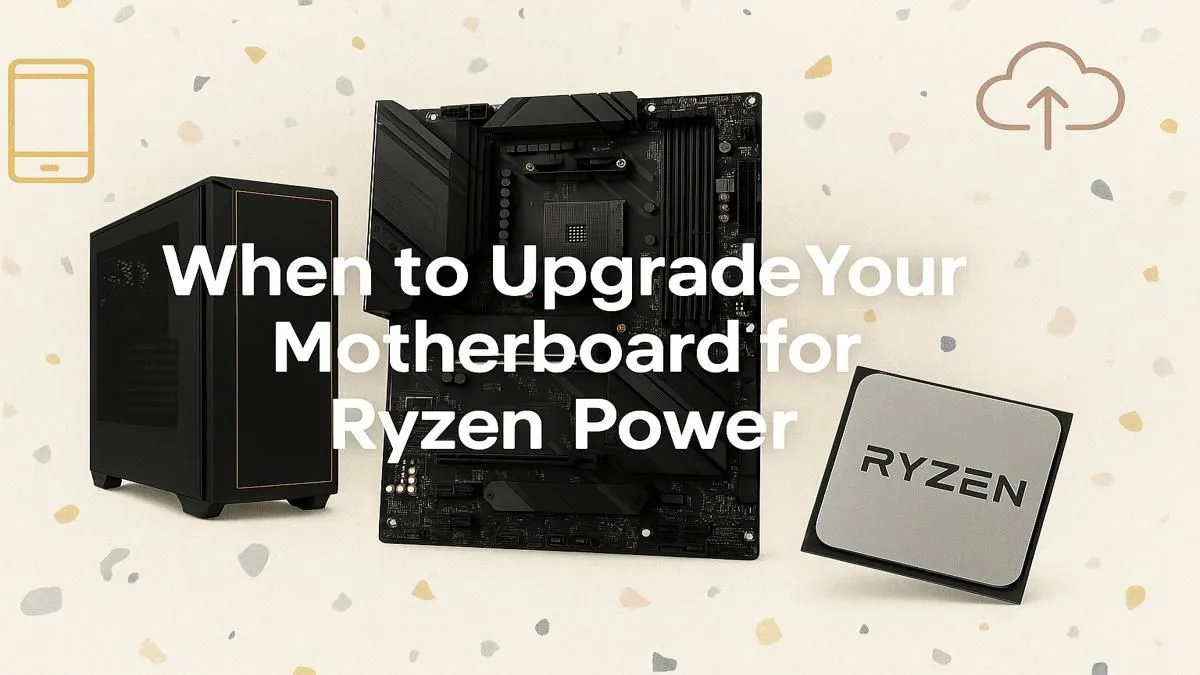
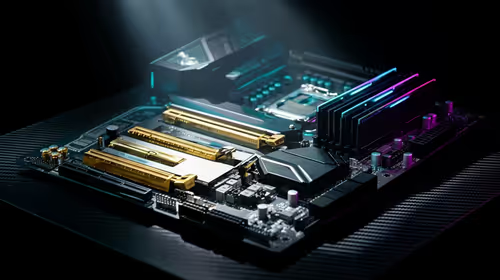
So, you’ve just dropped some hard-earned ZAR on a shiny new AMD Ryzen CPU. You slot it in, fire up your rig, and... the performance leap feels more like a small hop. What gives? Before you blame the silicon, look at its home. Your motherboard is the central nervous system of your PC, and an outdated one can seriously bottleneck your powerful new processor. Knowing when to upgrade your motherboard is key to unlocking that performance you paid for.
Is Your Socket Holding You Back?
The most straightforward reason for a motherboard upgrade is a change in the CPU socket. For years, AMD’s AM4 socket was the trusty home for generations of Ryzen CPUs. But with the launch of the Ryzen 7000 series and beyond, AMD introduced the new AM5 socket. 🚀
This isn't just a minor change; they are physically incompatible. If you're moving from a Ryzen 5 5600X to a Ryzen 7 9700X, for example, a new motherboard is not optional... it's essential. This generational leap is what enables game-changing technologies like DDR5 memory and PCIe 5.0, which simply aren't possible on the older platform. It’s the perfect time to explore the full range of modern AMD motherboards to see what the new platform offers.
Chasing Speed: The PCIe 5.0 Difference
Think of PCIe (Peripheral Component Interconnect Express) as the multi-lane highway connecting your graphics card and SSD to your CPU. The higher the version number, the more lanes and the faster the traffic can move.
Many older-generation boards, even excellent ones like the still-capable AMD B550 motherboards, are typically limited to PCIe 4.0. While fast, it offers half the bandwidth of PCIe 5.0. For today's top-tier GPUs and blisteringly fast NVMe SSDs, a PCIe 5.0 slot ensures you're not leaving performance on the table. If your goal is unlocking full Ryzen power for high-framerate 4K gaming or rapid video rendering, a motherboard with PCIe 5.0 support is a critical piece of the puzzle.
Compatibility Check 🔧
Before buying any new component, use a tool like PCPartPicker to check for compatibility issues. It can save you a massive headache by flagging potential conflicts between your new motherboard, CPU, RAM, and even your PC case size. Cross-reference with the official specs on Evetech's product pages for peace of mind.
More Than Just a CPU Socket: Future-Proof Features
The decision on when to upgrade your motherboard often comes down to the features that create a better overall experience. Modern motherboards are packed with tech that older boards simply lack.
Key Features to Consider:
- DDR5 Memory: Exclusive to the AM5 platform, DDR5 offers higher speeds and greater bandwidth than DDR4, feeding your Ryzen CPU data faster than ever.
- Enhanced Power Delivery: High-end Ryzen CPUs can be thirsty for power. Newer boards, especially the next-gen AMD B850 motherboards, feature more robust VRMs (Voltage Regulator Modules) to deliver clean, stable power for maximum performance and overclocking potential.
- Next-Gen Connectivity: Are you tired of slow file transfers or laggy Wi-Fi? A new motherboard can give you access to USB4 ports, 2.5Gbps (or faster) Ethernet, and Wi-Fi 7 for a truly modern, high-speed setup. For those who demand the absolute best without compromise, the top-tier AMD X870 motherboards represent the pinnacle of connectivity and features. ✨
The Verdict: When Should You Upgrade Your Motherboard?
Ultimately, the motherboard upgrade decision rests on your specific needs. It's not just about chasing the latest tech, but about building a balanced system where every component can perform at its peak.
Ask yourself these questions:
- Am I moving to a CPU with a new socket (like AM5)? If yes, an upgrade is mandatory.
- Is my new graphics card or SSD a PCIe 5.0 device? If yes, a new board will unleash its full speed.
- Do I need faster connectivity like Wi-Fi 7, DDR5 memory, or USB4? If yes, it's time to upgrade.
If you answered yes to any of these, your current motherboard is likely the bottleneck preventing you from enjoying your PC's true potential.
Ready to Unleash Your Ryzen's True Potential?
A motherboard upgrade is the key to a balanced, powerful rig that crushes games and smashes workloads. Explore our massive range of AMD motherboards and find the perfect foundation for your next build.