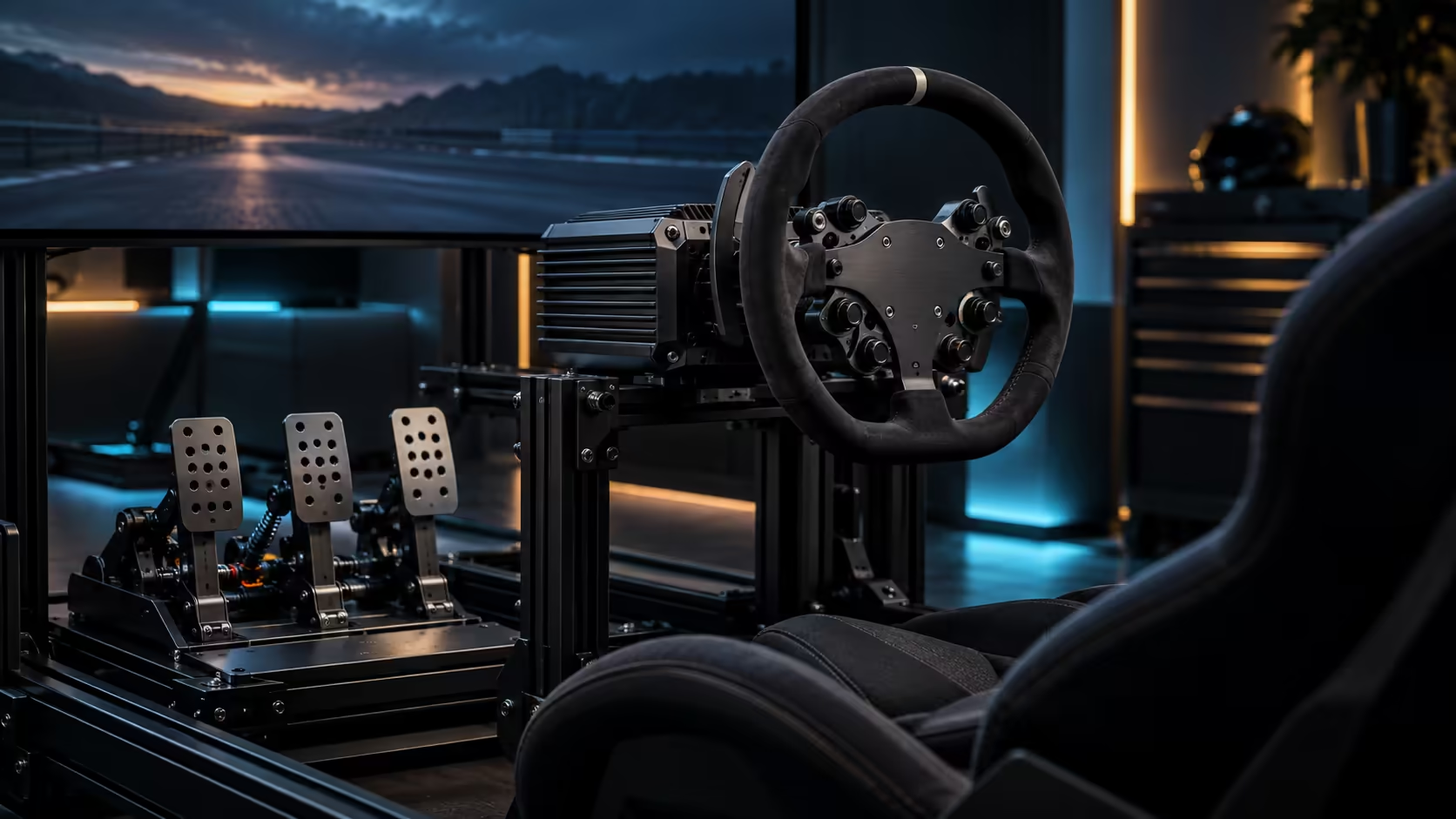
Thirty-five sounds like a marketing number until you realise most of it exists to solve one narrow problem: your body is not the same shape as anyone else's, and a pedal set with only two or three fixed positions is gambling that one of them happens to match you. 35 pedal adjustments on the P700 set inside the R14,999 bundle work because they cover the actual variables that make a driving position comfortable, not because more numbers are automatically better.
Quick Answer
Yes, but the value comes from covering the right variables rather than from the raw count. The 35 points on the P700 pedals in the R14,999 bundle split across plate height, angle, spacing and brake resistance, and having that many options means finding your own comfortable, repeatable position is a matter of iteration rather than compromise.
📊 What 35 points actually breaks down into
Adjustment on a pedal set generally falls into a handful of real categories, and a large adjustment count usually means finer granularity within each rather than an entirely new category being covered. Plate height changes the vertical position of where your foot rests, which directly affects the angle your ankle works at through a full press. Plate angle adjusts the tilt of the pedal face itself, letting your foot sit naturally rather than at a forced angle. Spacing sets how far apart the brake and throttle sit, matching the natural width your foot moves between them. Resistance and travel settings, meanwhile, decide the physical firmness of the press itself, entirely separate from whatever the sensor underneath ends up recording.
Having 8 or 9 fine-grained options within each category, rather than two or three coarse positions, is what lets a driver land on a genuinely comfortable setting rather than the closest available compromise to one, since a single missed step on a coarse pedal set can be the difference between a natural ankle angle and one that aches by the end of a session.
🔍 Why fine adjustment matters more than it sounds like it should
Just 2 or 3mm of plate height difference changes your ankle angle by a small amount that feels trivial in isolation but compounds heavily over a long session. A position that is very slightly wrong produces low-level discomfort that builds gradually rather than announcing itself immediately, which is exactly the kind of problem fine adjustment is suited to solving and coarse, fixed positions are not.
This matters even more with a load cell brake specifically, since the sensor reads whatever force actually reaches it, and a slightly wrong ankle angle changes how consistently that force is applied even when your leg effort feels identical from one press to the next. Getting the geometry close through fine adjustment is part of what makes a load cell's accuracy actually show up in your braking.
🧪 A practical way to actually use that many options
Do not try every combination at once. Start by setting plate height alone, driving a handful of laps, and only moving to the next variable once height feels settled. Adjusting several settings simultaneously makes it impossible to know which change actually improved things and which one you are still fighting against.
Keep a rough note of settings that felt right, whether on paper or in a phone photo of the pedal set, particularly if more than one person shares the rig. A pedal set with this many adjustment points is only worth the flexibility if you can return to a good setting quickly rather than rediscovering it from scratch every session.
🪑 What adjustment cannot fix on its own
Pedal geometry only solves problems that live in the pedal itself. If your seat sits at the wrong height or slides during a hard brake, no amount of plate adjustment fully compensates, since the relationship between your hip, knee and foot changes the moment the seat moves. A fixed simulator chair that holds its position through a race is what lets the position you carefully built with 35 adjustment points actually stay built. The racing simulation and simulation accessories ranges cover both the pedal sets and the mounting hardware that keeps everything, seat included, from drifting mid-session.
Frequently Asked Questions
Is more adjustment always better on a pedal set?
Only if it covers useful variables. A pedal set with 35 fine-grained points across height, angle, spacing and resistance is more useful than one with many redundant options in a single category.
How should I approach adjusting that many settings?
One variable at a time, testing with a few laps between each change. Adjusting several settings together makes it impossible to know which change actually helped.
Can pedal adjustment fix a seat that moves during braking?
No. A pedal set can only solve problems within its own geometry. A seat that slides under load changes the relationship between your body and the pedals regardless of how well the plate is set.
Ready to find your own position instead of settling for a fixed one?
Adjust one setting at a time on the Racing Simulation shelf's load cell pedal sets and note what works.