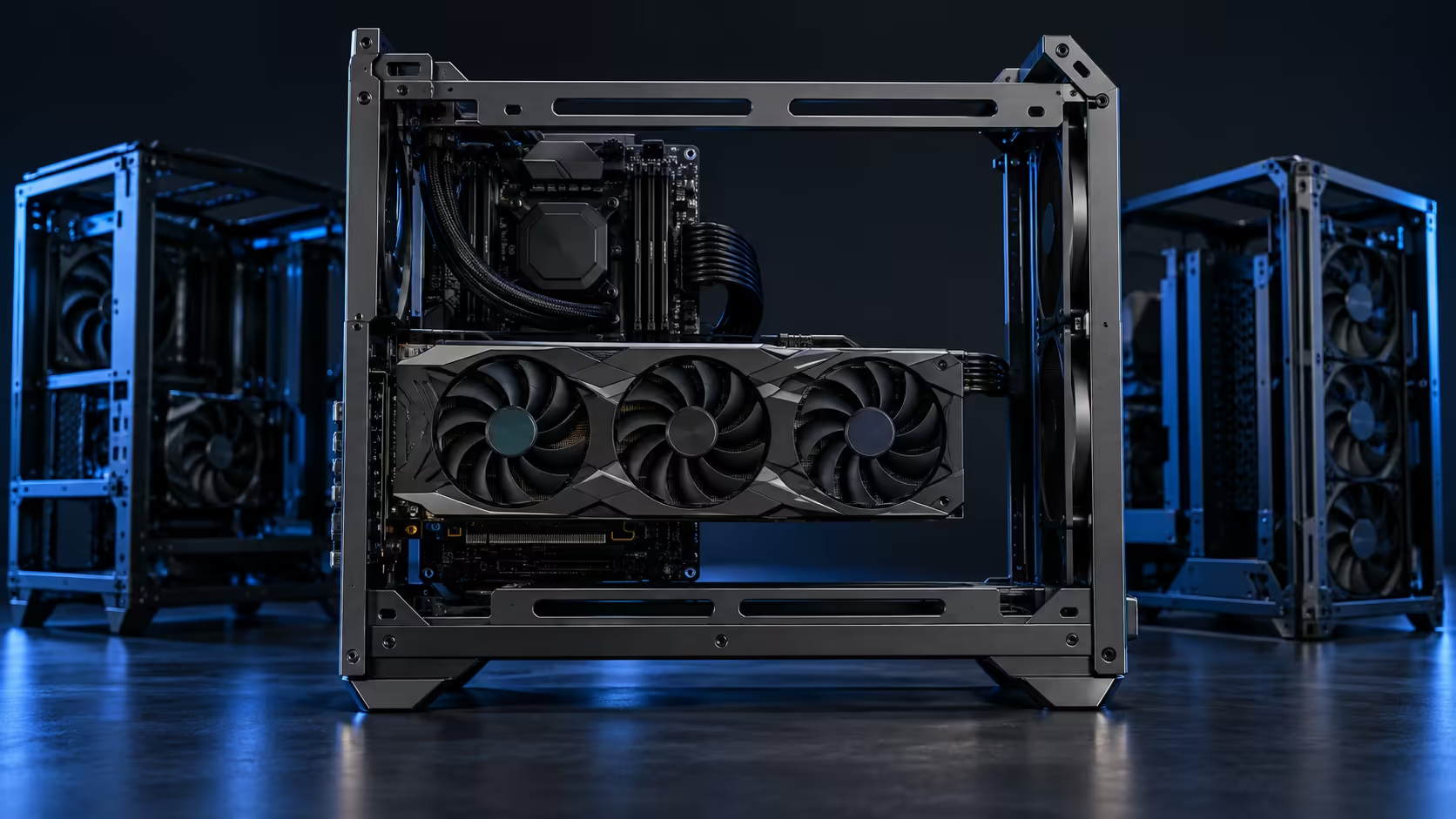
Graphics cards have grown steadily longer with every generation that pushes more power through a bigger cooler, and a case bought three years ago is not automatically ready for what ships today. A 368mm GPU clearance figure exists specifically because the cards that need it did not exist when a lot of mid-towers on the market were designed.
Quick Answer
368mm covers nearly every flagship and high-end card currently sold, including triple-fan coolers with the power connector attached, and it leaves margin most older cases never had to plan for. The ROG GR20 Edition 20 quotes exactly that figure and costs R15,999. Buy to that number rather than to the case size you owned last time, because the cards driving the requirement have changed generation since then.
📈 Why card length keeps growing
A graphics card's length is mostly a function of its cooler, not its circuit board, and coolers have grown because the chips underneath them are dissipating more heat generation over generation. A larger cooler with more heatpipe surface and bigger fans needs more physical length to fit, and manufacturers have consistently chosen more cooling capacity over a smaller footprint.
The result is that a case considered generous five years ago can be genuinely tight today. A card that once measured around 280mm to 300mm at the high end now regularly reaches 330mm to 360mm in the same performance tier, and the flagship cards at the very top of a generation are where 368mm stops being a comfortable margin and starts being the actual requirement.
📏 What 368mm covers, specifically
At 368mm, a case clears the vast majority of triple-fan flagship and near-flagship cards on the market today, measured with a standard power connector attached rather than a right-angle adapter that changes the figure. This is not a number chosen to sound impressive; it maps to what current top-tier hardware actually needs, with a small margin left for cable clearance.
The exception worth knowing about is a right-angle power adapter or an unusually long factory cable connector, either of which can add meaningful length past what the card's own spec sheet quotes. If you are buying a card near the clearance ceiling, measure with the exact connector you intend to use, not the card alone.
🏠 Case size and card size are two separate decisions
A common assumption is that a bigger case automatically means more GPU clearance, and that is often wrong. A full-tower case is taller and offers more drive bays and radiator positions than a mid-tower, but the horizontal clearance for a graphics card is set by the distance between the front panel or fan mounts and the rear I/O, which does not automatically grow with overall case height.
Some full-tower cases genuinely offer more GPU clearance than a comparable mid-tower, and some do not, because that extra internal volume goes toward more drive bays or a taller radiator mount instead. Check the graphics card clearance figure specifically rather than assuming a larger case category solves the problem by default.
🔧 Buying for the upgrade after this one
Cases last longer than graphics cards in most builds, and buying clearance for today's card alone is a common way to end up needing a new case at the next upgrade instead of just a new card. If current flagship cards are trending toward 360mm and beyond, buying a case rated for exactly that today leaves no room for the next generation's cooler to grow further, which historically it has, generation after generation.
Buying with margin, the way 368mm does over a typical 330mm to 350mm current flagship, is the more durable choice if you plan to keep the case through at least one more graphics card cycle. Check the current graphics card range against your case's clearance figure whenever you are shopping for either part, since the two decisions are genuinely linked even though they are sold separately.
Frequently Asked Questions
Why has GPU clearance become a bigger concern in recent years?
Cooler size has grown alongside chip power across generations, so cards that once fit comfortably in a standard mid-tower now regularly approach or exceed older clearance figures.
Does 368mm cover every graphics card currently sold?
It covers nearly all current triple-fan flagship and high-end cards measured with a standard connector, though an unusual right-angle adapter can add length worth checking separately.
Is a full-tower case always more generous on GPU clearance?
Not automatically. Extra internal volume in a full-tower often goes toward drive bays or additional radiator mounting rather than horizontal card clearance specifically.
Should I buy clearance for my current card or for future upgrades?
Buying with margin above your current card's length is the more durable choice, since card length has consistently grown generation over generation rather than shrinking.
What should I measure before buying a case for a specific card?
The card's full length with its power connector attached, taken from the manufacturer's listing or measured directly, compared against the case's stated clearance figure.
Ready to buy clearance that outlasts your current card?
Check today's flagship lengths against the case spec before you commit to either purchase.