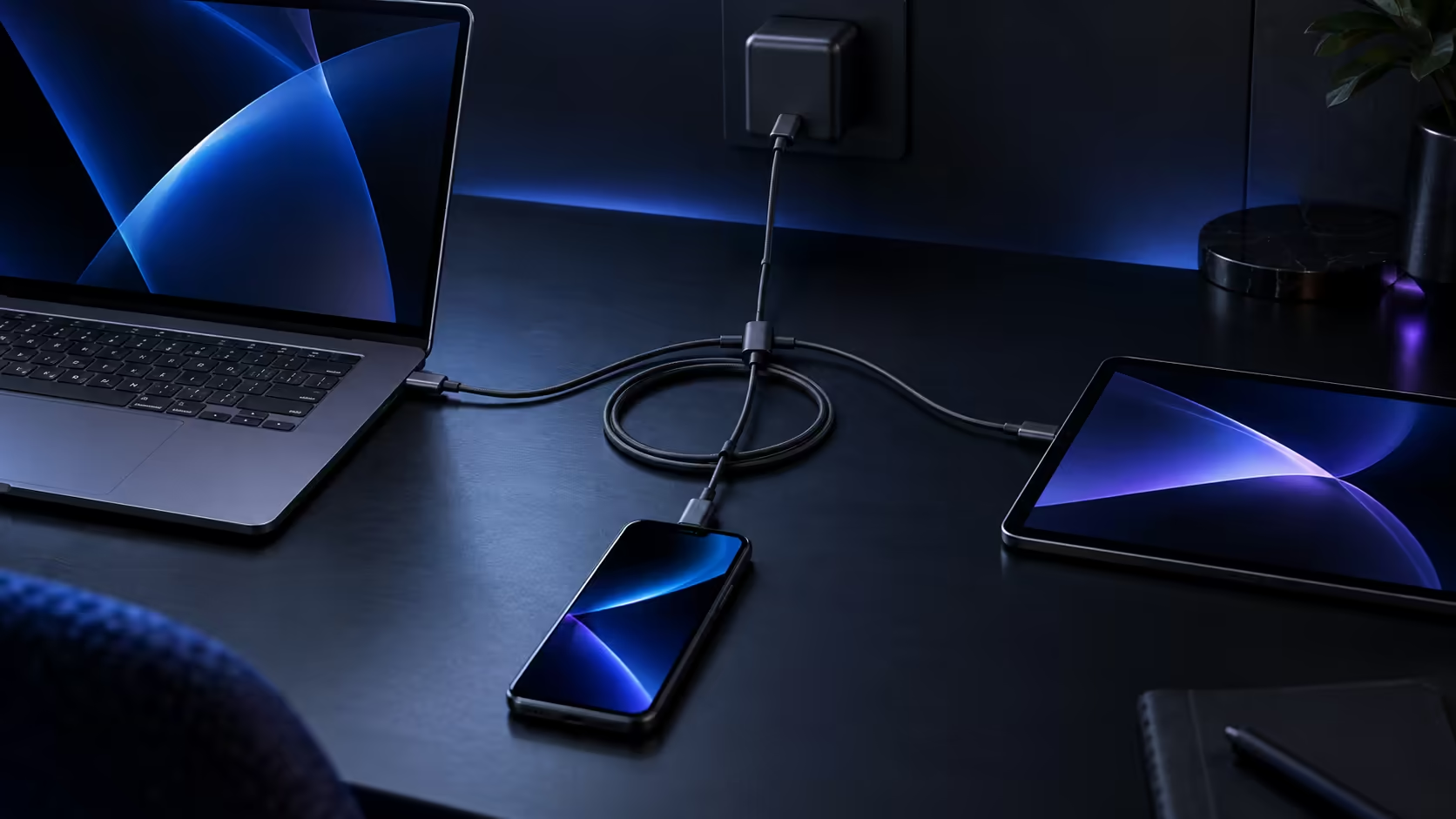
Choosing a USB-C cable for a 16-inch laptop and everything smaller in the house is simpler than it sounds, because buying for the biggest device in the room automatically covers the smaller ones without any extra thought.
Quick Answer
Buy for the laptop and everything smaller follows automatically. A 5A certified cable runs a 16-inch machine at full draw and steps down to a phone without a thought, so the R399 Anker 544 replaces the three cables otherwise sitting in a drawer.
💻 A 16-inch laptop sets the real requirement
A large 16-inch laptop commonly draws anywhere from 96W up to 140W under a full charger, which puts it firmly in the 5A cable class rather than the standard 3A one most phones and tablets get by on. Buying to this figure means the cable's job is settled the moment the biggest device in the house is accounted for, since nothing smaller will ever ask the cable for more than the laptop already does.
🔌 Testing this claim on a real day
Picture a typical evening: a 16-inch laptop plugged in overnight, a phone charging on the nightstand, and a tablet topping up on the kitchen counter, all from identical Anker 544 cables pulled from the same drawer. Nothing about that scenario requires checking labels or remembering which cable goes where, because every single one of them is already rated for whichever device ends up on the other end. That is the entire practical benefit of buying to the top of the range once.
📱 Phones and tablets step down without any setup
USB Power Delivery negotiates the actual power level fresh at every connection, so the same 140W-rated Anker 544 that charges a laptop at full speed steps down automatically to whatever a phone or a tablet actually requests, typically somewhere between 15W and 45W. Nothing needs configuring on the cable itself; the negotiation between charger and device handles the difference every single time.
💡 Why buying for the extreme case is cheaper than it sounds
Buying three separate cables, one matched to a phone, one to a tablet and one to a laptop, usually costs more in total than buying two identical 5A cables, since each purpose-matched cable still needs to be a decent quality product in its own right. Standardising on the higher rating removes that duplication entirely, turning a three-item shopping list into a one-item decision that never needs revisiting when a new device joins the household.
🗄️ Replacing a drawer of mismatched cables
Households commonly end up with a phone cable, a tablet cable and a laptop cable, each bought at a different time and rated differently, which makes it easy to accidentally plug a laptop into a cable that was only ever meant for a phone. Standardising on one 5A-rated cable, such as the Anker 544 in the comprehensive cable range, removes that risk entirely, since the same cable performs correctly regardless of which device ends up on the other end of it. Check your laptop range listing for the specific charging wattage your model needs before confirming the cable covers it.
Frequently Asked Questions
Will a cable rated for a 16-inch laptop damage a phone?
No. The phone only ever requests the power it needs during negotiation, so a higher-rated cable simply has unused headroom rather than sending extra power into the phone.
Do I need a different cable for an older, smaller laptop?
Only if that laptop's own charger sits above what your current cable is rated for. Otherwise, a 5A cable already covers it comfortably alongside larger, more demanding machines sitting in the very same house.
Can one cable really replace three different ones in a household?
Yes, provided it sits in the 5A class, since that rating comfortably spans a phone's light draw right up to a demanding laptop's, with nothing lost in between.
Is it worth buying a cheaper cable for smaller devices specifically?
Not particularly. Standardising on one 5A cable for the whole house means never having to remember which drawer holds the right one for which device, for only a modest difference in price.
Does a laptop ever refuse to charge at all on a lower-rated cable?
Rarely. Most laptops still accept a charge at the reduced rate a 3A cable allows, they simply take longer to reach a full battery than they would on a properly rated one plugged into the same charger.
Is a 5A cable overkill for a household with no laptop at all?
If nothing in the house ever draws more than a phone or tablet's typical charging rate, a 3A cable is genuinely sufficient on its own, though buying to the 5A class anyway future-proofs the household for whenever a laptop eventually joins it.
Ready to replace your mismatched cable drawer with one that works everywhere?
Buy to your biggest device's requirement, and everything smaller follows for free.