Is the summer heat in Jozi or Durban making your gaming rig sweat? You’re not alone. While we're used to battling high temps, the latest PC hardware introduces new challenges. Super-fast DDR5 RAM is incredible, but it runs hotter than ever. Effective DDR5 memory heat management isn’t just for overclockers anymore… it’s essential for anyone in SA who wants stable, top-tier performance without unexpected crashes during a crucial match. Let's get your rig sorted. 🔧
Why DDR5 Memory Heat Management is Crucial
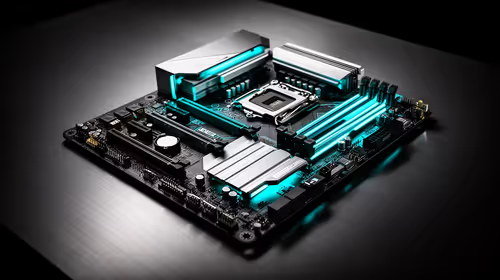
If you've just upgraded, you might be wondering why this is suddenly a hot topic. The answer lies in a tiny component: the Power Management Integrated Circuit (PMIC). Unlike previous-gen DDR4 RAM, where the motherboard handled power delivery, DDR5 modules have their own PMIC right on the stick.
This allows for finer voltage control and higher speeds, but it also concentrates heat in one spot. Without proper cooling, this can lead to thermal throttling, where the RAM slows itself down to prevent damage, causing stuttering, instability, and those dreaded blue screens.
Practical Tips for Keeping Your DDR5 Cool in SA
Excellent DDR5 memory heat management doesn't have to be complicated. A few smart choices can make a massive difference, especially when the ambient temperature is already high.
1. Master Your Case Airflow
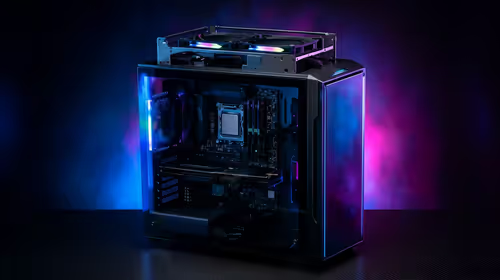
Before you spend a cent, check your fans. Good airflow is your first and most powerful line of defence. Aim for a "positive pressure" setup (more intake fans than exhaust) to push hot air out of every gap and prevent dust buildup. Ensure your intake fans have a clear path to blow cool air directly over your RAM slots. Sometimes, a simple fan adjustment can drop memory temperatures by several degrees.
2. Don't Skimp on Heatspreaders
Those stylish metal covers on your RAM aren't just for looks. A well-designed heatspreader is vital for wicking heat away from the memory chips and the PMIC. While even older memory generations used them, their importance has skyrocketed with DDR5. Look for kits with thick, aluminium heatspreaders that make good contact with the components.
Heatspreader Check 🌡️
When choosing your RAM, look for heatspreaders that aren't just thin, stamped metal. Quality kits often use multiple pieces, thermal pads for full contact with the memory chips, and a design that maximises surface area. This extra engineering makes a real difference in dissipating heat, especially during long gaming sessions on a hot day.
3. Consider Active Cooling for Extreme Setups
For the serious enthusiast pushing high overclocks or living in a particularly warm part of the country, active cooling is the next step. This involves a dedicated fan bracket that mounts directly over your RAM slots. You wouldn't find this on an old 32GB kit of DDR3, but for a high-speed 6000MHz+ DDR5 kit, it can be the key to unlocking maximum stability and performance. ✨
Evolving Your Build Strategy for Modern RAM
Building PCs is a skill that evolves. The strategies that worked five years ago need updating. The cooling requirements for modern components are vastly different from the days when the best memory from brands like Teamgroup was DDR3. Managing DDR5 heat requires a holistic approach, thinking about how every component, from your case fans to your CPU cooler's orientation, affects the air moving over your memory.
Ultimately, a cool system is a stable system. Don't let our South African climate be your PC's bottleneck. By focusing on airflow and quality components, you can build a rig that stays cool under pressure. Ready to upgrade? Start by checking out some of the best high-performance DDR5 memory available in SA.
Ready to Beat the Heat?
Proper DDR5 cooling is key to unlocking next-gen performance, especially in South Africa. Don't let thermal throttling ruin your game. Explore our massive range of PC components and build a rig that stays cool under pressure.