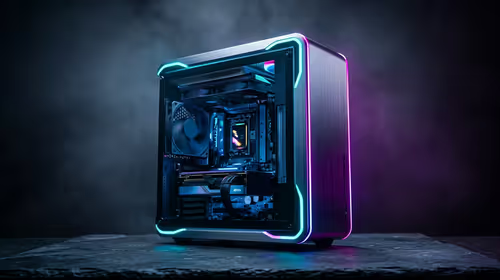
Understanding GPU Clearance and Case Dimensions
You’ve spent weeks researching the perfect upgrade. You finally pull the trigger on a high-end graphics card... only to realise it’s too long for your chassis. It is a heartbreaking moment every South African builder wants to avoid. Ensuring proper GPU Clearance is about more than just fitting the card inside. It is about airflow, cable management, and protecting your investment 🔧.
When browsing our wide selection of computer cases, the first spec you should look for is the maximum GPU length. This is usually measured in millimetres. Modern triple-fan cards can easily exceed 330mm. Always leave a little extra breathing room for your front intake fans. If your case is tight, those fans won't be able to push cool air past the massive heatsink of a modern GPU.
Why Length Isn't the Only Factor
Many builders obsess over length but forget about the width and thickness of the card. High-end GPUs are getting "taller" and "thicker" with every generation. A card that is too wide might press against the side panel... or worse... prevent you from closing it entirely. This is especially true if you are using a vertical mount or a 12VHPWR cable that requires a specific bend radius.
Build Lab Pro Tip ⚡
Always account for your front-mounted radiator. If your case supports a 360mm GPU but you install a 30mm thick radiator with 25mm fans at the front, your actual GPU clearance drops to 305mm. Always subtract the thickness of your cooling hardware from the manufacturer's maximum clearance spec to avoid a tight squeeze.
Premium options like Fractal Design PC cases are famous for their modularity. They often allow you to move drive cages or adjust brackets to create more internal volume. This flexibility is vital when you are trying to optimise airflow in a high-performance gaming rig ✨.
Choosing the Right Chassis for Massive Cards
You don't always need to spend a fortune to get a spacious layout. Many Gamdias gaming cases offer aggressive styling paired with surprisingly open internal chambers. These designs cater specifically to gamers who want to showcase their hardware without feeling cramped.
For those watching their budget after a big GPU purchase, there are several affordable gaming cases under R1500 that still provide enough clearance for mid-to-high-tier cards. Just remember to double-check the "Max GPU Length" on the product page before you checkout. It’s the difference between a seamless build day and a frustrating return process 🚀.
Ready to Find Your Perfect Match? Finding the right balance between size, style, and cooling is the key to a great build. Explore our massive range of computer cases and find the perfect home for your next graphics card upgrade.