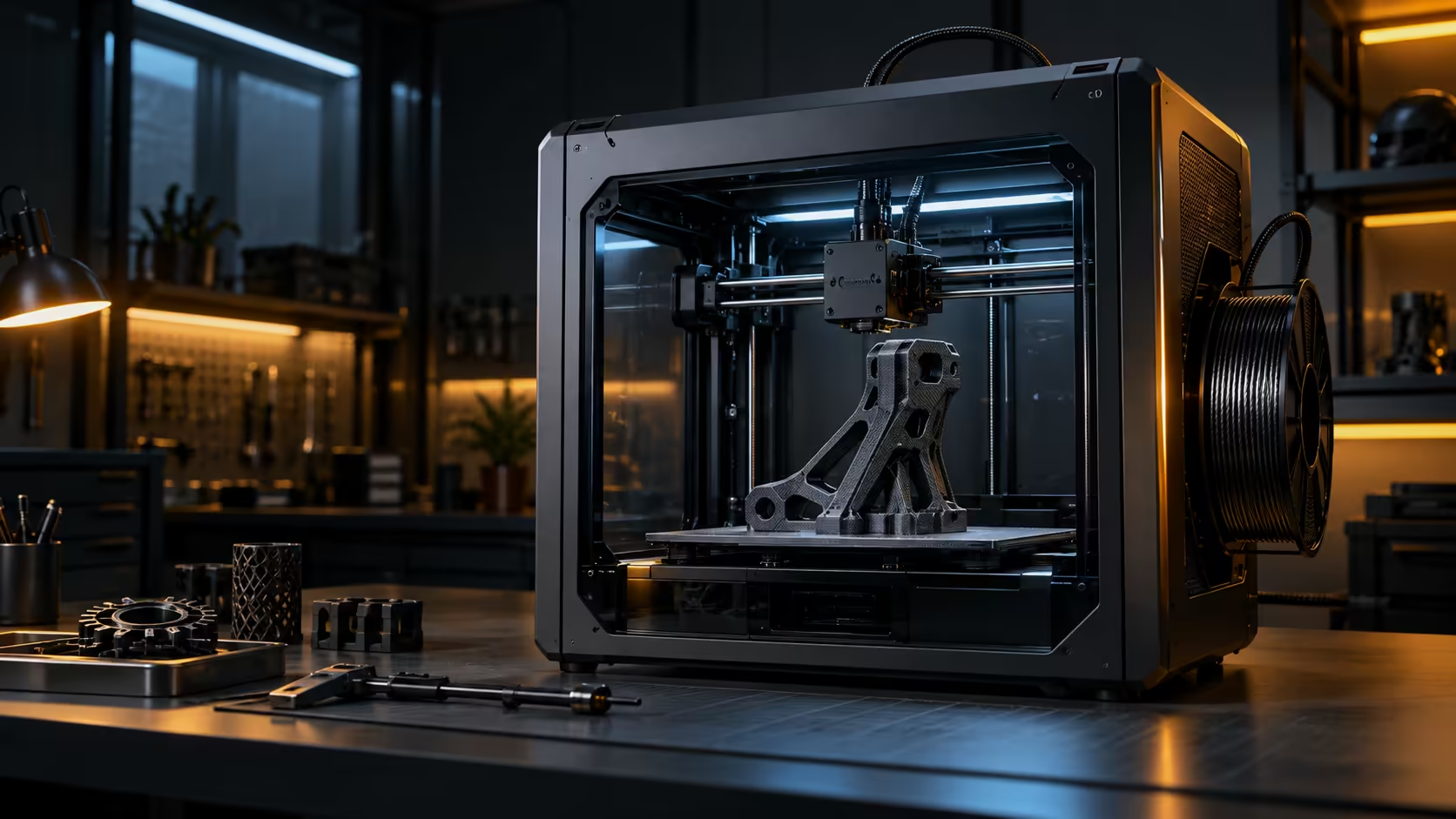
A cheaper printer that genuinely cannot handle carbon fibre and a more expensive one that handles it easily are both, in a real sense, correctly priced, once you know which capability the rand figure is actually buying. How much to spend on a carbon fibre 3D printer in South Africa starts with naming that specific capability rather than shopping by plate size or top speed.
Quick Answer
Carbon-fibre capability, not raw speed, is what actually sets the price floor worth paying attention to, and the Creality K1C reaches that floor at R12,599 with a 300C tri-metal nozzle built for exactly this material. Spending meaningfully less than that amount usually means settling for a soft brass tip that will need early, unwanted replacement, while spending considerably more than that tends to buy extra plate size rather than any genuinely wider material list at all.
🎯 What the floor actually protects you from
A machine priced below what carbon-fibre printing genuinely requires will still technically accept the filament, right up until the abrasive fibre wears a soft nozzle out of shape within a few hundred grams. At that point the choice becomes replacing the nozzle repeatedly, at a small but recurring cost, or giving up on the material entirely, and neither outcome was obvious from the printer's original price tag.
Paying enough to get a properly hardened, adequately hot nozzle from the start avoids that cycle, which is why R12,599 represents a real capability threshold rather than an arbitrary price point.
💰 Where spending more actually goes instead
Once a printer clears the carbon-fibre capability floor, an extra R2,000 to R4,000 of spending tends to buy a bigger build volume, faster top speed, or extra monitoring features rather than a fundamentally wider material list. Those are genuine upgrades worth having depending on your projects, but they are separate purchasing decisions from the material capability question itself.
🧾 Budgeting realistically around that floor
Once the printer itself is settled, budget separately for carbon-fibre filament, which typically costs more per spool than standard PLA, and for a spare hardened nozzle, since even a properly rated one is a wear part on abrasive material over time. Browse filament pricing before committing to a project's material budget, and the best-sellers list is a quick way to see which machines South African buyers keep coming back to at this price point.
📋 A realistic first-year total
Add R12,599 for the printer itself, R2,000 to R3,000 for carbon-fibre filament across a normal first year of genuinely moderate use, and a further R500 to R1,000 for spare nozzles, and the honest total sits considerably closer to R15,000 to R16,500 rather than the headline printer price shown alone on its own. This is not some hidden or unexpected cost, it is simply the full, honest picture that a single sticker price alone never actually shows on its own account. Writing it all down clearly before buying anything, rather than discovering it slowly a single spool at a time, keeps a whole project genuinely on budget from the very first order placed onward.
Compare that realistic total carefully against the 3D printer range as a whole before ever assuming the cheapest listed printer price alone actually represents the genuinely cheapest way to get a working carbon-fibre setup up and running.
Frequently Asked Questions
Is a cheaper printer ever a good choice for carbon-fibre printing?
Only if you plan to replace nozzles frequently and accept that as an ongoing cost; a properly rated hotend from the start avoids that cycle.
Does spending more always mean better carbon-fibre capability?
Not necessarily; extra spending above the capability floor often goes toward speed or build volume rather than a meaningfully wider material list.
How much more does carbon-fibre filament cost compared to standard PLA?
It typically costs noticeably more per spool, so factor that into an ongoing project budget rather than just the printer's purchase price.
Is R12,599 considered a fair price for carbon-fibre capability specifically?
It reflects a machine built around this capability as standard rather than as an add-on, which is a reasonable benchmark when comparing against other options.
What is a realistic first-year total for carbon-fibre printing?
Roughly R15,000 to R16,500 once the printer itself, the filament and spare nozzles are all genuinely counted together properly, rather than just the R12,599 printer price shown on its own in a listing.
Does the printer price alone give a fair picture of the real cost?
No, filament and spare nozzles both add a genuinely meaningful amount over a normal first year of use, so budget carefully for the full picture rather than judging by the sticker price in isolation alone.
Budgeting for your first carbon-fibre capable printer?
Price the capability floor first, then decide what extra speed or volume is actually worth to you.