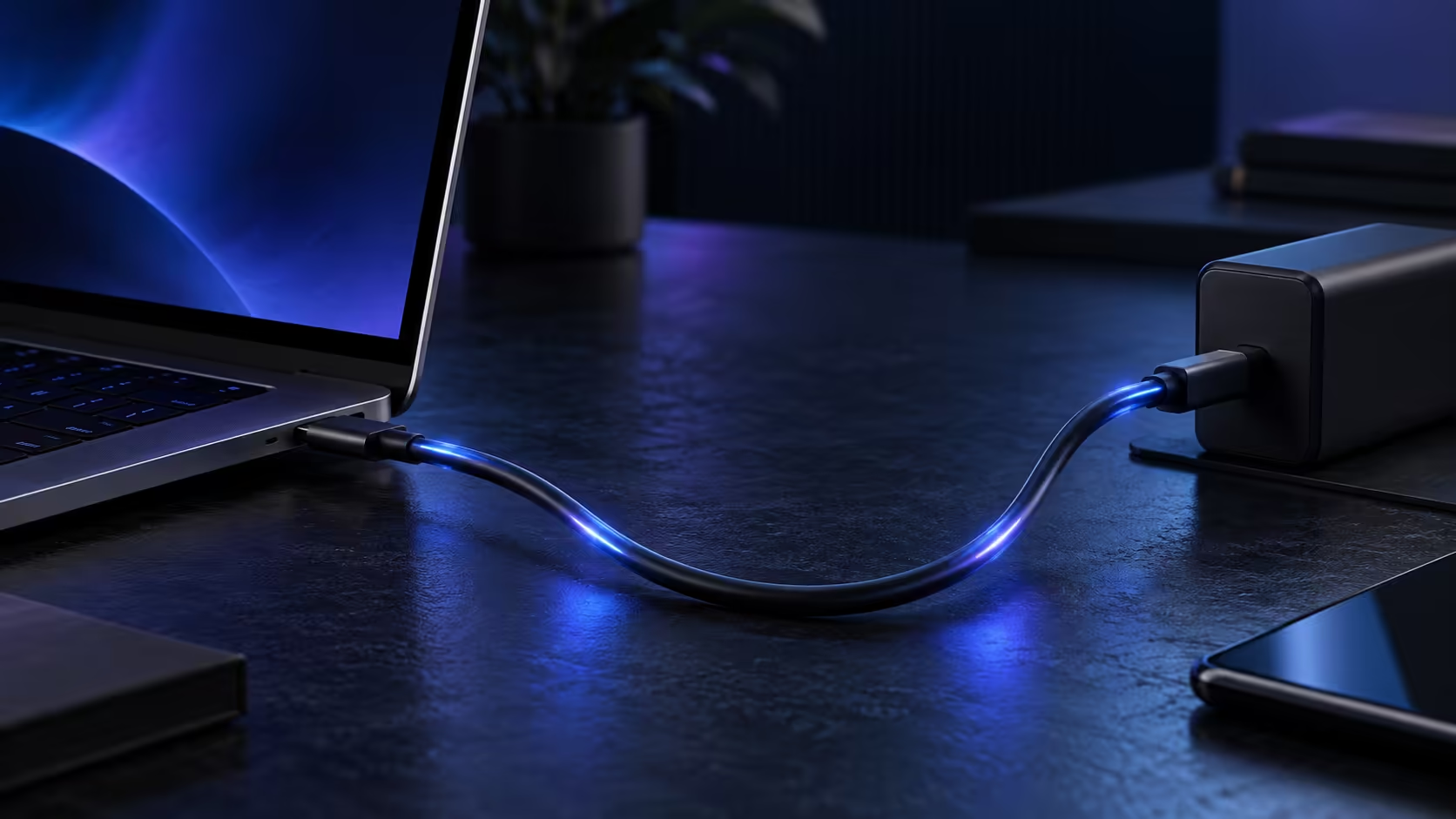
Picking a USB-C cable for 140W charging comes down to one hidden component most buyers never think to check: a tiny chip inside the plug itself that tells a charger how much current it is safe to send. Get that wrong and a 140W charger quietly behaves like a much weaker one.
Quick Answer
Pick a 5A e-marked cable that is USB-IF certified, or a 140W charger quietly settles at 60W instead. The Anker 544 clears that bar across 1.8m of bio-nylon braid, carries a 30,000-bend rating, and R399 is what it costs to stop guessing at the wall socket.
🔌 The chip inside the plug decides everything
Every USB-C cable rated above 60W contains an e-marker chip that reports its own current capability to the charger during negotiation. A cable without this chip, or one where it is set for a lower rating, caps the whole connection at 3A regardless of how capable the charger and laptop happen to be on their own. This is why a genuine 140W charger, cable and laptop combination can still deliver only 60W: the weakest declared link in the chain wins every time.
✅ What "5A" and "USB-IF certified" actually mean
A cable rated for 5A, rather than the more common 3A, is the one capable of carrying 140W at 20V, since power is current multiplied by voltage. USB-IF certification means an independent test house has verified the cable reports its rating honestly, which matters because an uncertified cable can print "140W" on its packaging while its e-marker chip is only wired for a lower figure.
The Anker 544, in the comprehensive cable range, states 140W+ fast charging directly and carries USB-IF certification, so both the physical wiring and the declared rating are backed by testing rather than a printed claim alone.
That distinction is worth remembering the next time a cheap cable claims a high wattage without any certification logo in sight: a claim printed on packaging costs nothing to make, while passing USB-IF testing costs the manufacturer time and money, which is exactly why cutting corners usually shows up as a missing certification mark rather than a missing number.
🧵 Bio-nylon and the 30,000-bend figure
Beyond the electronics, 46% of the cable body's exterior is made from bio-based nylon, a braided jacket that resists everyday wear better than a plain rubber sleeve. Anker rates it for a 30,000-bend lifespan, a figure that matters more for a cable moved daily between a bag and a desk than one that stays plugged in permanently behind a monitor.
📦 Checking a listing before you buy
Look for three specific words or figures on any cable's own product description before trusting a 140W claim: the current rating in amps, the word "e-marker" or a reference to a chip, and the USB-IF certification mark itself. A cable missing all three, relying only on "140W" printed in large text, is the one most likely to disappoint once actually plugged into a demanding laptop.
🖥️ Confirming it works for your specific laptop
Not every laptop needs the full 140W a charger might offer, and the cable's job is simply to not be the bottleneck for whatever the laptop actually draws. Check the charger your laptop uses for its own printed wattage, then confirm the cable running between it and the laptop is genuinely 5A e-marked rather than assumed to be. Our laptop range lists charging specifications per model if you are still deciding which machine to pair the cable with.
Frequently Asked Questions
What happens if I use a 3A cable with a 140W charger?
The connection settles at 60W, the ceiling a 3A cable can safely carry, regardless of what the charger and laptop are both capable of individually.
Does USB-IF certification cost more than an uncertified cable?
Generally yes, since the certification process itself costs the manufacturer money, which is part of why certified 5A cables sit above the cheapest uncertified options on price.
Can a 140W cable also charge a phone safely?
Yes. The cable's rating is a ceiling, not a fixed output, so it delivers a phone's lower charging rate exactly as easily as a laptop's higher one.
Is bio-nylon less durable than a standard nylon braid?
No. The bio-based content changes the source material rather than the mechanical properties, so a bio-nylon braid performs comparably to a standard one while shifting part of its feedstock away from petroleum.
Does the e-marker chip ever fail on its own over time?
It is not a common failure point compared with the physical connector or the conductors themselves, since the chip has no moving parts and carries very little of the actual charging current.
Ready to stop your laptop charger underperforming?
Check for a 5A rating and USB-IF certification before anything else on the cable.