Quick Answer
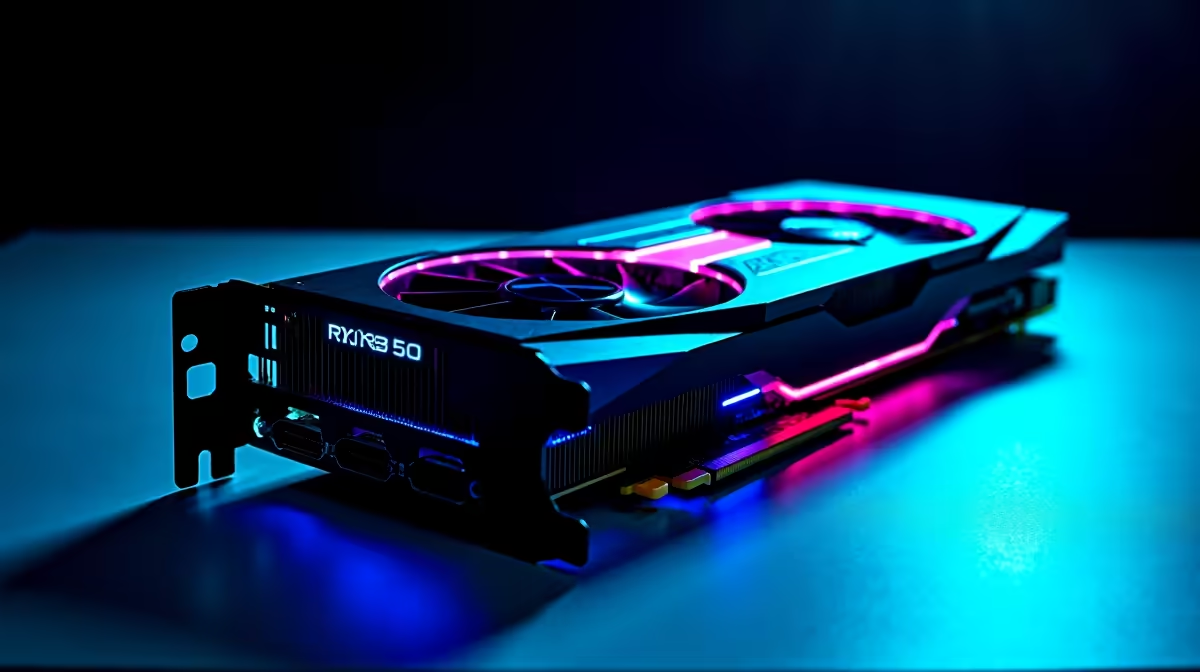
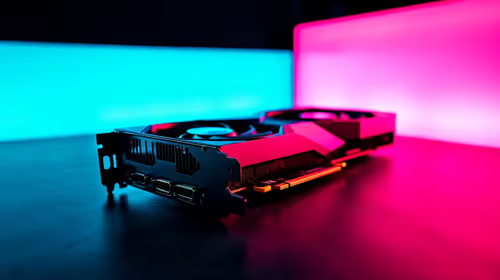
RTX 5080 build microstutter usually clears once you cap the frame rate just under your panel's refresh, disable a background overlay, and confirm the cable runs from the GPU rather than the motherboard. Buyers in Sandton typically see 4K stabilise back to 90 fps after these three checks. Hardware spend is the last step, not the first.
Start With One Repeatable Test Scene
Use the in-game benchmark or a fixed route and watch frame-time, not just the headline number. A smooth 90 fps that occasionally spikes points at microstutter from background tasks, while a flat 60 fps at 4K points at raw GPU or CPU load. Record the figure so every later change is measured against the same RTX 5080 build baseline.
Thermals And Clock Behaviour
Watch GPU and CPU temperatures during your test loop; sustained throttling above the mid-80s C will cap clocks and produce microstutter. A clean dust filter, a fresh fan curve, and case airflow that pulls cool Sandton air through the front usually settle it. If a 9-series chip still throttles after that, a stronger cooler is the targeted fix, not a whole new platform.
Memory, Storage And Background Load
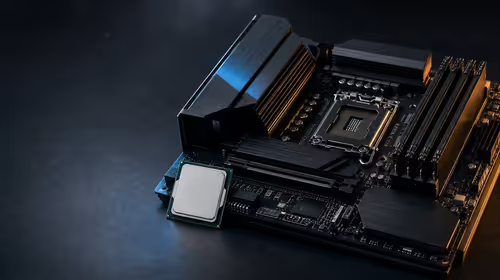
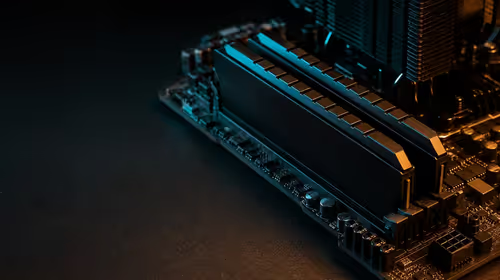
Enable the rated EXPO/XMP profile so DDR5 runs at its advertised speed, since RAM stuck at base clocks is a common microstutter cause. Move the game to a Gen 4 or Gen 5 NVMe SSD if it currently sits on a slow drive, and close updater services during play. Background indexing and sync clients are a frequent hidden tax on the RTX 5080 build.
In-Game Settings That Actually Matter
Drop the two heaviest settings first: ray tracing and volumetric/shadow quality, then add a frame cap a few frames under your refresh. Turn on upscaling (DLSS or FSR) at Quality to claw back headroom at 4K. These changes recover most of the gap between 60 fps and 90 fps without making the picture look worse.
FAQ
Why does microstutter only appear in some games?
That usually means a per-game setting or shader-cache issue rather than a hardware fault. Clear the shader cache, reset that title's graphics options, and the microstutter normally disappears while other games stay smooth.
Should I cap my frame rate to stop microstutter?
Yes, a cap a few frames below your monitor's refresh keeps frame-times even and stops the GPU from spiking. Pair it with G-Sync or FreeSync for the smoothest result at 4K.
Is the RTX 5080 build powerful enough for 4K gaming?
At 4K a healthy RTX 5080 build should hold 90 fps in most titles once drivers and power settings are correct. If it cannot after a clean reset, the GPU or cooling is the limiter rather than the configuration.
Next Step
Fix the configuration first, then let your measured 4K result decide which Evetech category to shop.