A blank screen after working on a wireless gaming headset setup rarely means a dead GPU or a faulty panel; it usually points at the display route or a driver that lost its place.
Quick Answer
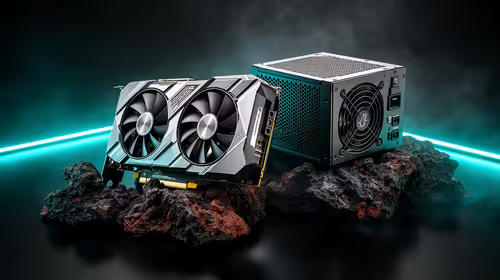
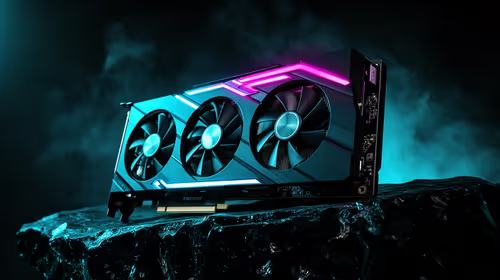
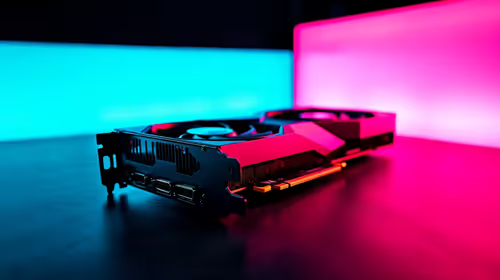
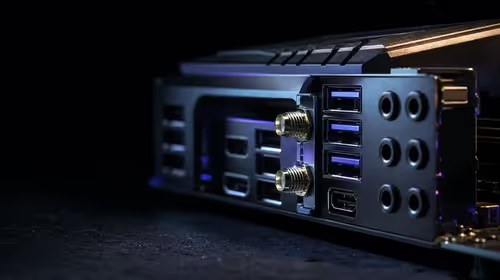
Start at the GPU ports, use a cable rated for the panel (a 240Hz panel needs DisplayPort 1.4 or HDMI 2.1), and pick the matching input on the monitor menu. If that fails, reseat the card, check the 8-pin and 12VHPWR power, then reinstall the driver and run Windows Detect. A point easy to skip, yet it changes the result more than people expect.
Isolate cable, port, and panel
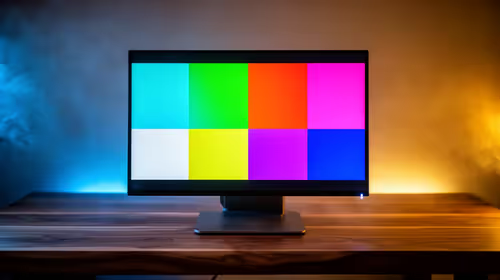
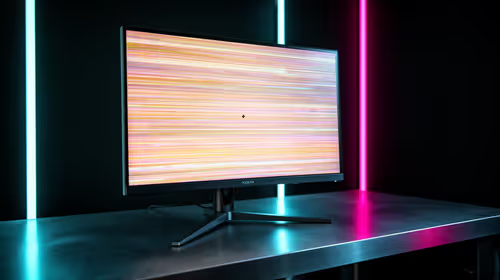
Test one monitor, one cable, one GPU output before adding anything back. If a second screen lights on the same port, the original panel or its cable is the suspect; if no screen works on that port but another port is fine, the output or its driver is the issue. Multi-monitor setups hide the fault, so simplify to a single chain while diagnosing. For a wireless gaming headset setup, write the result down so you never repeat a passed test.
Reset the graphics driver cleanly
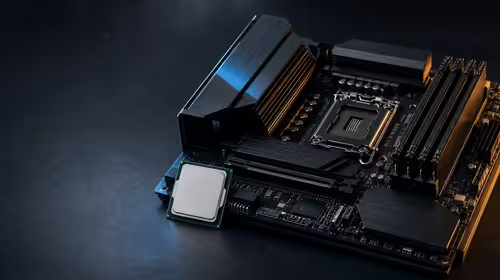
Once any image returns, install current chipset drivers and then the matching GPU driver. If the panel shows as a generic display, a clean removal with DDU followed by a fresh install usually restores full detection and the right resolution and refresh. Old device assumptions carried over from a previous build are a common cause when the drive was simply moved across. For a wireless gaming headset setup, the right call now saves a return and a wasted weekend.
Set BIOS display priority correctly
Enter BIOS and look for primary display, initial display output, or integrated graphics options. On platforms with CPU graphics the board may default to the wrong source, so set PCIe or the dedicated GPU as primary, save, and reboot. Change only the settings you understand so a failed test never creates a second fault you then have to unwind. Most a wireless gaming headset setup questions in SA come down to exactly this point.
FAQ
Should I clear CMOS before replacing parts?
Clearing CMOS is a low-risk reset that wipes bad display or overclock settings. Power down, pull the plug, use the clear jumper or pull the battery for a minute, then retest with stock settings. It resolves many no-detect cases without spending a cent. On a wireless gaming headset setup, a calm second test beats a panicked parts order every time.
Does a wireless gaming headset setup need a special cable for the GPU?
Match the cable to what you are driving. For 1440p at 144Hz or any 240Hz panel, use DisplayPort 1.4 or HDMI 2.1; an older HDMI lead can train down to 60Hz or drop the signal. A quality cable runs around R450 to R1,200 and is far cheaper than the parts people swap by mistake. For a wireless gaming headset setup, that ordering is what saves you from chasing the wrong fault.
Why does the motherboard port show nothing on this build?
With a dedicated graphics card installed, the CPU graphics outputs on the board are often disabled or set low in priority by default. Plug into the GPU first; only fall back to board ports if you have no card or are deliberately testing integrated graphics in BIOS. For an SA a wireless gaming headset setup setup, that is the cheapest, fastest move available.
Buy for the resolution your GPU can drive
After the signal path is stable, shortlist Evetech panels that match your card so you pay for refresh and resolution you will actually see, not headline numbers. A point easy to skip, yet it changes the result more than people expect.