Plenty of South African builders hit a dead display the first time they power on, and the cause is usually mundane: a cable in the wrong port or an input the monitor never switched to. South African gamers chasing value want the fix that costs nothing first, so this guide front-loads the free checks.
Quick Answer
A no-signal screen on a wireless mouse setup is almost always a wrong input, a tired cable, the motherboard port, or a driver state, not a dead card. Trace the physical signal path first, then check Windows and drivers; budget around R900 to R3,200 only if a part truly fails. If a part does turn out to be faulty, expect roughly R900 to R3,200 for a like-for-like swap, which is reason enough to test before you buy.
Confirm Windows actually sees the panel
Once any picture appears, open display settings and press Detect, then check whether the layout is set to duplicate, extend, or single. A driver update can silently save the wrong arrangement so a working monitor reads as missing. Device Manager will also flag a generic or warning-marked display adapter that needs a clean driver reinstall.
Test with a second screen or cable
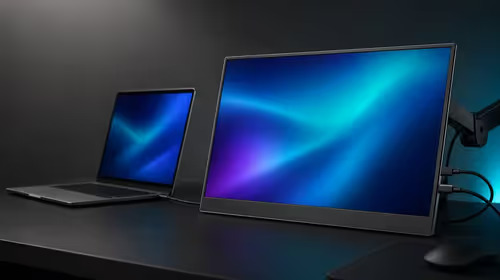
Borrow a known-good cable and a second display to split the problem in two. If the spare screen lights up, the original monitor or its cable is the suspect; if it stays dark, the output side is where to look. This single swap saves hours of guessing and stops you returning healthy parts.
Rule out a sleeping or wrong-mode panel
A monitor that auto-switched inputs or dropped into deep sleep can mimic a dead build. Cycle the monitor power, manually select the right source on its menu, and give the panel a few seconds to sync after each change. Modern high-refresh panels sometimes need a moment to lock onto a new signal.
FAQ
Does a driver update fix a no-signal screen?
Sometimes, because a corrupt or generic display driver can stop Windows from waking the panel. Get any picture first, then do a clean driver reinstall to lock in the fix.
Will a better cable really change this?
Yes, on a high-refresh or high-resolution panel the cable standard sets the bandwidth ceiling, so a certified DisplayPort or high-spec HDMI run can unlock rates a cheap cable hides. A good cable is a small spend against the cost of the rest of the build.
Is it safe to keep using the rig while I troubleshoot?
For display and settings issues, yes, it is safe to keep testing. If you see heat warnings, repeated shutdowns, or burning smells, power down and inspect before continuing, since those point at power or thermal faults rather than software.
Save Time
Do the free checks in order and write down what you changed; a short log stops you returning healthy gear and pinpoints the one step that actually fixed it.