Flight simulators like Microsoft Flight Simulator 2024 lean hard on one or two CPU threads for long stretches, so the cooler matters more here than in many games. Sustained single-core boost generates steady heat that a stock cooler struggles to clear.
Quick Answer
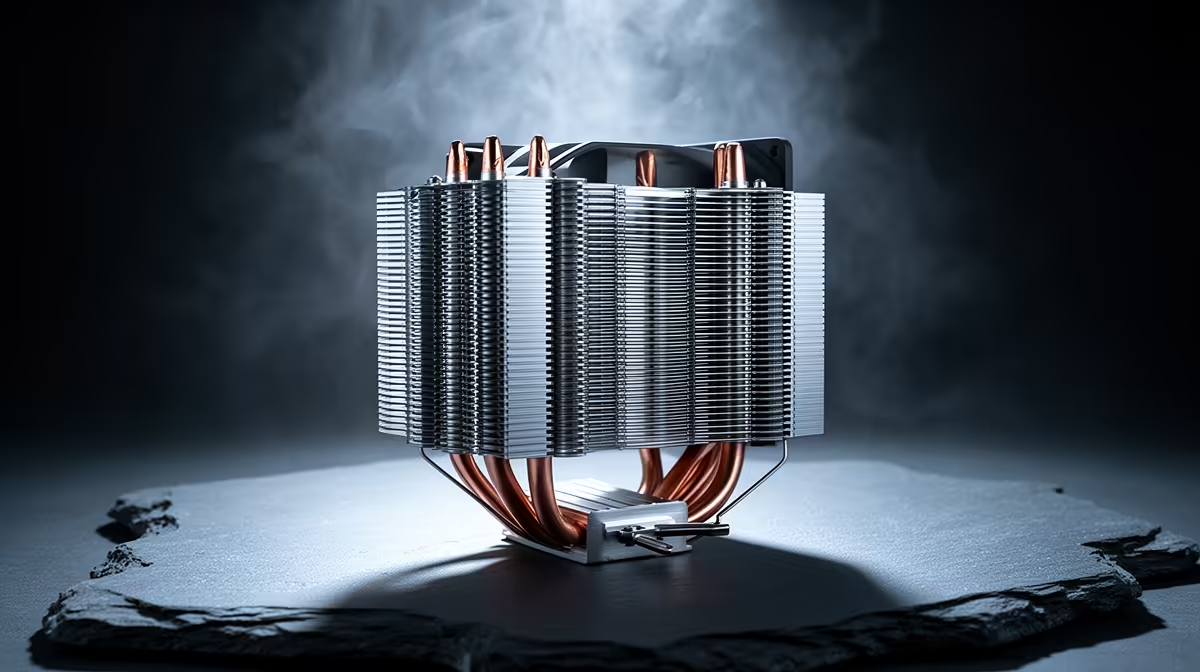
Upgrade the cooler if MSFS 2024 or DCS pushes your CPU past 85C and clocks drop during long flights. A Thermalright Peerless Assassin 120 SE (around R650 at Evetech) holds a Ryzen 7 7800X3D or i5-13600K in the low 70s C, keeping boost clocks high for steadier frame times.
Why Flight Sims Stress The Cooler
Flight sims are CPU-bound: scenery streaming, weather and AI traffic keep one or two cores at near-peak boost for an entire flight, unlike bursty shooters. On a Ryzen 7 7800X3D the X3D cache runs hot, and sustained boost on an i5-13600K (up to 181W in turbo) generates real heat. A stock cooler lets the CPU hit its thermal limit and throttle, causing stutters on approach into dense airports.
What To Fit For Smooth Flights
A 120mm dual-tower air cooler is the practical pick: the Peerless Assassin 120 SE (R650) or DeepCool AK620 (R1,100) keep a 7800X3D or 13600K well under throttle during multi-hour flights. For a small case where height is tight, a 240mm AIO like the Arctic Liquid Freezer III (~R2,200) clears heat without a tall tower. Either keeps frame times stable when ground traffic spikes CPU load.
FAQ
Why does a flight sim need a better cooler than other games?
Flight sims keep one or two cores near peak boost for the whole session instead of in short bursts. That sustained heat reaches the CPU's thermal limit on a stock cooler, throttling clocks and causing stutters.
Will a cooler upgrade improve my flight sim fps?
Indirectly. It won't add raw fps, but stopping thermal throttling keeps boost clocks high, which holds frame times steady during demanding moments like busy airport approaches.
Is the X3D chip's heat a problem for cooling?
The Ryzen 7800X3D runs warm because the stacked cache limits heat transfer. A good 120mm tower or 240mm AIO keeps it safely in the low 70s C under flight-sim load.
Pair your flight-sim CPU with a Peerless Assassin 120 SE or a 240mm AIO and confirm case height clearance, then watch temps stay under throttle on a long flight. Compare coolers at Evetech.