Quick Answer
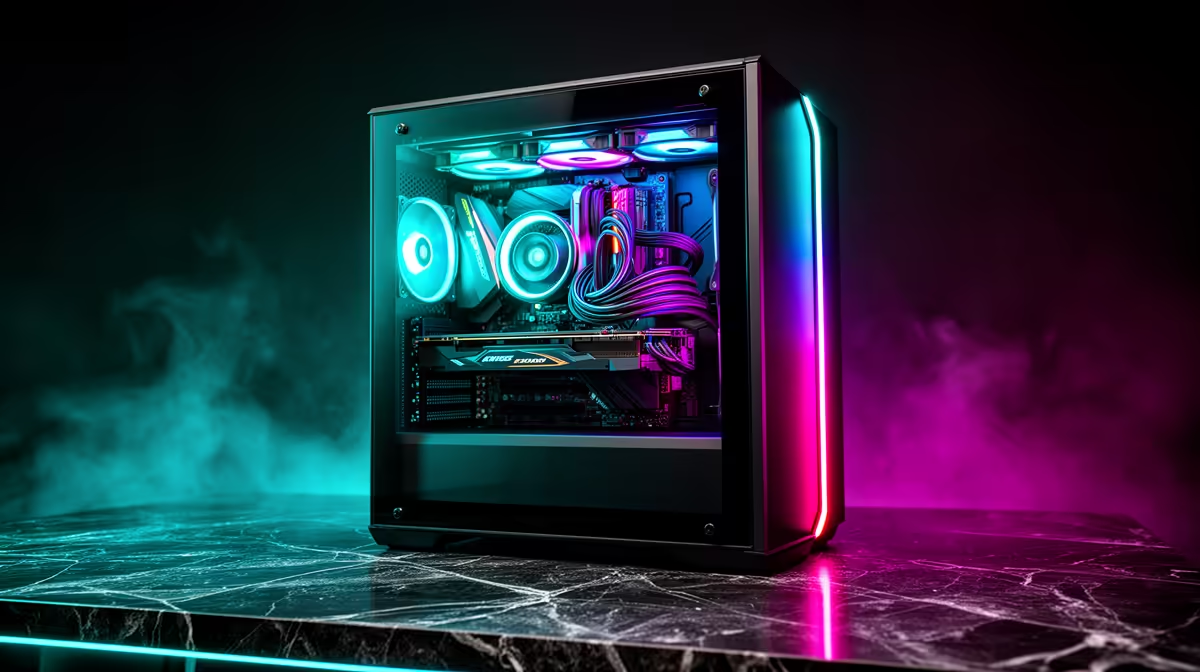
Strategy and sim games (Cities: Skylines II, Total War, Stellaris) hammer the CPU, not the GPU, so a Ryzen 5 7600 (6 cores) or Ryzen 7 7700 with 32GB DDR5 is the priority in a Brits build — figure R18,000–R28,000 for a rig that holds 60fps in busy late-game saves.
CPU and RAM win late-game turns
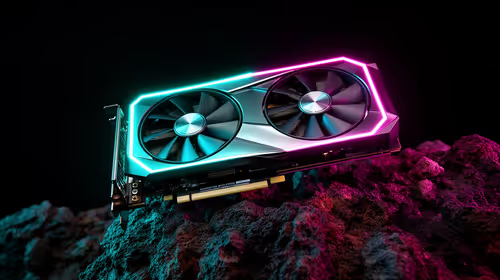
A 4X or city-builder late game spawns thousands of units, agents and pathfinding calculations — that load falls on the processor and memory. A Ryzen 7 7700 (8 cores) keeps Total War campaign maps and 200,000-citizen Cities: Skylines II saves responsive, while 32GB DDR5 stops the stutter you get on 16GB once mods and large saves pile up. The GPU can be modest: an RTX 4060 (around R7,500) drives these games at 1080p–1440p above 60fps.
Storage and display
Big strategy saves and texture-heavy mod packs love fast storage — a 1TB Gen4 NVMe loads turns and autosaves quickly. A 1440p 75Hz monitor is the practical pick; high refresh matters less in turn-based and slow-sim genres than in shooters.
Cooling for long sessions
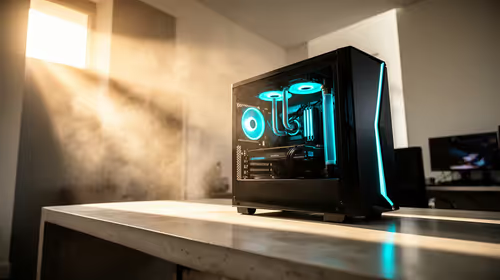
Late-game 4X turns can run the CPU hard for minutes at a time, so a decent tower air cooler keeps the Ryzen 7 7700 from throttling during marathon sessions. A mesh case with two intake fans handles Highveld summer heat. Stable temperatures matter more here than chasing the last few hundred MHz.
FAQ
Do strategy games need a strong CPU or GPU?
The CPU. Simulation depth, AI turns and unit counts are processor-bound, so a Ryzen 7 7700 helps more than a top GPU here.
How much RAM for modded Cities: Skylines II?
32GB DDR5. Heavy asset and mod loads push past 16GB, causing stutter and longer load times in big cities.
Will an RTX 4060 handle 4X games?
Easily — at 1080p and 1440p it pushes well over 60fps in Stellaris, Civilization and Total War, since these lean on the CPU.
-game smoothness, cap your frame rate just below your monitor's refresh — it frees CPU headroom for the simulation in turn-heavy titles.