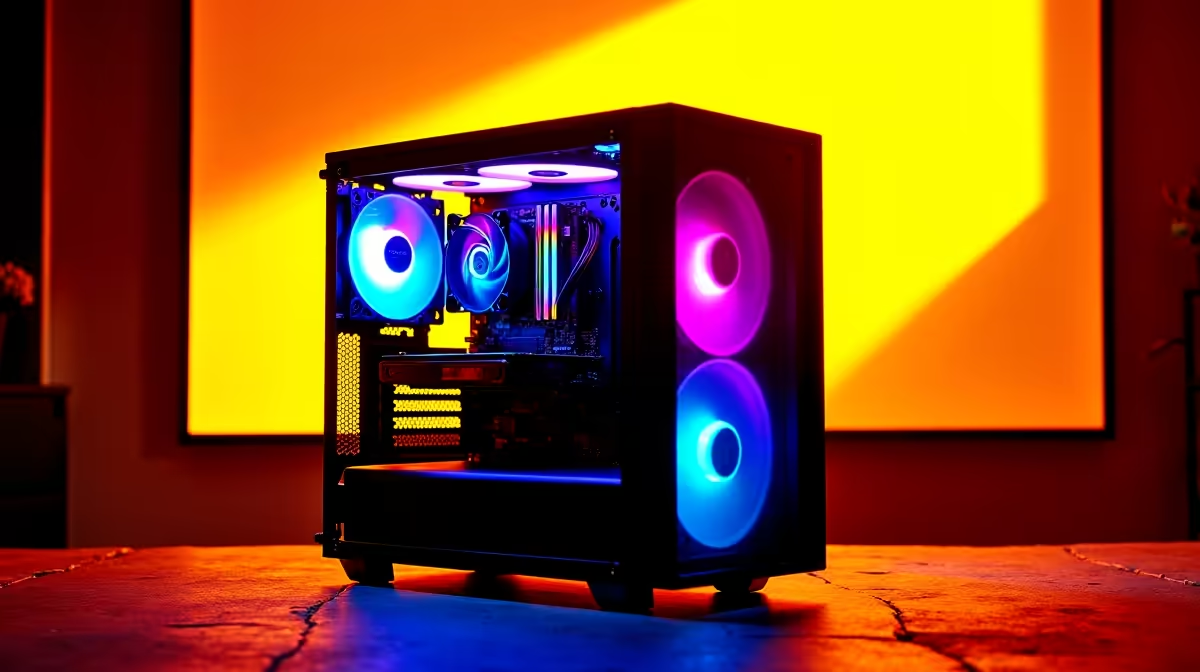
Stage 6 just hit. Again. For most South African gamers, that dreaded notification means downed tools and a dark screen. But what if it didn’t? Imagine your squad calling for backup and you… actually being there, powered by the sun. This isn’t a far-off dream. Building a solar-powered gaming PC is more achievable than ever. The secret isn't a massive battery bank; it's a smart, low-wattage PC build designed to survive anything Eskom throws at it. ⚡
Why a Low-Watt Build is Your Secret Weapon
Before you even think about solar panels or inverters, the focus must be on your PC's power consumption. A power-hungry rig that pulls 600W under load will drain a typical inverter battery in no time. But a carefully optimised solar-powered gaming PC that sips just 200-250W? That’s the sweet spot for hours of uninterrupted gameplay.
Think of it like this: every watt you save on your PC is a watt you don't have to generate or store. This philosophy not only makes your solar setup more affordable but also extends your gaming sessions when the grid goes down. By choosing efficient components from the start, you're building a rig that's not just powerful, but resilient. Many of the best gaming PC deals today already feature components with excellent performance-per-watt.
Core Components for Your Solar-Powered Gaming PC
Building an energy-efficient machine doesn't mean settling for low frame rates. It's about making intelligent choices where it counts most: the CPU, GPU, and Power Supply Unit (PSU).
### The CPU: The Brains of the Operation
The heart of your low-watt build is a CPU with a modest Thermal Design Power (TDP). A lower TDP generally means lower power consumption.
- Team AMD: Look for non-X Ryzen CPUs (like the Ryzen 5 7500F or Ryzen 7 7700). They offer incredible performance while sipping power compared to their "X" counterparts. You can find fantastic options in our range of all AMD Ryzen PC deals.
- Team Intel: Non-K series processors (like the Core i5-13400F or i5-14500) are brilliant choices, delivering excellent gaming chops without the high power draw of their overclockable siblings. Check out the latest builds in our all Intel PC deals section.
### The GPU: Smart Power for Smooth Frames
Your graphics card is typically the most power-hungry component, so choosing wisely is crucial. You don't need a top-tier card to enjoy beautiful 1080p or even 1440p gaming. NVIDIA's GeForce RTX 4060, for example, is a modern marvel of efficiency, offering brilliant features like DLSS 3 while drawing surprisingly little power. These efficient cards are often the stars of our budget gaming PCs, proving you don't need to spend a fortune to build a outage-ready rig.
Check Your Real-World Wattage 🔧
Don't just rely on manufacturer specs. Grab a simple plug-in watt meter for a few hundred Rand. Plug your PC into it to see exactly how much power your system draws while gaming versus idling. This real-world data is gold when sizing your inverter and battery system, helping you build a truly effective solar-powered gaming PC.
The Supporting Cast: PSU and Peripherals
A highly-rated Power Supply Unit (PSU) is non-negotiable. An 80 Plus Gold or Platinum certified PSU runs far more efficiently, meaning less energy is wasted as heat. This pulls less power from your inverter, giving you more game time. 🚀
Even components from modern home and office PCs like NVMe SSDs and DDR5 RAM are incredibly power-efficient and contribute to the overall low-wattage goal. When you combine these parts, you can easily assemble a powerful Stage 6 survivor. Many excellent pre-configured PCs under R20k are built around this very principle of balanced, efficient performance.
This isn't about compromise; it's about building a smarter PC for a uniquely South African challenge. A low-watt build is your ticket to gaming freedom, no matter the schedule.
Ready to Build Your Stage 6 Survivor?
Creating a solar-powered gaming PC starts with the right foundation. An energy-efficient build doesn't just save you on your electricity bill... it keeps you in the game when the lights go out.