Is your PC sounding more like a jet engine during a Johannesburg heatwave? Dust, humidity, and even the aftermath of an unexpected outage can choke your machine, causing thermal throttling and slower performance. This essential PC cleaning guide is your ticket to lower temps and higher frames, specifically for South African conditions. A clean rig isn't just about looks; it's about reclaiming the speed you paid for. Let's get that PC running cool and fast again. 🚀
Why PC Cleaning is Crucial in South Africa
In SA, we deal with more than just the usual household dust. Fine red sand from the highveld, coastal humidity, and sudden power surges from an unexpected outage all put extra strain on your components. When dust clogs your fans and heatsinks, your PC can't cool itself effectively. This leads to "thermal throttling," where your CPU and GPU automatically slow down to prevent overheating. Suddenly, your smooth 144 FPS drops to a stuttery mess in the middle of a firefight.
Regular maintenance is a core part of this PC cleaning guide because it extends the life of your hardware. By keeping temperatures low, you reduce wear and tear on sensitive electronics. This is just as vital for affordable budget gaming PCs as it is for high-end beasts; a clean machine is always a faster, more reliable machine.
Your Essential PC Cleaning Toolkit
Before you open that case, you'll need a few basic tools. You don't need a professional workshop, just the right gear to do the job safely and effectively.
- Can of Compressed Air: The number one tool for blasting dust out of tight spaces.
- Microfibre Cloths: Perfect for wiping down surfaces without leaving lint behind.
- Isopropyl Alcohol (90%+): Excellent for cleaning thermal paste off a CPU or stubborn grime. Use sparingly!
- Cotton Swabs & Small Brushes: For getting into the nooks and crannies of fan blades and motherboard ports.
- Screwdriver Set: You'll need a Phillips head screwdriver for most case panels and components.
- Anti-Static Wrist Strap (Optional but Recommended): A cheap and effective way to prevent static discharge from damaging your components.
The Step-by-Step PC Cleaning Process 🔧
Ready to get hands-on? Follow this simple process for a thorough clean. Set aside about 30-60 minutes.
### Prep Work: Power Down & Ground Yourself
First, completely shut down your PC. Don't just put it to sleep. Switch it off at the wall and unplug the power cable. Press the power button a few times to discharge any remaining electricity in the system. If you have an anti-static wrist strap, clip it to a metal part of your case.
### Stage 1: The Exterior Wipe-Down
Start with the easy part. Use a slightly damp microfibre cloth to wipe down the outside of your case, including any glass or acrylic panels. Clean out any dust filters—these are your first line of defence and are often easily removable for a quick rinse and dry. This simple step is crucial for maintaining both budget-friendly PCs under R20,000 and high-end rigs.
Pro Tip: Canned Air Safety ⚡
Always use compressed air in short, controlled bursts. Never shake the can or hold it upside down, as this can spray liquid propellant onto your components, potentially causing damage. Keep the nozzle about 15-20cm away from the surface you're cleaning.
### Stage 2: Conquering the Internal Dust
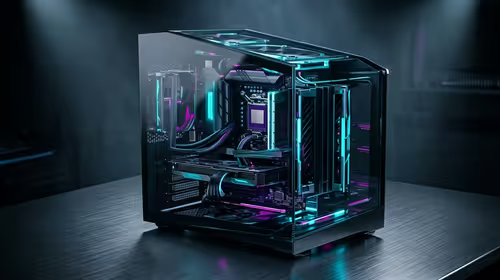
With the side panel off, take your PC to a well-ventilated area (like a garage or balcony). Use the compressed air to blow dust out of the case, starting from the top and working your way down. Pay special attention to the graphics card, the area around the CPU cooler, and the power supply shroud. The goal is to get the big clouds of dust out before moving to detailed cleaning. For the most powerful premium builds over R20,000, ensuring the massive GPU and CPU coolers are clear is non-negotiable for performance.
### Stage 3: Fans, Filters, and Heatsinks
Use a soft brush or cotton swab to gently clean individual fan blades. If they're particularly grimy, a cloth lightly dampened with isopropyl alcohol works wonders. For your CPU and GPU heatsinks, use compressed air to blow dust out from between the metal fins. A clean heatsink is the key to a cool processor.
When Cleaning Isn't Enough
A thorough clean can work wonders, but it can't upgrade old hardware. If you've followed this PC cleaning guide and your games are still running poorly, or your PC struggles with modern tasks, it might be a sign that your components are showing their age. Technology moves fast, and what was top-tier five years ago might be a bottleneck today. Sometimes, the best performance boost comes from a fresh start with one of the best gaming PC deals available.
Similarly, if you find the process of building and maintaining a PC daunting, you're not alone. Opting for one of our expertly assembled pre-built PCs means you get a perfectly optimised and clean machine right out of the box, with professional cable management that actually improves airflow from day one. ✨
Ready for a Fresh Start?
A clean PC is a happy PC, but if your rig is still struggling after a good dust-out, it might be time for an upgrade. Explore our massive range of Gaming PCs and find the perfect machine to conquer your next adventure.