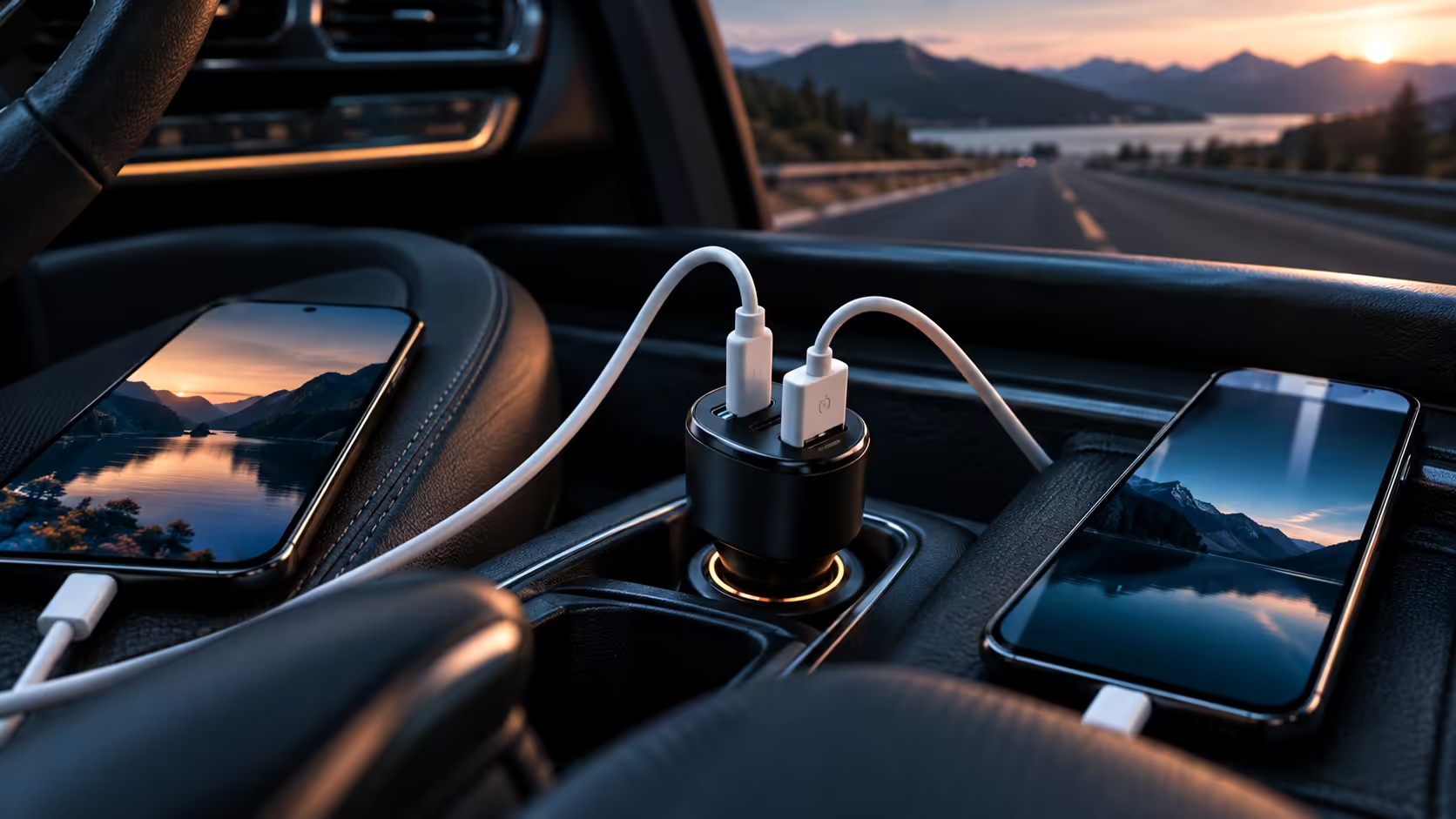
Running USB-C and USB-A ports safely on a long drive is less about the charger and more about the cable connecting it to a phone, since the cable is what actually carries the current the ports negotiate.
Quick Answer
Use a cable rated for at least 3A on USB-C, avoid tightly coiling it under a hot seat or against exposed metal, and check the connector ends occasionally for wear. Both ports on a properly built charger, 30W USB-C and 22.5W USB-A on Anker's R349 two-port unit, can run all day safely, but only when the lead carrying that current is actually built for it.
🔌 Why the cable, not the port, is usually the weak link
A charger's port and a phone's charging chip agree on a voltage and current during negotiation, but the cable between them is a passive conductor that has to carry whatever current gets agreed without adding meaningful resistance. Most decent USB-C cables carry 24AWG power conductors rated to 3A; a bargain cable dropping to 28AWG or thinner, especially with worn or loose internal wiring, introduces resistance that shows up as heat near the connector and a charge rate below what both ends actually agreed to.
This matters more for a cable that lives permanently in a car than one used briefly at a desk, since a car cable takes more physical flexing, more heat exposure and more accidental yanking over its working life.
🌡️ Heat, coiling and where cables actually fail
A cable tightly coiled and tucked under a hot seat, or run across a section of exposed metal trim that gets genuinely hot in direct sun, is working under worse thermal conditions than the same cable laid loosely across a console. Heat and current together are what age a cable's internal wiring and its connector's solder joints over time, so avoiding unnecessary heat exposure extends a cable's working life more than most people expect.
Physical wear tends to concentrate right at the connector, where the cable bends every time it is plugged or unplugged. A visible kink, fraying or a connector that feels loose in the port are all worth treating as a reason to replace a cable rather than continuing to use one that is visibly on its way out.
🚗 What a full day of charging on a road trip actually asks
On a genuinely long South African drive, Gauteng to the coast or similar, both ports can realistically run for 6 hours or more continuously if two people are charging devices the entire way. That is a heavier, more sustained load than most everyday city driving puts on a cable, and it is exactly the scenario where a marginal, ageing cable is most likely to show its limits, either through reduced speed or an outright intermittent connection. A dedicated dashcam power lead, if one is present, is worth checking separately from a phone's own cable, since a premium sleeved cable built for durability handles that kind of continuous use better than a bargain lead ever will.
Frequently Asked Questions
Can both ports really run for a full day of driving without issue?
Yes, with a properly rated cable on each side. The charger's own protections handle the electrical side; cable quality is what determines whether the physical connection holds up.
Does coiling a cable actually damage it?
Tight coiling under heat accelerates wear at the bend points and can shorten a cable's working life, more so than loosely laid cable in a cooler spot.
How do I know a cable needs replacing?
Visible fraying, a kinked section that will not lie flat, or a connector that feels loose in the port are all signs worth acting on rather than ignoring.
Does the length of a cable affect how safely it can carry current?
A longer cable of the same gauge carries slightly more resistance than a shorter one, which mostly shows up as marginally more heat over its length rather than a safety concern at the lengths typical in a car.
Is a more expensive cable actually worth it for a car?
For one that lives permanently in the vehicle and sees daily heat and flexing, a well-built cable rated for the current it carries is a reasonable investment against replacing a failed one repeatedly.
Should I remove the cable from the car overnight?
Not for electrical reasons, though leaving it disconnected from a phone avoids a slow trickle drain on the car's own battery from a charger left constantly powered.
Does running both ports at once generate more heat than one port alone?
A little, since the shared converter is working harder overall, though a well-protected charger manages this automatically and it rarely becomes noticeable during normal, everyday use around town.
Is it worth carrying a spare cable in the car at all times?
Yes, given how often a cable is the actual point of failure rather than the charger itself. A spare costs little next to the inconvenience of a dead phone with no working lead on hand.
Ready to sort out the cables in your car before a long drive?
Have a look at the car charger range and check every cable you plan to use for wear.