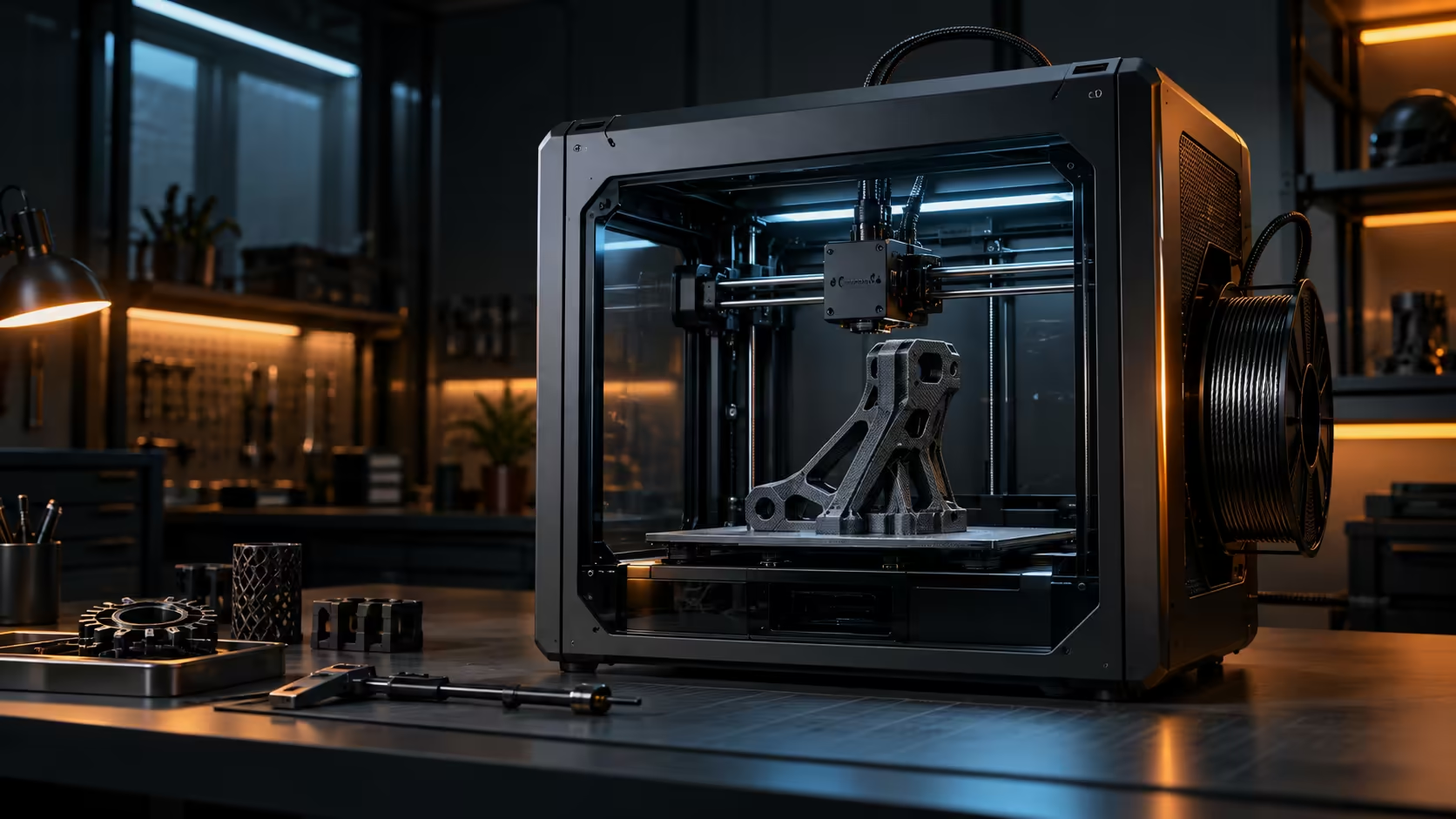
A "carbon fibre capable" label printed on a box means very little without actually knowing which specific parts of the printer earned it, since abrasive filament can fail a machine in more than one single place at once. A carbon fibre capable 3D printer needs four things working together, not one headline feature.
Quick Answer
Look for a hardened flow path, nozzle heat to spare beyond the material's minimum, a short feed distance from motor to melt zone, and a chamber that holds warmth steady through the print. Miss any one of these and chopped fibre either wears a soft nozzle out of shape or jams somewhere along a feed path that cannot handle it. The Creality K1C covers all four at R12,599.
🔩 A hardened flow path, not just a hardened tip
Wear from abrasive fibre is not limited to the nozzle orifice alone, though that is where it shows up fastest and most visibly. The whole path plastic travels through, from feed gear to hotend, benefits from being built with abrasive materials in mind rather than added as an afterthought once a customer complains.
A tri-metal nozzle addresses the point of greatest wear specifically, combining a hard surface at the 0.4 to 0.6mm orifice where the fibre passes with efficient heat transfer through the rest of the construction.
🌡️ Heat with margin, not heat at the minimum
Carbon-fibre blends generally need more heat than their base plastic alone, and running right at the minimum recommended temperature leaves no margin for a slightly cooler room or a slightly faster print speed pushing flow past what that temperature can properly melt. A 300C-rated hotend gives real headroom above what most carbon-fibre blends actually require.
⚙️ Short feed, and a chamber that holds heat
A direct drive extruder keeps the distance filament travels before melting short, which matters because fibre-reinforced filament is stiffer than standard spools and does not tolerate a long, flexing path as well. A 50N-rated feed holds grip against the back pressure that stiffer filament creates.
A chamber that holds warmth steady rounds out the fourth requirement, since consistent ambient heat around a printing part improves layer adhesion on the tougher, often less forgiving materials carbon-fibre blends tend to be. Check filament options built specifically for this kind of printing, and browse resin printers for a completely different approach where fine detail matters more than fibre reinforcement.
🧾 Checking a listing against all four requirements at once
Reading a spec list one line at a time makes it surprisingly easy to miss that a machine only genuinely covers 2 or 3 of these 4 separate requirements rather than the complete full set. Write out the four as a checklist, hardened flow path, heat margin, short feed, warm chamber, before reading any single listing, then tick off each one specifically rather than being reassured by a general phrase like "carbon-fibre compatible" appearing somewhere on the page.
A machine genuinely covering all four typically states each one plainly and separately, since a manufacturer truly confident in the full package usually lists the specifics rather than relying on one vague, catch-all marketing claim to quietly cover for a real gap. Check the 3D printer range against this exact checklist before buying specifically for carbon-fibre work, rather than assuming any enclosed machine automatically qualifies.
Frequently Asked Questions
Is a hardened nozzle alone enough for carbon-fibre printing?
It is the single most critical piece, but heat margin, feed distance and chamber stability all still affect how reliably a carbon-fibre print actually finishes.
Does carbon-fibre filament need more heat than plain PLA or PETG?
Generally yes, since the fibre needs the surrounding plastic properly molten to flow around it cleanly rather than dragging stiffly through a partially melted matrix.
Why does feed distance matter for this specific material?
Fibre-reinforced filament is stiffer than standard spools, and a long, flexing feed path handles that stiffness worse than a short, direct one.
Can I add carbon-fibre capability to an existing printer with upgrades?
Some individual components, a hardened nozzle especially, can often be swapped in fairly easily; a full chamber and feed system upgrade is a considerably bigger undertaking and not always practical to attempt.
What is the fastest way to check a listing against all four requirements?
Write the four out as a short checklist and tick each one off against the specific claims in the listing, rather than accepting a general "carbon-fibre compatible" label at face value.
Does missing just one of the four requirements really matter?
Yes, since each one addresses a genuinely different failure point, missing even a single requirement usually means either wearing through nozzles quickly, weak layer bonding, feed slippage, or inconsistent chamber temperature undermining the whole print.
Shopping for a printer that will actually survive carbon-fibre filament?
Check all four requirements together, not just the nozzle on its own.