Quick Answer
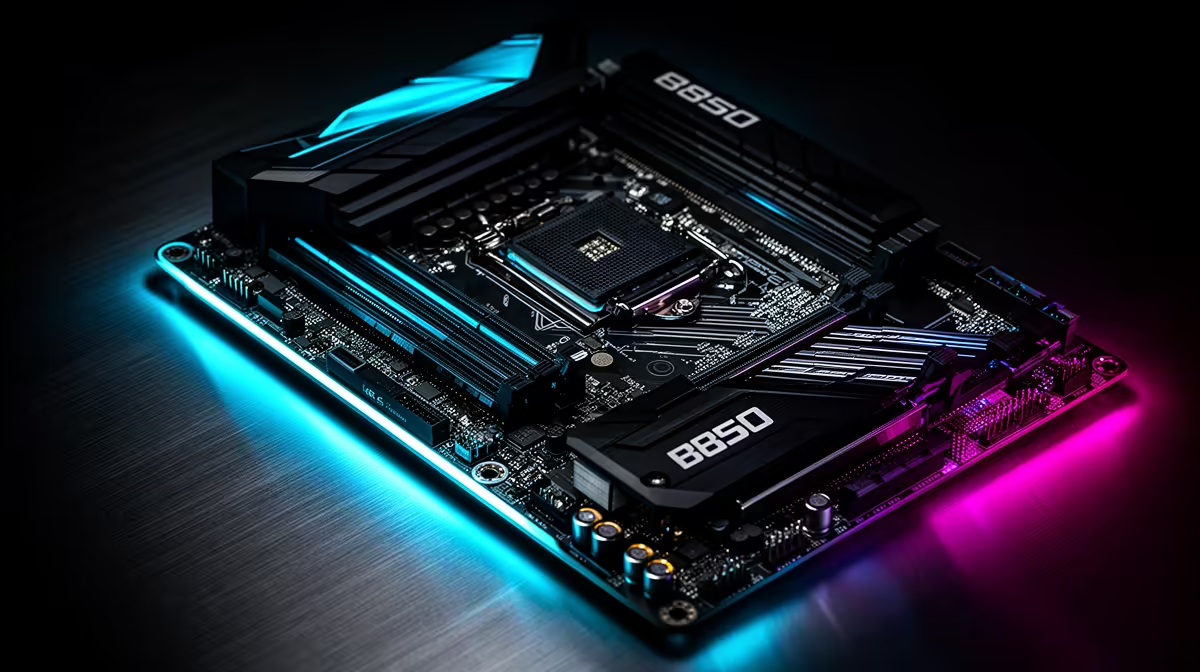
For a B850 motherboard showing lagging, start with evidence rather than a parts swap. Lagging usually comes from drivers, background tasks, storage stalls, thermal throttling, or RAM profile resets. Test one known workload and watch temperatures, drive activity, and memory speed. B850 boards commonly land around R3,500-R6,500, with premium Wi-Fi models higher, so a measured fix can prevent buying the wrong component.
Input Lag Or System Lag
Input lag feels delayed; system lag feels like pauses or slow loading. Test offline and online so a fibre-router or Wi-Fi issue is not blamed on the PC. Use named parts in your notes, such as MSI MAG B850 Tomahawk WiFi or ASUS TUF Gaming B850-PLUS WiFi, so BIOS, driver, and support checks stay specific. For SA buyers, B850 is a sensible SA AM5 choice when you want current features without top-tier board pricing.
Startup Load And Storage
After updates, indexing and driver tasks can make a fast PC feel slow. Check boot drive free space, SSD temperature, RAM speed, and CPU clocks. Use concrete checkpoints such as DDR5-6000 EXPO, PCIe 5.0 NVMe lanes, and 2.5GbE or Wi-Fi 7. If the issue began after a Windows update, test defaults and the same workload before calling hardware faulty.
Buy Or Repair Decision
Do not treat the category name as the diagnosis. A display symptom needs display testing, a stop code needs driver and memory checks, and a power-off event needs heat and PSU checks. For this B850 motherboard, replace parts only when the same fault repeats at stock settings after driver, cable, heat, RAM, and storage checks.
FAQ
Can the board make a PC lag?
Indirectly, through BIOS settings, PCIe configuration, power limits, or memory instability.
Why after updates?
Updates can reset drivers, power profiles, startup tasks, and indexing.
What number should I track?
Average fps, 1 percent lows, CPU temperature, GPU temperature, RAM speed, and SSD activity.
Practical check
Before spending on a B850 motherboard, write down the trigger, temperature readings, driver version, BIOS profile, and one repeatable pass or fail result.