Quick Answer
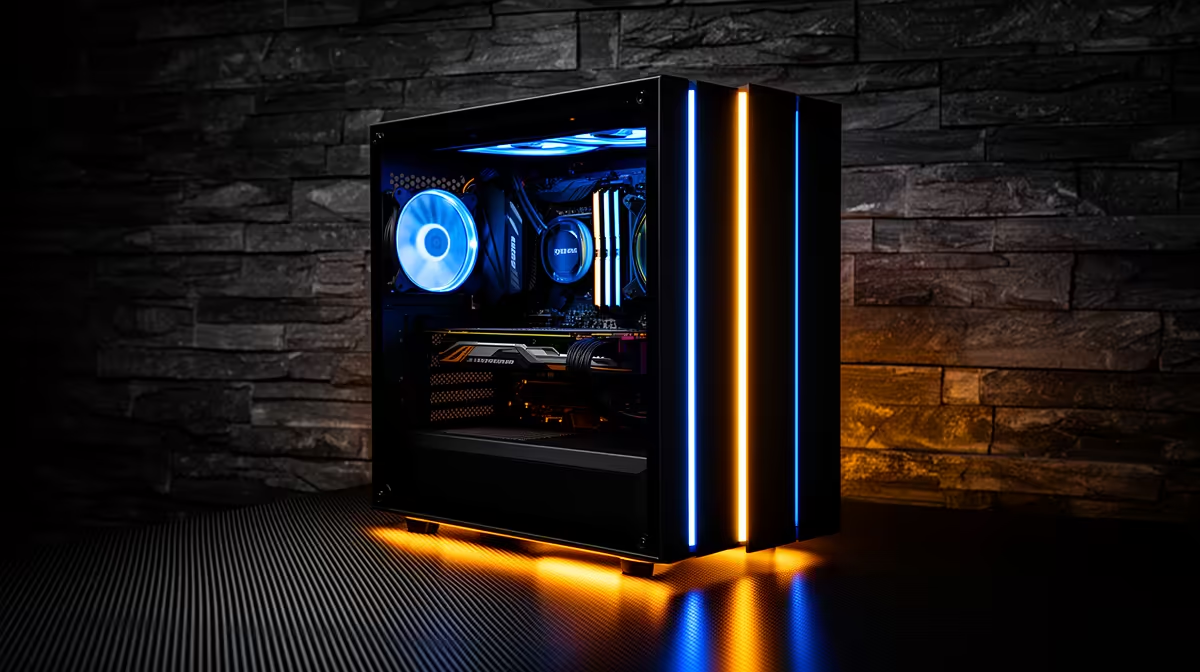
For a Wits Computer Science student in Waterkloof, the best build under R10,000 is to choose an APU desktop or tight entry tower instead of forcing a flashy GPU. Shortlist AMD Ryzen 5 5600G, 16GB DDR4, 500GB NVMe SSD and Radeon integrated graphics, with a later RX 6600 or RTX 3050 upgrade, keeping the tower in the R8,000-R10,000 band before monitor and accessories. Expect about 35-55 fps in 1080p esports on Low settings, enough for coursework plus realistic gaming settings.
Parts That Matter
Spend first on parts that improve VS Code, Python, Java, Git, Docker basics and browser research. The practical target is AMD Ryzen 5 5600G, 16GB DDR4, a 500GB NVMe SSD and a 450W-550W PSU in a case with clean front airflow.
For Computer Science work, 16GB RAM is usable; 32GB is better once IDEs, containers and Chrome run together. A balanced PC will feel better during lectures and reports than a louder tower that cuts corners on memory or storage.
Home Setup
Waterkloof is Pretoria-side, so the PC should cover remote Wits coursework. Check desk width, router placement, fan noise and monitor space before choosing the biggest case. A 24-inch 1080p monitor is the sensible target.
Test the shortlist by opening VS Code, Docker Desktop, Git and lecture tabs, a browser with lecture tabs and a video call. If memory headroom remains, it is a better student PC than a cheaper build that only looks good on paper.
Upgrade Path
Prioritise CPU, RAM and SSD quality. Avoid a weak discrete GPU that leaves only 8GB RAM. The smartest next step is to add a 1TB SSD first, then a discrete GPU, because that upgrade helps both study work and daily use.
For Evetech shortlisting, compare CPU generation, RAM capacity, SSD size, GPU class and warranty handling in that order. The right choice is the build that handles project weeks without forcing an urgent second purchase.
FAQ
Should a Wits Computer Science student in Waterkloof buy desktop or laptop?
A desktop gives better speed per rand if the student already has a basic laptop for campus notes. Choose a laptop only when daily portability matters more than performance and simple upgrades.
Is 16GB DDR4 enough for coding and Docker?
16GB DDR4 is the right target for this tier. Heavy multitasking feels better with 32GB, but NVMe storage and open RAM slots matter more than the flashiest case.
What should be checked before checkout?
Confirm the CPU, GPU, RAM, SSD size, PSU rating and monitor target before paying. Also check airflow and one realistic upgrade route for the next two study years.
Student build tip
Before checkout, confirm 16GB DDR4, the 500GB NVMe SSD, a 450W-550W PSU and one spare upgrade slot for a Wits Computer Science student in Waterkloof.