A coloured percentage can look more certain than the method behind it. An AI detector result is an estimate about text patterns, not a recording of the author at work. South African students and anyone reviewing written material need to understand that distinction before a score turns into a conclusion.
Quick Answer
Read the detector's definition, supported input and limitations before interpreting a result. Turnitin describes its percentage as the share of qualifying text its model identifies, and acknowledges false positives. That is not the probability that a person cheated. Drafts, source notes and an explanation of the work add context, and preserving them can cost R0 in extra purchases rather than requiring a paid detector subscription.
📊 Ask what the number measures
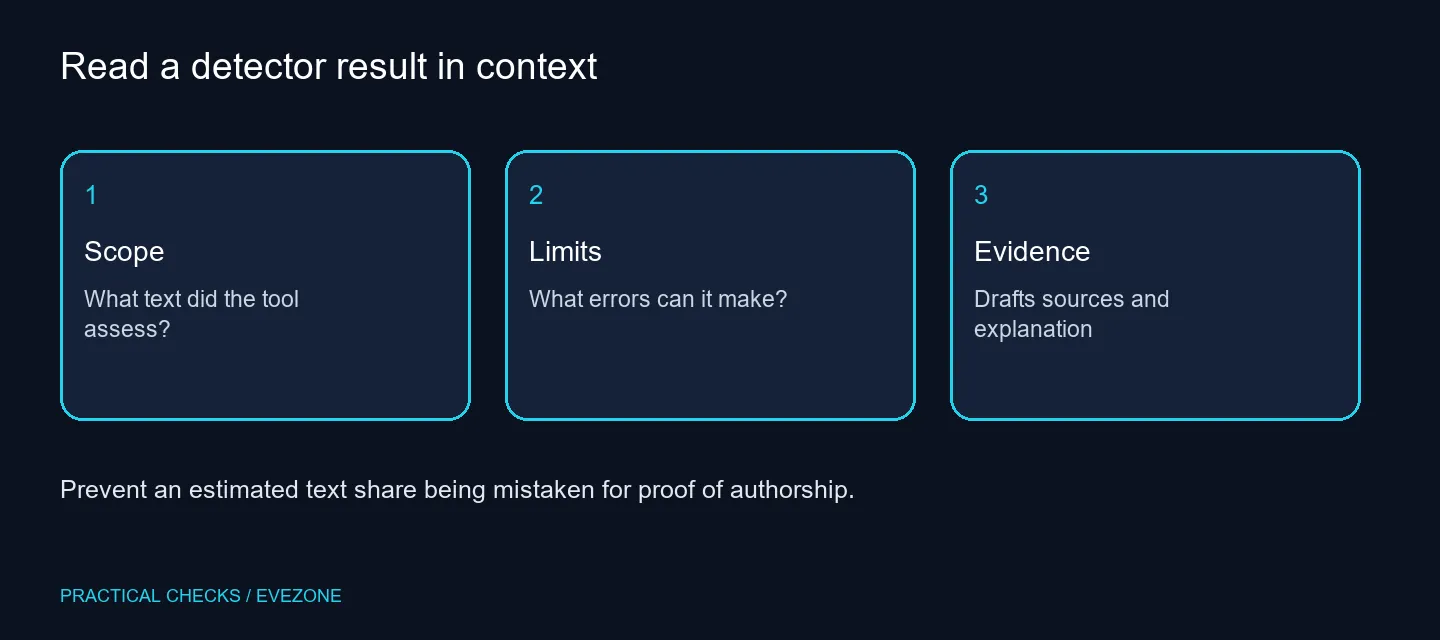
A percentage needs a denominator. In the documented report, it concerns qualifying prose rather than necessarily every word or element in the submitted file. Do not treat excluded material, unsupported input or a processing error as a clean result. First check whether the tool assessed the document under its stated conditions.
The percentage is also not automatically a confidence level about the writer. A result describing a portion of text and a probability about someone's behaviour are different quantities. Read the report's own explanation instead of importing an interpretation from a social-media example or a different service.
🔍 Allow for mistakes in both directions
False positives mean human writing can be flagged. A low or zero result also does not independently establish that every sentence was written without assistance. Treat the tool as one input to a review, with the limitations of that specific product kept visible.
Turnitin suppresses numerical results below its stated 20% threshold because that range is less reliable. That product-specific rule is not a universal permission threshold for using AI, and it is not a guarantee that a higher score proves misconduct. The applicable submission rules and human assessment remain separate questions.
📝 Preserve the work behind the final file
Keep drafts, source notes and meaningful revision history while writing. Be ready to explain the argument and why each source supports it. These materials show the process more directly than repeatedly pasting the final paragraph into unrelated tools and comparing coloured bars.
If a result is disputed, ask for the relevant report and the review procedure. Explain the work using the evidence you actually have rather than inventing a timeline after the fact. Avoid uploading private or unpublished material to extra services without checking whether that use is appropriate.
💻 Choose tools for writing, not score chasing
A stable writing setup matters more than a promise to produce a detector-friendly style. Compare intel gaming laptops for the computer you need and keyboards on special for comfortable input; neither hardware category changes whether a detector's inference is valid.
Use feedback to improve clarity, factual accuracy and attribution. Do not replace your own explanation with awkward wording simply because a score changes. Detector output can be discussed, but the final work must still answer its task and follow the relevant rules. That remains true whether the checker is free, paid or supplied by an institution.
Frequently Asked Questions
Is an AI detector score proof of cheating?
No. The estimate needs interpretation with the applicable rules and other evidence. It is not a direct record of who wrote the text.
What does a text percentage describe?
Check the tool's definition. Turnitin describes a share of qualifying text identified by its model, not the probability that a person used AI.
Can human writing be flagged?
Yes. False positives are possible. A highlighted passage should prompt careful review rather than an automatic conclusion.
Are image and text detectors interchangeable?
No. They assess different material. Do not apply a text tool's score definition or limits to an image result.
Must I pay to demonstrate my writing process?
No. Keeping drafts, source notes and revision history can cost R0 in additional purchases. A paid score does not establish authorship.
Should I keep rewriting just to lower a score?
Edit for accuracy and clarity, and follow the submission rules. A lower detector result does not independently prove originality or compliance.
Keep evidence of the writing, not just a score.
Save drafts and sources, understand the report limits and follow the rules for the actual submission.