Two fans can share the same ARGB header and still look nothing alike once they are installed. One lights a single ring around its hub, while the other bounces light through a frame on several sides and makes the glow look like it goes on for ever. Here is how an infinity mirror frame differs from a standard ARGB fan, and what each one looks like through a glass side panel.
Quick Answer
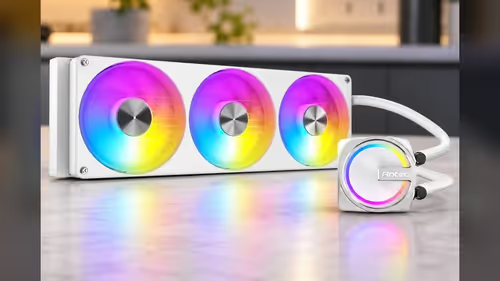
A standard ARGB fan lights a single ring, so the glow stays flat and sits in one plane. An infinity mirror frame reflects light across four sides, which gives the effect depth and repetition. The Antec Omni Matrix 360 at R999 has a four-sided infinity mirror frame built into its fans, so the depth effect comes with the cooler.
💡 What a standard ARGB fan lights up
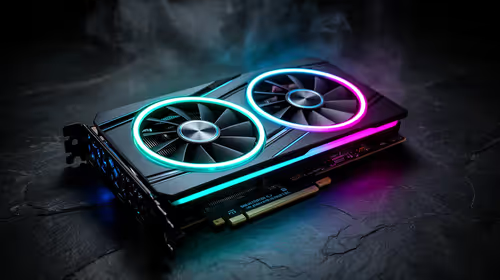
A standard ARGB fan has a ring of addressable LEDs around its hub or its frame, and it runs off a 5V 3-pin header. Each LED takes its own colour from the controller, so the ring can show a chase, a wave or a single steady colour across its 120mm frame. The light sits on one plane, and what you see is a bright ring turning against a dark fan blade.
That looks good from the front, and it looks clean in a case with a plain side panel. Look at it from an angle and the glow flattens out, because the light does not travel far from the fan. Most builders are happy with that look, and it costs less to get into a build.
🪞 How the infinity mirror frame changes the look
An infinity mirror frame is built from reflective surfaces arranged so light bounces between them. The LEDs sit at the edge, and each reflection carries the colour further in, so the glow looks like a series of nested squares. Four sides mean light is reflected across the top, bottom and both edges of the frame, which is the reason the depth reads so clearly through glass.
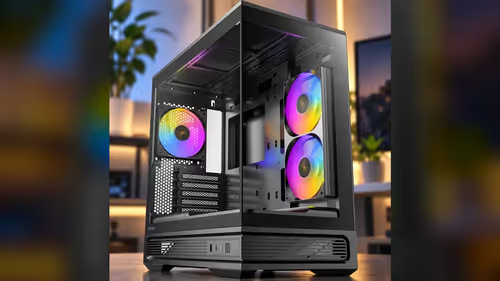
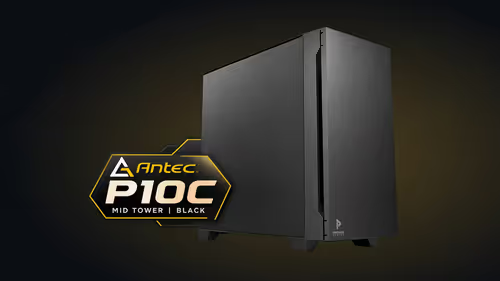
Through a glass side panel, the difference shows most. A standard ring looks like a bright circle on a dark wall, while a mirror frame throws the same colour into layers that appear to recede. The effect is strongest when the room is dim, seen from about 1 metre away, and the case sits at normal eye level, so the cooler is in view from the couch rather than hidden at the back of a desk.
The Antec Omni Matrix 360 uses a mirror frame on its three 120mm fans, and its pump head is an ARGB mirror-finish unit. Put together, the fans and the pump give the case a lit centre and a lit edge rather than one glowing point.
🎛️ Choosing between the two for your build
Start with the case and the speed you run it at. The three fans on the Antec Omni Matrix 360 move between 800RPM and 1800RPM, and the glow comes from the LEDs rather than the blades, so the look holds at every speed. Each of those fans is rated at 42.9CFM, and that airflow is the same whichever frame sits on top. A solid panel hides most of the fan, and a standard ring will look fine behind mesh. A glass panel rewards a mirror frame, because the reflections have somewhere to show. If you can see only the front edge of the fans, a standard ring costs less and still looks neat.
Next, check how the lights are driven. Both fan types use addressable ARGB, so one header can run several fans in sync. Check the number of fans each header can handle on your board, then plan the lead routing before you mount the radiator. Our case fans range groups fans by type, which makes that comparison easier.
Finally, decide how much colour you want. A mirror frame amplifies whatever the controller sends, so a bright rainbow loop reads loudly through glass. A single steady colour in a warm white or a deep blue often looks more expensive than a fast effect, and it is easier to live with in a room you use every evening.
If the lit fans are part of a liquid cooler rather than a standalone case fan, the CPU coolers range lists the cooler types side by side so you can compare the lighting alongside the cooling.
A small test helps. Set the lights to one colour, turn off the room lamps, and look at the case from your usual seat. That is the view you will live with, so choose the fan for that angle.
Frequently Asked Questions
Do infinity mirror fans run cooler than standard ARGB fans?
No. The reflective frame changes how the light looks, not how the fan moves air, and a fan running at 1800RPM moves the same air whatever its frame looks like. Cooling depends on the fan's speed and airflow, so compare those figures when you judge cooling.
Will a mirror frame work with a standard ARGB header?
Yes, provided the header is a 5V addressable ARGB header with three pins. The frame changes the light's appearance, while the controller and the header work the same way for both fan types.
Are standard ARGB fans harder to set up?
They are not. Both fan types use the same addressable lighting, so the setup steps are the same. The difference shows only in the look once the case is closed.
Does the glass side panel matter for the effect?
It matters a great deal. A mirror frame looks deepest through glass, while a solid panel hides most of the reflections. A standard ring still looks good behind a solid panel, if the glow is all you want to see.
Want the glow inside your case?
Browse our case fans and pick a style that suits the side panel on your build.