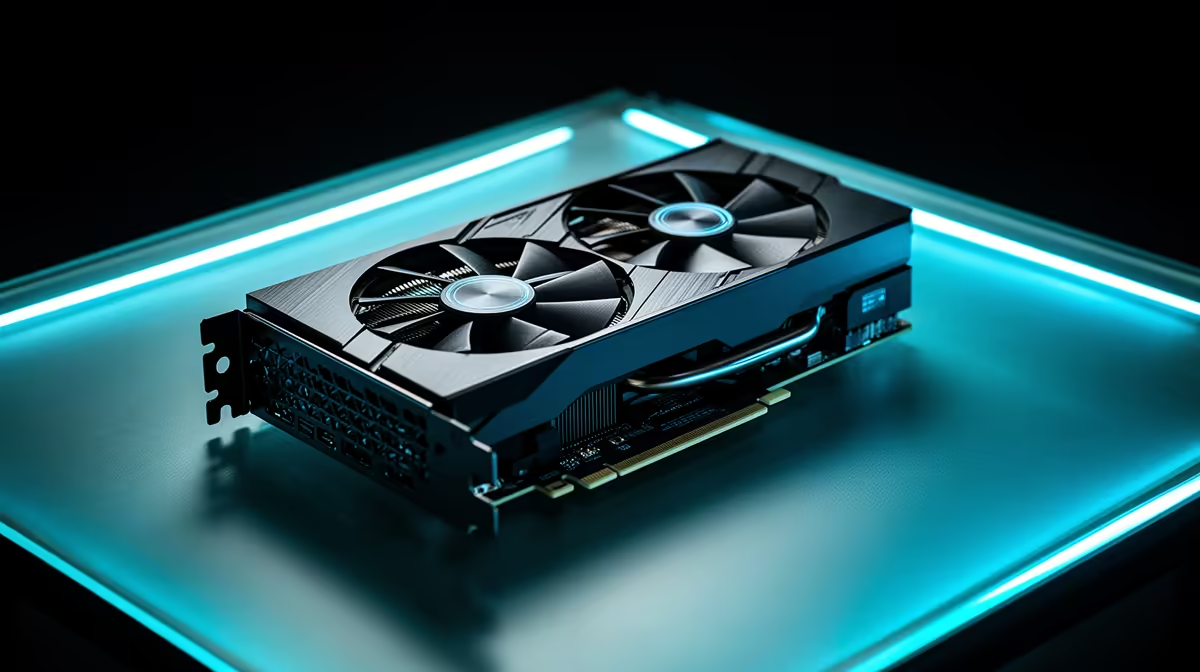
Sixteen gigabytes sounds generous until you load a full-precision video model and watch it refuse to fit. For image generation, though, the RTX 5080 and its 16GB of VRAM sit in a genuinely capable spot in 2026. It chews through SDXL, runs Flux in its quantised forms comfortably, and only starts to feel tight when you push into uncompressed Flux.1 Dev or 14B local video. Whether that matters depends entirely on what you actually make.
Quick Answer
For most AI image work in 2026, the RTX 5080's 16GB is enough. SDXL runs easily and FP8 Flux fits with headroom, so the everyday image-generation workload is well covered. It gets tight for full-precision Flux.1 Dev (which wants far more than 16GB) and is limited for large local video models like Wan 2.2 14B without quantisation. For photos, yes; for heavy local video, look higher.
What 16GB Comfortably Handles
SDXL is the easy case. The base model needs around 8GB at FP16 and roughly 12GB with the refiner, so the 5080 has clear breathing room for 1024-pixel work, ControlNet stacks and batch runs. This is the bread and butter of AI art and the card never breaks a sweat.
Flux is the more interesting test. Full FP16 Flux.1 Dev is huge and does not fit on any consumer card. But the FP8 build lands near 12GB, which fits the 5080 with room to spare, and quantised GGUF versions go lower still. So in practice you run Flux on this card every day, just not in its uncompressed form.
Where 16GB Starts To Pinch
Two workloads stretch the card. The first is full-precision Flux.1 Dev at FP16, which exceeds 16GB outright, so you offload or step down to FP8. For image quality the FP8 difference is usually negligible, so this is rarely a real problem. The second is local video generation: large models like Wan 2.2 14B want more memory than 16GB provides unless you quantise, and even then you trade headroom for resolution and clip length.
The 5080 does have a genuine advantage that softens this. Its Blackwell architecture supports native FP4, which roughly cuts memory use again and lifts throughput, so the card punches above its raw VRAM number when models are built for it. That keeps it relevant for image work for some time.
If you mainly generate images, the RTX 5080 graphics cards stocked at Evetech are a strong fit, and complete machines tuned for this are easy to compare on the AI PCs range.
Frequently Asked Questions
Can the RTX 5080 run Stable Diffusion and SDXL well?
Yes, comfortably. SDXL needs around 8GB at FP16 and about 12GB with the refiner, both well within 16GB. You get room for ControlNet and reasonable batch sizes, making the 5080 a fast, fuss-free SDXL card.
Does Flux work on 16GB of VRAM?
Yes, in its FP8 form, which sits near 12GB and fits with headroom, plus quantised GGUF builds that go lower. Full FP16 Flux.1 Dev does not fit, but for image quality the FP8 version is effectively as good for most users.
Is 16GB enough for AI video generation?
For light or quantised video it can manage, but large models like Wan 2.2 14B really want more VRAM unless heavily compressed, and you sacrifice resolution and length to fit. Serious local video work points toward a card with more memory.
Should I wait for more VRAM instead?
If your work is image generation, no real need; the 5080 covers SDXL and quantised Flux well and its FP4 support extends its life. If you are set on uncompressed video models, a higher-VRAM card is the better long-term buy.
Building an AI art rig that fits your workload? Compare current graphics cards on the Evetech GPU best sellers and match the VRAM to the models you actually run, from SDXL up to local video.