Quick Answer
A 420mm radiator has 17 percent more surface area than a 360mm radiator, translating to 4 to 10 degrees Celsius lower CPU temperatures at equivalent fan speeds. The practical benefit is most significant for CPUs pushing beyond 200W TDP under sustained load, like an overclocked Ryzen 9 9950X or Intel Core Ultra 9.
What the Extra 60mm of Radiator Actually Buys 🌡️
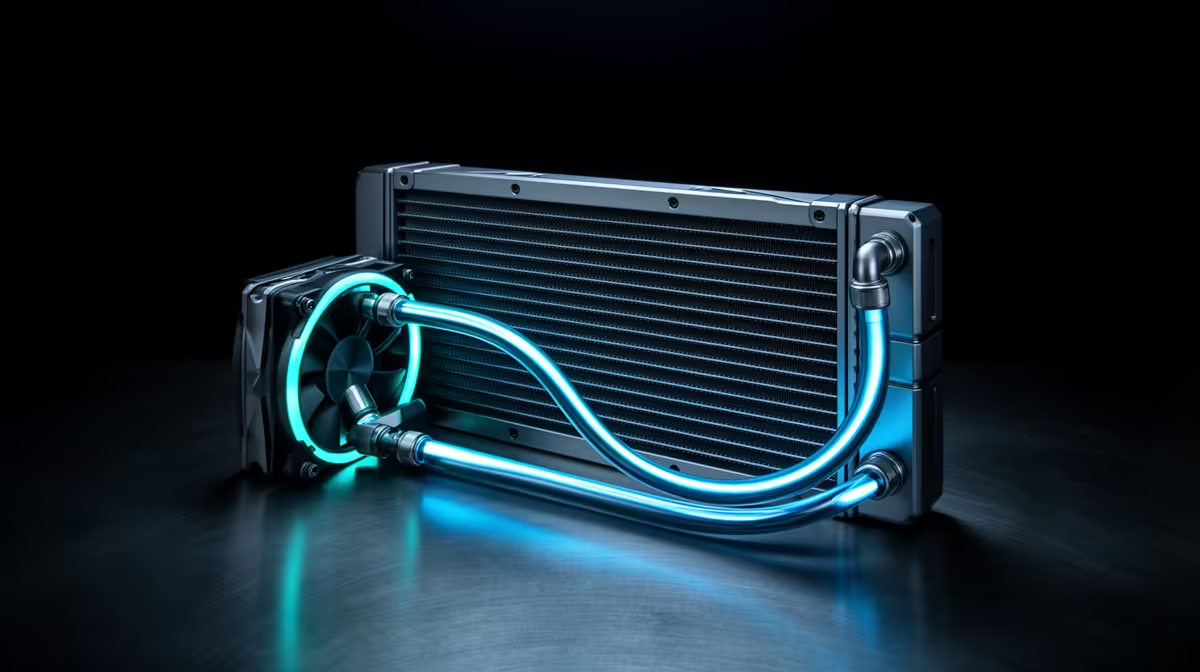
A 420mm radiator uses three 140mm fans; a 360mm uses three 120mm fans. At 1,000 RPM, a 140mm fan delivers roughly 30 to 40 percent more cubic feet per minute than a 120mm fan at the same speed. The larger fin array gives coolant more contact time with the air stream. For a Ryzen 7 9800X3D at stock settings (120W gaming TDP), a 280mm AIO is adequate and a 360mm is comfortable. The 420mm becomes relevant when you push a 200W or higher TDP processor, or when you want the lowest possible fan noise: running the 420mm at 700 RPM vs the 360mm at 1,100 RPM for the same thermal result is a meaningful comfort difference. AIOs with 420mm radiators are stocked at Evetech from around R3,500 to R7,000.
The 360mm Option for Most Gaming Builds 🎮
For the majority of SA gaming builds, a 360mm AIO is the practical sweet spot. It fits inside far more cases (virtually every mid-tower with front radiator support), costs R1,000 to R2,000 less than equivalent 420mm units, and cools a Ryzen 7 9800X3D to 75 to 82 degrees Celsius under gaming load without fan noise above 35 dB. The 360mm three 120mm fans also integrate more easily into standard airflow configurations because 120mm is the common exhaust and supplemental fan size. If your case supports 360mm at front and top, that dual arrangement actually outperforms a single 420mm, though at higher cost and complexity.
Case Compatibility Is the Deciding Factor 📐
Not all cases claiming 420mm support are equal. Some list it as a theoretical maximum but require removing drive bays or accepting compromised cable routing. Verify that the front radiator bay is at least 455mm long, the front-to-motherboard tray clearance is 55mm or more, and the case does not place a drive cage in the radiator's airflow path. Cases confirmed for full 420mm without compromise include the Phanteks Enthoo 719 and Corsair 7000D Airflow. In SA, these full-tower cases range from R3,500 to R8,000 at Evetech.
Measure Tray Clearance Before Buying a 420mm AIO ⚡
The most common mistake with 420mm installs is purchasing the AIO before confirming front-to-motherboard tray clearance. A 30mm thick radiator plus a 25mm fan totals 55mm minimum, and many mid-towers offer only 40 to 45mm. Pull up your exact case model's specifications and look for front radiator clearance or HDD cage clearance before ordering.
FAQ
Does a 420mm radiator cool better than a 360mm for gaming-only workloads?
For pure gaming on a stock Ryzen 7 9800X3D or Core i7-13700K, the difference is 3 to 5 degrees Celsius, which does not affect frame rates or boost clock behaviour. The 420mm advantage is more pronounced under workstation workloads like rendering at sustained 100 percent CPU load.
Are 420mm AIOs compatible with AM5 and LGA1851 sockets?
Most current 420mm AIOs ship with mounting hardware for both AM5 (Ryzen 7000 and 9000) and Intel LGA1851 (Core Ultra 200) out of the box. Always verify the product's supported socket list, particularly for older sockets which may require a separate adapter bracket.
Is a dual 360mm setup better than a single 420mm?
For total thermal capacity, yes: two 360mm radiators provide more surface area than one 420mm. However, dual radiators require two AIOs or a custom loop, significantly increasing cost and complexity. For 95 percent of gaming builds, one AIO is the correct choice.
Choosing between a 420mm and 360mm liquid cooler?
Evetech stocks AIO coolers in both sizes from NZXT, Corsair, Lian Li, and DeepCool, with case bundles available to ensure perfect compatibility.