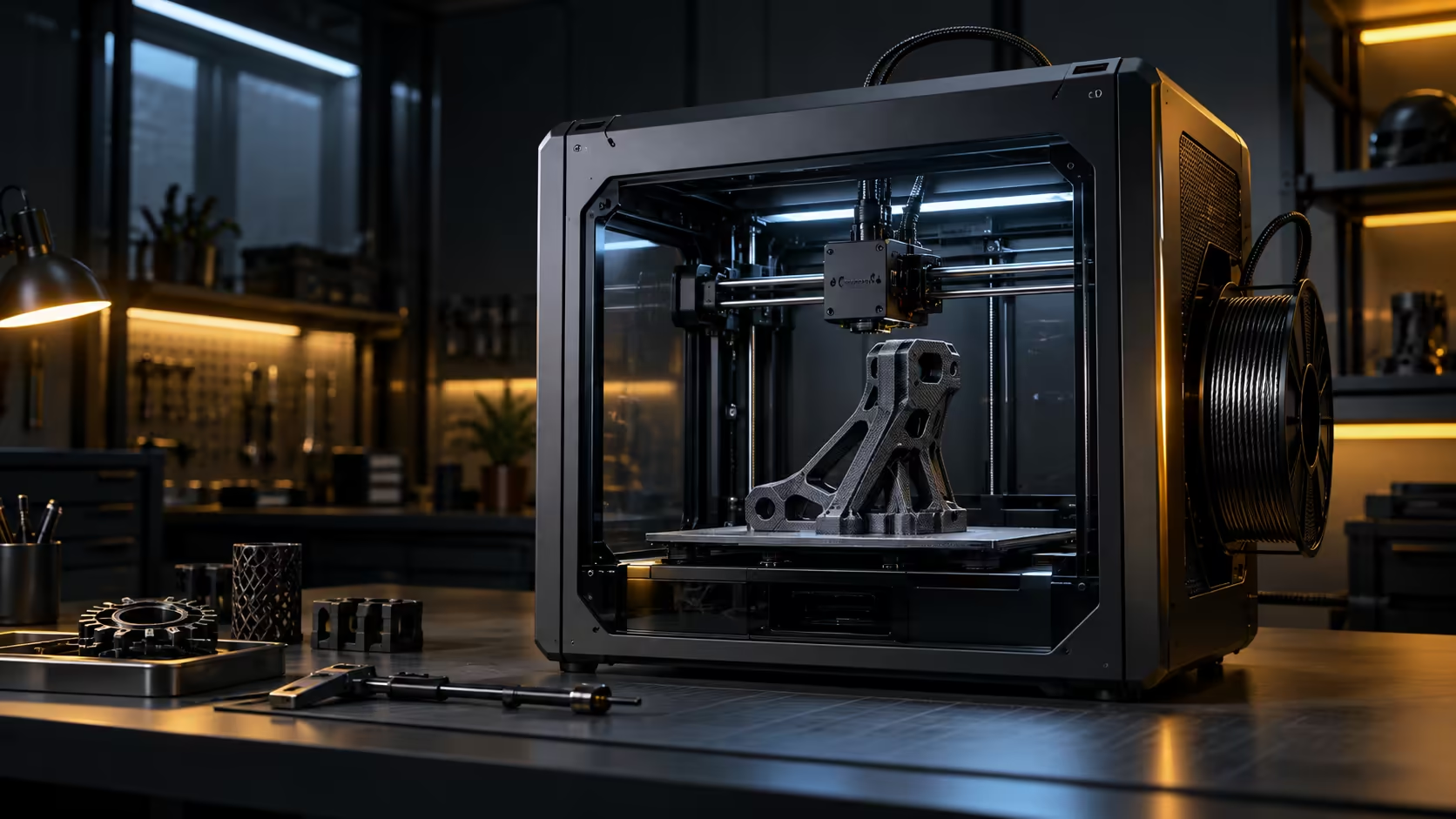
Three separate features decide whether a fast printer actually delivers on that promise once real filament and real deadlines are both genuinely on the line, and none of the three substitute for one another. Choosing a fast 3D printer in South Africa means checking CoreXY motion, direct drive feed and nozzle temperature together, not any one alone.
Quick Answer
CoreXY motion supplies the pace by keeping heavy motors fixed to the frame, a direct-drive feed handles filled and flexible spools without slipping under pressure, and a hot enough nozzle decides your actual usable material list once the printer finally arrives on the bench. The Creality K1C combines all three, CoreXY motion, a 50N direct drive extruder and a 300C nozzle, for R12,599.
⚙️ CoreXY: where the raw pace actually comes from
Keeping the motors stationary and moving only a toolhead under 500g is what allows a machine to hold acceleration above 15000mm/s2 without shaking the print apart. Without this, a fast-sounding top speed rarely translates into a fast real print, since a heavier moving system cannot safely accelerate as aggressively regardless of what the box claims.
🔗 Direct drive: keeping pace consistent under load
Speed above 300mm/s generates back pressure at the nozzle, and a weak feed system starts slipping exactly when that pressure is highest, which undoes whatever advantage the fast motion system was providing. A direct drive extruder with a strong grip holds steady through this, particularly on filled or flexible filaments that a Bowden system handles less reliably at pace.
🌡️ Nozzle temperature: what you can actually print once it arrives
A fast printer that only reaches 250C is still limited to PLA and PETG, regardless of how quickly it can move. A 300C-rated nozzle opens nylon, polycarbonate blends and carbon-fibre filament, none of which are usable at all on a lower-rated hotend no matter how fast the rest of the machine performs.
Check all three specifications together when comparing options rather than treating any single number as decisive, since a printer strong in one area and weak in another underperforms in ways a spec sheet alone will not reveal. Browse the 3D printer range with these three checks in mind, stock filament matched to whichever nozzle capability you settle on, and a decent home fibre router is worth having sorted too if remote monitoring and firmware updates are part of how you plan to run the machine.
🧮 Reading past one big number
Manufacturers know a single headline figure sells better than three numbers that need explaining together, which is exactly why top speed gets printed in large type while acceleration, feed strength and nozzle temperature sit in smaller print further down the listing. Train yourself to look past the large number first and check whether the supporting figures are even given at all anywhere, since a listing that omits acceleration or feed force entirely is often hiding a weaker number rather than a genuinely fast, well-rounded machine.
A printer advertised purely on a 600mm/s top speed, with no acceleration figure given, deserves the same scepticism as a car advertised purely on its top speed with no mention of how it handles corners. The number might be real, but it tells you almost nothing about how the machine performs on the kind of print you will actually run day to day, which is rarely a single unbroken straight line from one side of the plate to the other.
🏗️ Why these three features tend to arrive together, not separately
CoreXY motion, a strong direct-drive feed and a hot, capable nozzle are not three unrelated features bundled together by chance, they are three parts of one coherent engineering decision aimed at the same goal. A manufacturer building a machine capable of 500 to 600mm/s has to solve all three problems at once, since a fast motion system paired with a weak feed simply reveals the feed's weakness sooner, and a hot nozzle without fast motion never gets to show off its material range on a reasonable timeline.
This is useful to know when a machine looks unusually cheap relative to its advertised speed. It is far more common for a manufacturer to have cut corners on the feed system or the nozzle, the two specs that get less attention in marketing copy, while keeping the flashy motion system and its associated top speed intact. Check the quieter numbers specifically when a deal looks too good relative to the competition, since that is usually where the actual compromise is hiding.
🛒 A practical shortlist checklist
Before comparing prices at all, write down three numbers for every machine on your shortlist: the acceleration rating, the extruder's rated drive force if published, and the nozzle's maximum temperature. If a manufacturer does not publish one of these figures anywhere, treat that omission as information in itself rather than an oversight, since a genuinely strong number is rarely left out of a listing.
Once you have all three numbers side by side for every candidate, the comparison becomes considerably more honest than working from price and top speed alone. A machine that is R2,000 cheaper but visibly weaker on two of these three figures is very often the worse buy once you account for nozzle replacements, feed slippage, or simply not being able to print the material you actually needed in the first place, all of which cost more over a year than the saving on the sticker price ever did.
Frequently Asked Questions
Is CoreXY motion alone enough to guarantee a fast, reliable printer?
No, a weak feed system or a limited nozzle rating can undermine speed regardless of how good the motion system is on its own.
Does direct drive matter if I only print standard filaments?
Less critically for PLA and PETG specifically, though it still offers an advantage on flexible filaments and at higher speeds generally.
Should nozzle temperature be the deciding factor when budget is tight?
It is worth prioritising if your projects need materials beyond PLA and PETG, since this spec cannot be upgraded around later without effectively replacing the hotend.
Can these three features be found separately on cheaper machines?
Sometimes individually, but finding all three combined together at a genuinely reasonable price is less common than finding a machine deliberately built around all of them from the ground up.
Comparing fast printers and unsure which spec actually matters?
Check motion, feed and nozzle temperature together, not any single number in isolation.