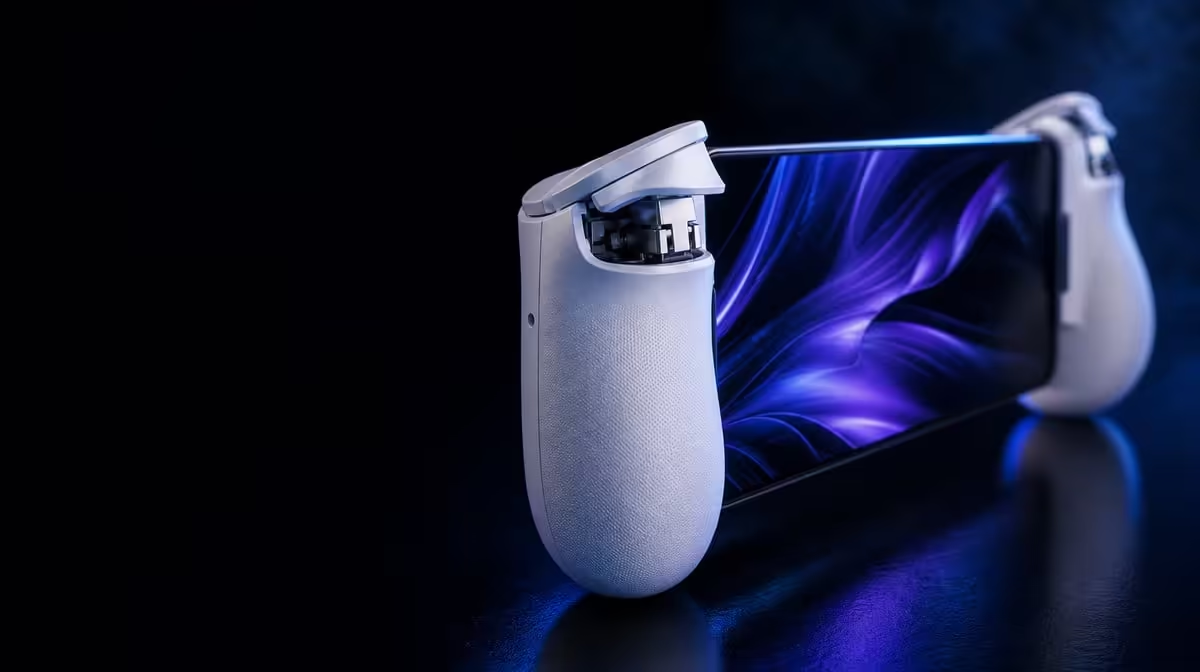
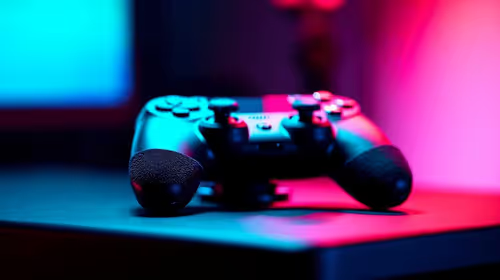
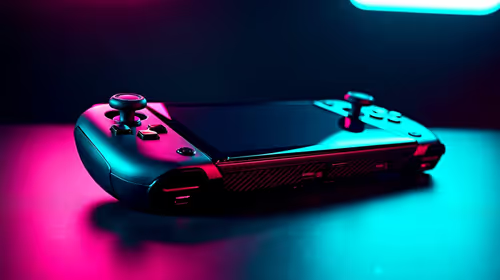
A trigger can make a digital command feel cleaner before the game has processed anything else. Micro-switch triggers for mobile gaming provide a distinct actuation event that suits rapid, repeatable presses. On the R1,199 GameSir X3 Pro, they sit beside Hall sticks and 6-axis gyro, giving separate control methods for direction, action and motion.
Quick Answer
The X3 Pro's E-Sports Micro Switch Triggers add a short, crisp actuation for digital-style commands such as firing or shifting in supported games. The controller costs R1,199, and the switch improves physical press definition rather than removing connection, software, display or network delay.
⚡ A defined actuation changes finger technique
A micro switch changes state at a clear point. The player can press until the command registers and then release enough for the switch to reset, avoiding unnecessary extra travel. That makes repeated inputs easier to practise with a consistent rhythm.
The audible or tactile response can also help identify whether the finger completed the press. It does not prove that the game acted at the same instant, because the signal still moves through the controller connection and software. Separate physical feedback from the on-screen result.
Evetech's gaming controller collection provides current options for comparing trigger styles. The X3 Pro's R1,199 price covers a complete cooled mobile controller rather than the switches alone.
Practise the release as carefully as the press
Rapid input fails if the trigger never resets between commands. Use short sets at a steady tempo, listening or feeling for both actuation and return before increasing speed.
🎮 Match digital action to the right games
Micro-switch triggers fit actions that need an on-or-off event: a shot, gear change or other command that gains nothing from partial pressure. The sharp actuation can make those inputs feel direct and repeatable.
Analog triggers serve a different purpose when a supported title maps depth to throttle, braking or another variable. A micro switch cannot invent graduated values. The trigger shape should not be confused with its reporting method.
Review the player's priority games and identify which actions use the triggers. Test mapping, reconnect behaviour and gameplay rather than relying on menu navigation. One mobile title may recognise the controller yet ignore a particular control.
The gaming accessories category can help organise cables around the phone. A cable pulling on the controller can affect grip and finger position, undermining a fair trigger comparison.
🎯 Combine fast actions with precise direction
The X3 Pro's Hall sticks use magnetic sensing for directional position. In an FPS, the right stick can bring aim towards a target while the micro-switch trigger handles the firing command. Configure deadzone and sensitivity before assessing the whole action sequence.
Six-axis gyro may add fine physical correction in supported games. Calibrate it on a stable surface and reduce dual rumble during the first test. This prevents feedback movement from being mistaken for aim instability while learning the trigger timing.
Run a drill that requires moving, aiming and pressing once per target. Count early, late or missed commands. Then isolate the trigger with a stationary test if the sequence fails. The controller offers several input layers, but diagnosis is faster when only one is examined at a time.
🧪 Measure response without impossible promises
Film the finger and screen together at a high frame rate if the phone allows it, or use an in-game timing test. Keep the same display mode, game scene and connection. Compare several presses rather than choosing the quickest single result.
The physical actuation is only one stage. Game processing, screen output and online conditions can each add timing. A controller switch cannot correct a remote server or change a phone's display pipeline.
Comfort belongs in the measurement. A crisp switch is less valuable if the grip forces the finger into an awkward angle. Test several minutes of repeated use, pause at any discomfort and adjust posture rather than squeezing harder.
The accessories best-seller page offers wider setup context. Keep the final verdict tied to actual game actions and a relaxed hand position.
At R1,199, the X3 Pro makes micro-switch triggers part of a broad mobile package. Their strongest contribution is certainty at the physical actuation point, not a sweeping claim about total latency.
Build a trigger drill around three tempos. Start with slow presses that make every actuation and reset obvious, move to a comfortable match pace, and finish with a short burst. Count missed commands separately from late on-screen results.
Video can help distinguish the stages. Frame the finger and phone display together, then inspect several repetitions rather than selecting the quickest. This is a practical consistency check, not a claim of laboratory timing.
Grip pressure should remain low enough that the index finger moves independently. If the whole hand tightens during fast input, the player may shift the phone inside the stretchable frame or obscure the cooler. Rest between sets and adjust finger position before chasing more speed.
Test both triggers, even if the main action uses one. Their roles may differ across games, and a comfortable right-side press does not prove the left hand has the same angle. Map each to a useful command where the title permits it.
Restore normal dual rumble and repeat the sequence. Strong feedback can alter finger contact or hide the switch's tactile reset. A competitive profile may favour gentler rumble without reducing its value in other modes.
The X3 Pro's R1,199 package gives trigger-focused players useful supporting controls, but technique completes the hardware. Repeatable actuation, complete release and relaxed posture are the three parts a switch cannot practise on the player's behalf.
Save the practice result beside the game and display mode. A future change in frame setting or input mapping may alter the on-screen response while the physical switch remains identical.
Clean storage matters for triggers as well as sticks. Prevent pressure on either lever in a bag, and check that both return freely before a competitive session.
Micro switches add clarity at the actuation point. Their honest value is a finger movement that can be learned and repeated, backed by the broader control and cooling systems in the R1,199 X3 Pro.
Pair the drill with a missed-input note. Record whether the finger failed to press, failed to release or actuated cleanly while the game responded late. Those are different problems and need different corrections.
Run the final sequence with ordinary game audio. A player who depends entirely on hearing the switch may lose timing in a louder scene; tactile reset should remain clear enough for the normal environment.
Clean, repeated inputs define the micro-switch advantage. Chasing a single dramatic speed result does not.
Frequently Asked Questions
What is the defining advantage of a micro-switch trigger?
It gives a clear actuation event that supports short, repeatable digital-style presses.
Which actions are a poor fit for a simple switch?
Actions needing graduated depth, such as partial throttle in a supported racing game, call for an analog trigger assessment.
Can short trigger travel remove network delay?
No. It changes the finger's physical input stage; network timing exists elsewhere in the game path.
How much is the X3 Pro with E-Sports triggers?
At R1,199, the white X3 Pro also carries Hall sticks, cooling, gyro and two-motor feedback.
Ready to put crisp trigger action into a real game test?
Browse Evetech's controller options and compare each mechanism against the commands you use most.