You’re in the final circle. It’s a 1v1. You flick your mouse for the winning shot… but the cable snags. Game over. We’ve all been there. That stiff, annoying cord can be the difference between a win and a rage quit. That’s why the paracord vs shoelace cables debate is so critical for competitive gamers. These ultra-flexible cables promise a near-wireless feel, but which one is right for your setup? Let's untangle this.
Understanding the Cable Evolution ⚡
For years, mouse cables were an afterthought. We battled with stiff rubber or thick braided cords that fought back with every swipe. Then, enthusiasts started modding their mice with paracord—the lightweight cord used in parachutes—and everything changed.
Manufacturers noticed. Soon, stock mice started shipping with their own flexible cables, often called "shoelace" or other branded names (like Razer's Speedflex or Glorious's Ascended Cable). The goal is the same: to create a cable so light and flexible that it feels like it isn't even there. This innovation has dramatically improved the experience of using a high-performance gaming mouse, making the wire a non-issue for most players.
Paracord vs Shoelace Cables: The Main Differences
At first glance, these two cable types look similar. They’re both soft, flexible, and designed to eliminate drag. But there are subtle differences in feel and performance that might sway your decision.
### Flexibility and Weight
This is the big one. The entire point of these cables is to feel wireless.
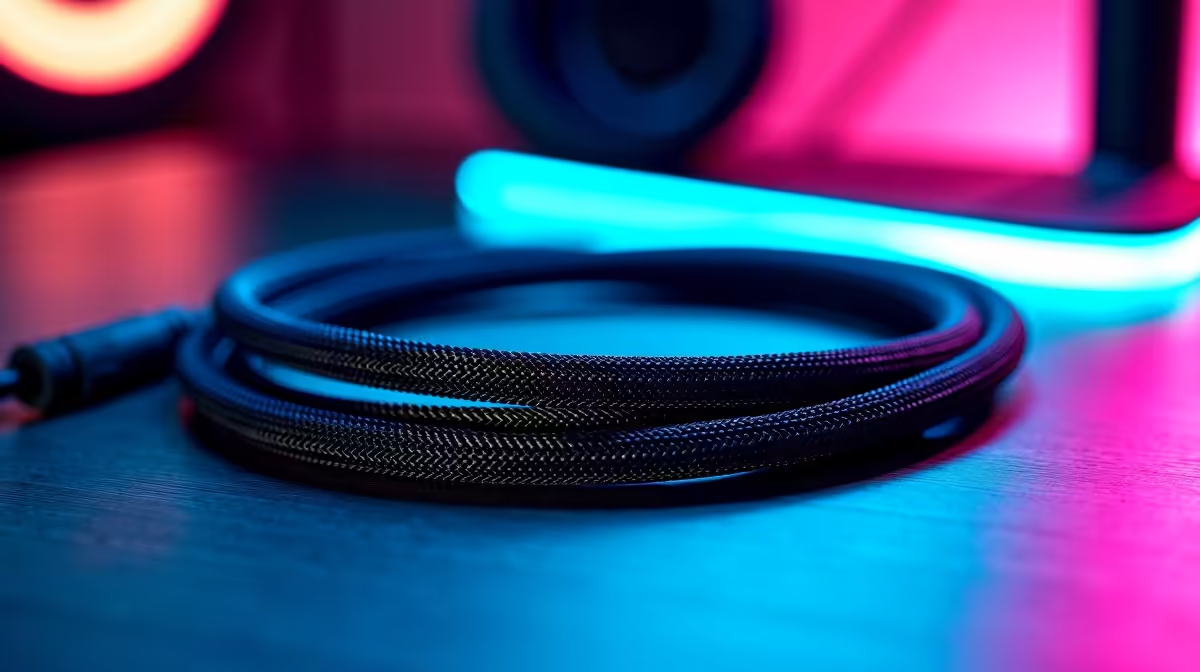
- Paracord Cables: These are typically the most flexible option, especially those from third-party modders. They have a very loose weave and minimal internal structure, offering virtually zero resistance during fast movements.
- Shoelace Cables: These are the stock cables found on most modern gaming mice. They are incredibly good—a massive leap from old rubber cables—but can sometimes be a fraction stiffer than a true custom paracord. For 99% of gamers, the difference is negligible.
Ultimately, both technologies have made modern wired gaming mice feel incredibly liberating.
Pro Tip: Get a Mouse Bungee
To make either cable type feel truly wireless, pair your mouse with a bungee. This small accessory lifts the cable off your desk, completely eliminating any chance of it snagging or dragging on your mousepad. It's a small investment for a massive quality-of-life improvement.
### Durability and Aesthetics
A flimsy-feeling cable might make you worry about its lifespan. Luckily, both are surprisingly tough. The flexible outer shell protects the delicate wires inside without adding friction. Aesthetically, it's all up to you. You can find these cables in every colour imaginable, allowing you to perfectly match your setup's theme, especially if you're looking into custom mouse accessories for a unique look. ✨
So, Should You Go Wireless Instead?
With all this talk of making wired mice feel wireless, the big question is: why not just get a wireless mouse? 🚀
It's a valid point. Modern wireless tech from leading brands is flawless, offering latency that's indistinguishable from wired connections. However, some gamers still prefer wired for a few key reasons:
- Weight: No battery means a lighter mouse, which can be crucial for aim-intensive games.
- Reliability: You never have to worry about charging your mouse or potential (though rare) wireless interference.
- Cost: Top-tier wired mice are often more affordable than their wireless counterparts, offering the same sensor and switch performance for less ZAR.
The choice between a paracord/shoelace wired mouse and a true wireless one comes down to personal preference for weight, convenience, and budget. There's no wrong answer here—only what's best for you.
Find Your Perfect Match at Evetech
Ready to ditch the drag and elevate your aim? Explore our incredible selection of mice with ultra-flexible cables and find the perfect fit for your playstyle and budget. Check out the best gaming mouse deals in South Africa for performance that puts you in control.