Quiet air cooling is a balance between metal, fan speed and the airflow already moving through your case. Scythe coolers such as the Mugen and Fuma families earned attention by chasing that balance rather than brute fan noise. For Scythe coolers in South Africa, the exact socket kit, case clearance and current support route should lead the decision.
Quick Answer
Scythe cooler listings and Rand prices can shift across specialist South African sellers and overseas channels, so no permanent local availability claim will age well. A border purchase may add freight, customs duty and difficult bracket support. Evetech's current CPU cooler range is the useful local checkpoint for air and liquid cooling options.
🧊 Understand the quiet-cooling approach
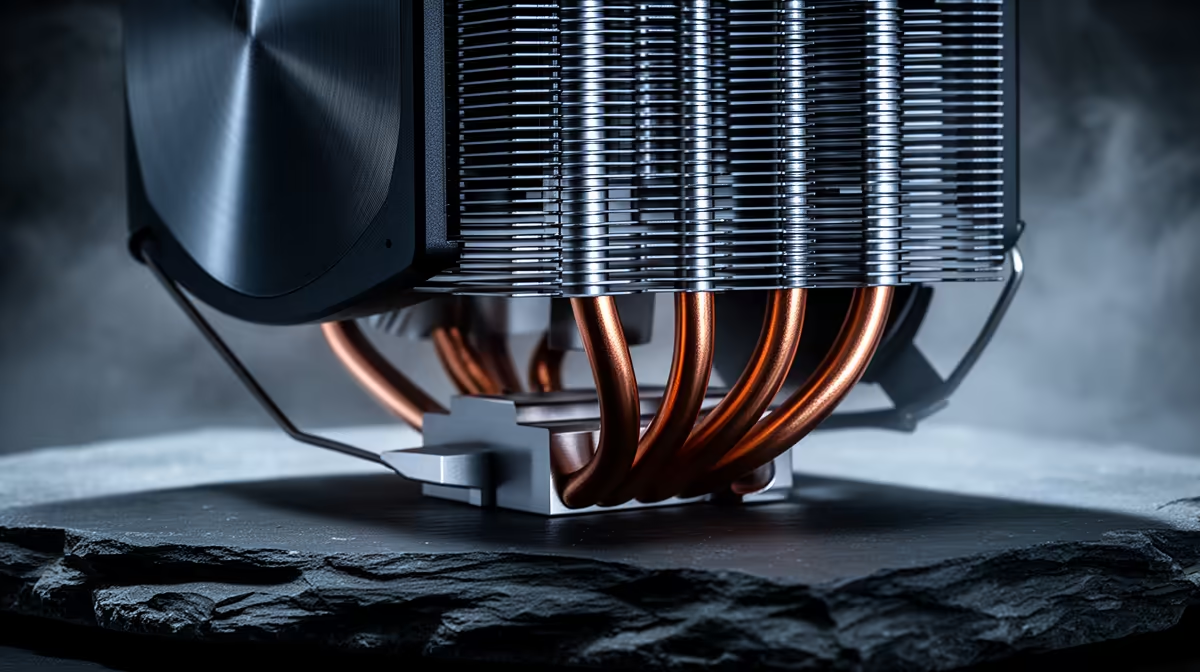
Scythe is associated with tower air coolers that use broad fin stacks, heatpipes and low-noise fans. Model and revision determine the real design.
More metal can spread heat across a larger area, allowing the fan to run slower. It also adds mass and clearance demands.
Single-tower coolers can offer easier memory and case access. Dual-tower designs can increase surface area while crowding the socket.
Do not choose from fan decibels alone. Test method, distance and heat load affect noise figures.
Look for cooling results at a normalised noise level. That comparison shows how efficiently the heatsink uses a quiet fan.
Check fan-bearing type, PWM range and replacement size. Standard fans improve long-term serviceability.
Match the cooler to the CPU's real power limits. A quiet mid-range build and an unrestricted flagship processor ask for different capacity.
📏 Verify socket, RAM and case fit
Use the current Scythe compatibility page for the exact cooler revision and CPU socket. Product families can outlive old mounting kits.
Confirm that the required backplate, spacers and brackets are in the box. Do not improvise mounting pressure.
Measure cooler height against the case limit. Leave room for side-panel structure and sound material.
Check memory height and the front fan position. Raising a fan to clear tall RAM can make the cooler too tall for the case.
Inspect graphics-card clearance near the first PCIe slot. Wide towers can obstruct a latch or backplate.
Check top-case fan and radiator interference. A tall air cooler may fit alone and conflict with a thick top fan.
Plan screwdriver access. Some towers need a long tool through the fin stack for final mounting.
📦 Compare current South African value
Use a dated offer naming the Scythe model, revision, fan count, socket kit, paste, seller and currency.
International carriage and customs duty can shape the delivered Rand amount. Heavy fin stacks need packaging that prevents bent heatpipes.
Ask who handles a noisy fan, damaged fins, missing mount or poor base contact.
Check whether newer-socket mounting kits can be sourced separately. Do not assume future compatibility.
Review Evetech's cooler best sellers for current locally popular cooling options and live specifications.
Compare local coolers on noise at your CPU load, height, RAM clearance, fan support and warranty. A model that fits cleanly can beat a larger tower forced into compromises.
Keep every unused socket bracket, screw, fan clip and adapter labelled by cooler model.
Include case airflow and paste in the project. A quiet tower cannot cool well while recycling graphics-card heat.
Read the seller's terms for bundled fan and mounting-part faults. These small items often decide whether the heatsink remains usable.
Check the base shape and CPU contact reports for the exact revision. A cooler can fit the socket while making less effective contact with a large or unusual heat spreader.
If the package uses two fans, verify their connectors and splitter. The motherboard should control both without exceeding header current.
Review low-RPM behaviour, since quiet idle depends on a fan that does not click or stall near its minimum.
Check the weight against motherboard and transport guidance. A large tower should be supported during a long trip with the PC.
If you already own quiet case fans, decide whether the cooler's bundled fan adds value or becomes a spare.
🧪 Mount for even pressure and low noise
Shut down, disconnect power and place the case where you can support the motherboard safely.
Clean the CPU heat spreader and cooler base with suitable material. Remove any protective film.
Install the correct backplate and standoffs in the documented orientation.
Apply thermal paste using a method suited to the processor and cooler. Avoid air pockets and excess around the socket.
Lower the heatsink evenly and tighten opposing screws in stages. Do not fully tighten one side first.
Attach the fan with airflow towards the rear or top exhaust. Check that clips clear the graphics card.
Connect the fan to a controllable CPU header. Verify speed in firmware before loading the processor.
Run an idle check, then a controlled CPU load. Watch temperature, clock speed and fan response.
Tune the curve to avoid rapid speed hunting around one temperature. A gentle ramp often sounds calmer.
Save baseline temperature, room condition and fan curve. Recheck dust, mounting and fan noise after several months.
Run a combined CPU and GPU load so the cooler breathes realistic case air. A CPU-only result can look better than gaming conditions.
Listen for turbulence near the rear case grille. Moving the fan a few millimetres or adjusting its speed can remove a tone without raising temperature.
Check paste spread only when a remount is justified. Repeatedly lifting the cooler for curiosity introduces dust and mounting variation.
After a platform update, keep the old brackets labelled even when unused. A secondary build may need them later.
When replacing the fan, match airflow direction and PWM range. A faster fan can create noise with little improvement if the fin stack is already saturated.
Frequently Asked Questions
Does Scythe have a South African distributor?
That status can change and should not be asserted forever. Check current local listings and support terms.
Why are Scythe coolers popular with quiet-PC builders?
Their tower designs and fan tuning have earned attention for balancing useful cooling with restrained noise.
How does border shipping affect price?
The actual carrier quote, customs assessment, insurance and support journey all belong in the total.
Are Scythe coolers compatible with modern sockets?
Many are, but compatibility depends on exact model revision and the included mounting kit.
Does Evetech stock quiet-focused coolers?
Use the linked live range and best-seller page to compare current noise, size and platform options.
Is warranty reliable on an imported cooler?
It follows the seller's written route. Confirm fan, bracket and heatsink transport responsibility.
Which Scythe models interest South African buyers?
Mugen and Fuma family names are often discussed, but current fit and revision should decide your choice.
Ready to cool your CPU without turning the PC into a fan test?
Browse Evetech's current CPU coolers and best sellers, then match heat load, case clearance and noise goals.