Quick Answer
For shared gaming spaces: budget, balanced, a clean three-tier plan is a 500GB-1TB Gen4 budget drive (R700 to R1,300), a 2TB Gen4 balanced drive (R1,900 to R2,900), and a 2TB Gen5 premium drive at 12,000MB/s+ for scratch work, all currently stocked at Evetech.
The Starter-To-Serious NVMe Ladder
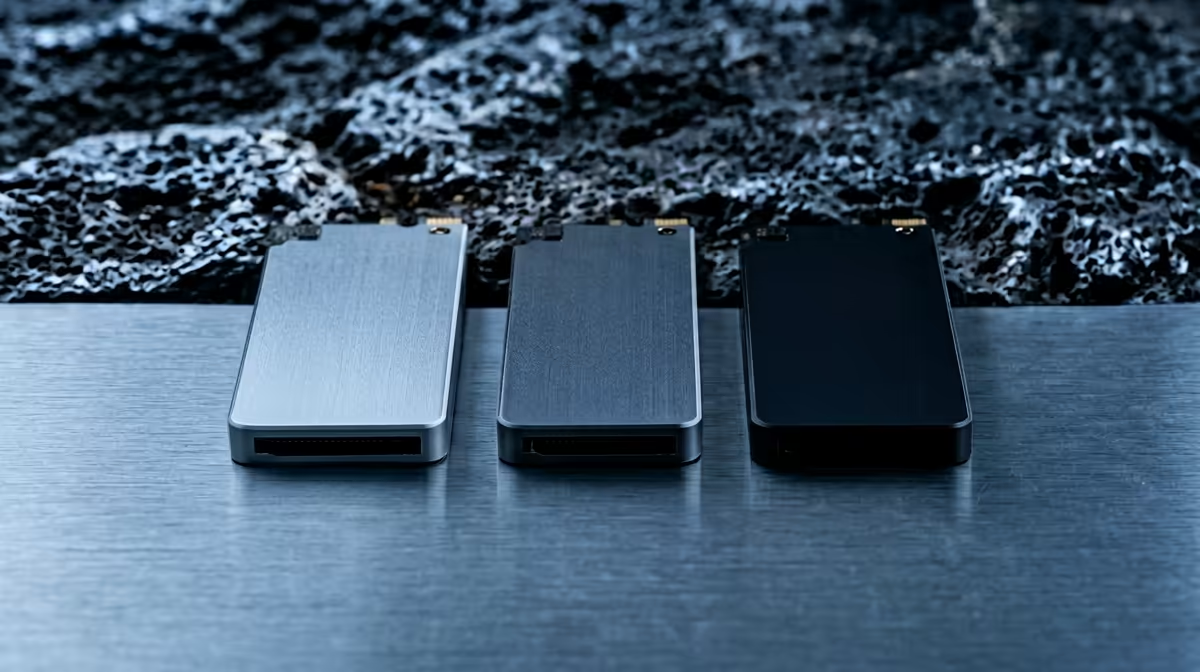
Start with a 1TB Gen4 drive at around 5,000MB/s reads for the OS, apps and a few active projects; that is the floor at roughly R1,100 to R1,700 currently stocked at Evetech. Step two is a 2TB Gen4 data drive (R1,900 to R2,900) so installs and media never crowd the boot disk. The serious tier adds a Gen5 drive at 12,000MB/s+ reads only if you move very large files or run a scratch disk; for gaming and general use the speed jump is barely felt and the heat and price are higher.
Matching The Drive To Your Workload
For shared gaming spaces: budget, balanced, decide between speed and capacity. If you mostly load games and apps, a 2TB Gen4 at ~5,000MB/s reads is the sweet spot at roughly R1,900 to R2,900 currently stocked at Evetech. If you move very large files daily, pay for sustained write speed and a higher TBW endurance rating rather than chasing the highest peak number on the box.
FAQ
Is Gen5 NVMe worth it over Gen4 for gaming?
Not really. Games load only a second or two faster on Gen5, and the drives run hotter and cost more. A 2TB Gen4 at ~5,000MB/s is the smart pick for gaming; save Gen5 (12,000MB/s+) for heavy file work.
How much NVMe storage do I actually need?
2TB is the practical sweet spot. Modern games run 80GB to 150GB each, so 1TB fills fast. A 2TB Gen4 (about R1,900 to R2,900 currently stocked at Evetech) holds a healthy library plus the OS.
Do I need a heatsink on my NVMe drive?
For Gen4 a heatsink is nice-to-have; for Gen5 it is essential. M.2 drives throttle past roughly 70C, so a heatsink or a motherboard M.2 cover keeps speeds steady during long transfers.
Compare Gen4 and Gen5 NVMe drives at Evetech by capacity, sustained write speed and TBW endurance to match your real workload.