Ever felt your aim betray you at the worst moment? You flick your mouse for that perfect headshot, but the cursor lands just... off. It’s a frustrating, all-too-common problem for South African gamers. While you might blame lag or your own reflexes, the culprit could be hiding inside your mouse. We're talking about a subtle but critical piece of tech: tilt angle correction in sensors. Let's debunk the myths and see if it's what you need.
Understanding Tilt Angle Correction
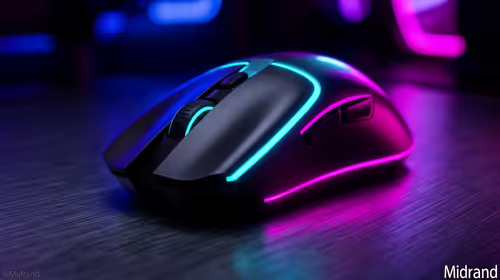
So, what is this feature really? Think about how you use your mouse in a heated match. You lift it, slam it down, and angle it constantly. Your mouse is rarely perfectly flat on the pad. Tilt angle correction is a smart feature in advanced sensors that compensates for these changes in angle. Without it, lifting and placing your mouse can cause the cursor to jump unexpectedly, a phenomenon gamers call "tilt slam." This technology helps ensure your aim remains true, no matter how aggressively you reset your mouse position. It's a key part of what makes modern gaming mouse components so precise. 🔧
Debunking the Myths: Fluff or Function?
Is sensor tilt correction just marketing jargon, or does it actually make a difference? Let's clear the air on a few common misconceptions.
Myth 1: "It's a Gimmick with No Real Impact."
This couldn't be further from the truth, especially for competitive players. When you tilt your mouse, even slightly, the sensor sees a distorted image of the surface below. On a high-DPI setting, this tiny physical distortion can translate into a significant cursor deviation on-screen. For low-sensitivity players who frequently lift their mouse to re-centre, this can be the difference between winning and losing a duel. Effective tilt angle correction minimises this deviation, keeping your crosshair exactly where you expect it.
Myth 2: "Every Gamer Needs It."
Not necessarily. The importance of mouse tilt correction depends heavily on your playstyle. If you're a high-sensitivity wrist aimer who rarely lifts your mouse, you might not notice its absence. However, for arm aimers in fast-paced FPS titles like Valorant or Apex Legends, it's a crucial feature. Whether you prefer the raw input of a reliable wired mouse or the freedom of the latest wireless mouse models, understanding your own habits is key to choosing the right tech. ✨
Quick Tip: Test Your Own Mouse 🚀
Open a drawing program like MS Paint. Select the pencil tool. Now, lift your mouse straight up and place it back down in the same spot, without moving it horizontally. Does it create a dot or a short line? A line indicates cursor deviation from tilt slam.
Is It a Priority for Your Next Upgrade?
Ultimately, deciding if you need a mouse with superior tilt angle correction in its sensor comes down to you. If you're a casual gamer or a wrist aimer, you can probably focus on other features like weight, shape, and sensor DPI. But if you're a competitive, low-sensitivity player who is constantly resetting your mouse, this feature should be high on your checklist. It provides a layer of consistency that can give you a real edge. A great mouse, combined with other high-quality mouse accessories like a premium mousepad, can truly refine your aim.
Ready for Pinpoint Accuracy?
Now that you understand the tech, find a mouse that matches your unique playstyle. Explore our best gaming mouse deals for performance that leaves missed shots in the dust.