Quick Answer
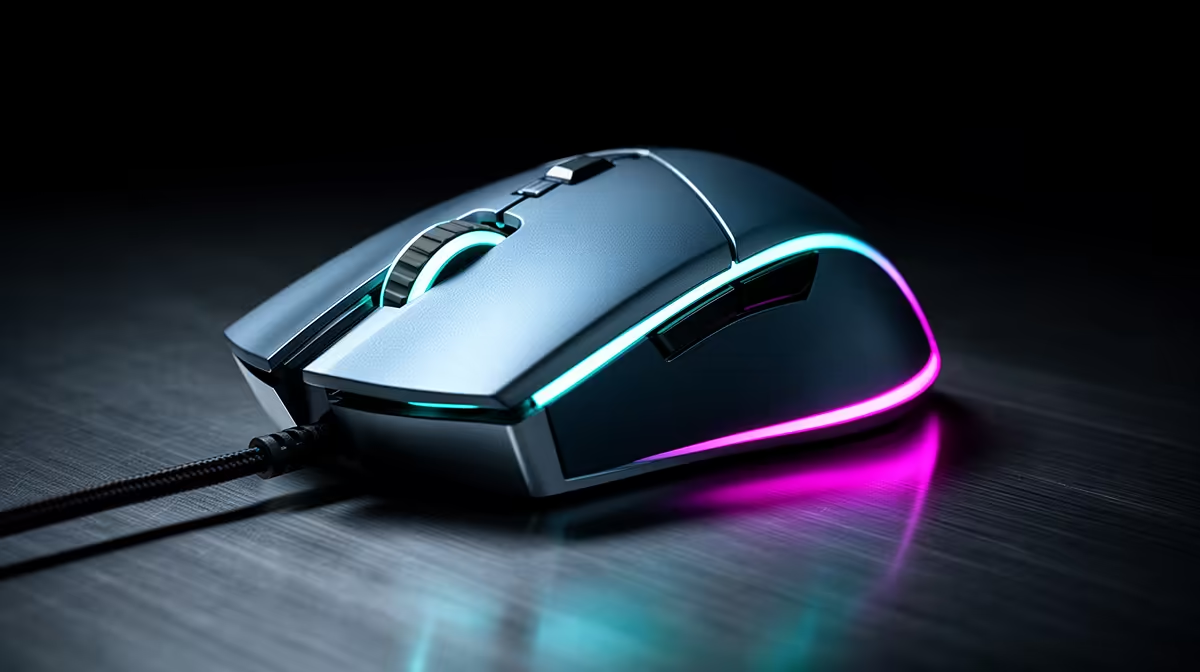
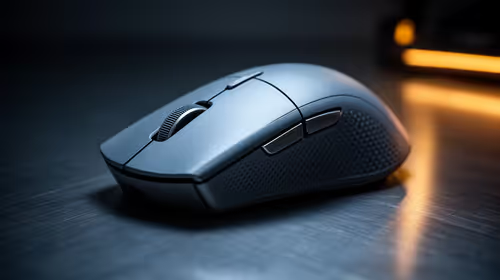
A 100 million click lifecycle rating translates to roughly 10 to 27 years of daily gaming before switch failure, depending on session length and click intensity. For a premium mouse priced between R1,800 and R3,000 in South Africa, that rating makes per-click cost negligible and means you will replace the mouse for ergonomic or technology reasons long before the switches wear out.
What 100 Million Clicks Actually Means 🔢
Manufacturers test switch lifecycle by mechanically actuating the button at a fixed force until the electrical signal degrades. 100 million actuations is the figure stamped on the box. A competitive player logging 6 hours per day and averaging roughly 10,000 clicks per hour produces around 21.9 million clicks per year. At that rate, a 100 million click-rated switch lasts approximately 4.5 years before the rated figure is reached, though most switches in quality mice outlast their rated lifecycle in practice.
Optical switches, which use a light beam rather than physical contact, carry 100 million ratings that are arguably more honest because there is no mechanical wear mechanism at all. Razer Gen-4 optical switches rate endurance of the LED emitter and plastic housing rather than any switching contact surface.
Calculating ZAR Value Over Time 💰
Consider two scenarios. Scenario A: you buy a R500 mouse with a 20 million click-rated mechanical switch. At 21.9 million clicks per year, the switches are beyond their rated life within 11 months. Most budget mice begin double-clicking well before the rated limit due to contact bounce, which cannot be fixed without soldering. Scenario B: you buy a R2,400 mouse with a 100 million click optical switch. The per-year cost over a 4.5-year switch lifecycle is around R533 per year, nearly identical to scenario A but with consistently clean click registration throughout.
The hidden cost in scenario A is replacement frequency. South African gamers buying two or three budget mice over the same period also absorb e-waste and the inconvenience of rebuilding muscle memory on a new device each time.
Build Quality Beyond the Switch Rating 🛠️
Switch lifecycle is only one dimension of durability. The scroll wheel encoder, cable or wireless charging circuit, PTFE glide pads, and shell plastics all have independent wear characteristics. Premium mice in the R1,800 to R3,000 range combine 100 million-rated optical switches with optical scroll encoders, braided cables, and thick PTFE pads that last multiple years. Budget mice often use rubber pads that wear through in 6 to 12 months on abrasive cloth mousepads, causing drag and affecting tracking accuracy.
Glide Pad Longevity Tip ⚡
PTFE replacement pads for most major gaming mouse models cost between R80 and R200 locally and can extend your mouse glide life by years. Replace pads before they wear through to the shell to prevent scratching your mousepad and degrading tracking.
FAQ
Does double-clicking always mean the switch is worn out?
Not always. Double-clicking can also be caused by debounce settings that are too short. Check if your mouse software allows you to increase the debounce time before assuming switch failure. Razer Synapse and Logitech G Hub both expose this setting.
Are optical switches worth the premium for casual users?
For casual users clicking fewer than 5,000 times per day, a quality mechanical Omron switch rated at 50 million clicks will last over a decade. Optical switches provide greatest value to competitive players with very high click counts who demand zero debounce delay.
Can I get premium-switch mice repaired locally if something else fails first?
Some electronics repair shops in Johannesburg and Cape Town offer gaming peripheral repairs, but parts availability is inconsistent. Buying through Evetech with local warranty support is the most practical protection.
Invest in a mouse built to last.
Evetech stocks premium gaming mice rated for 100 million clicks and beyond. Browse the selection at Evetech to find a model that delivers long-term value for your setup and play style.