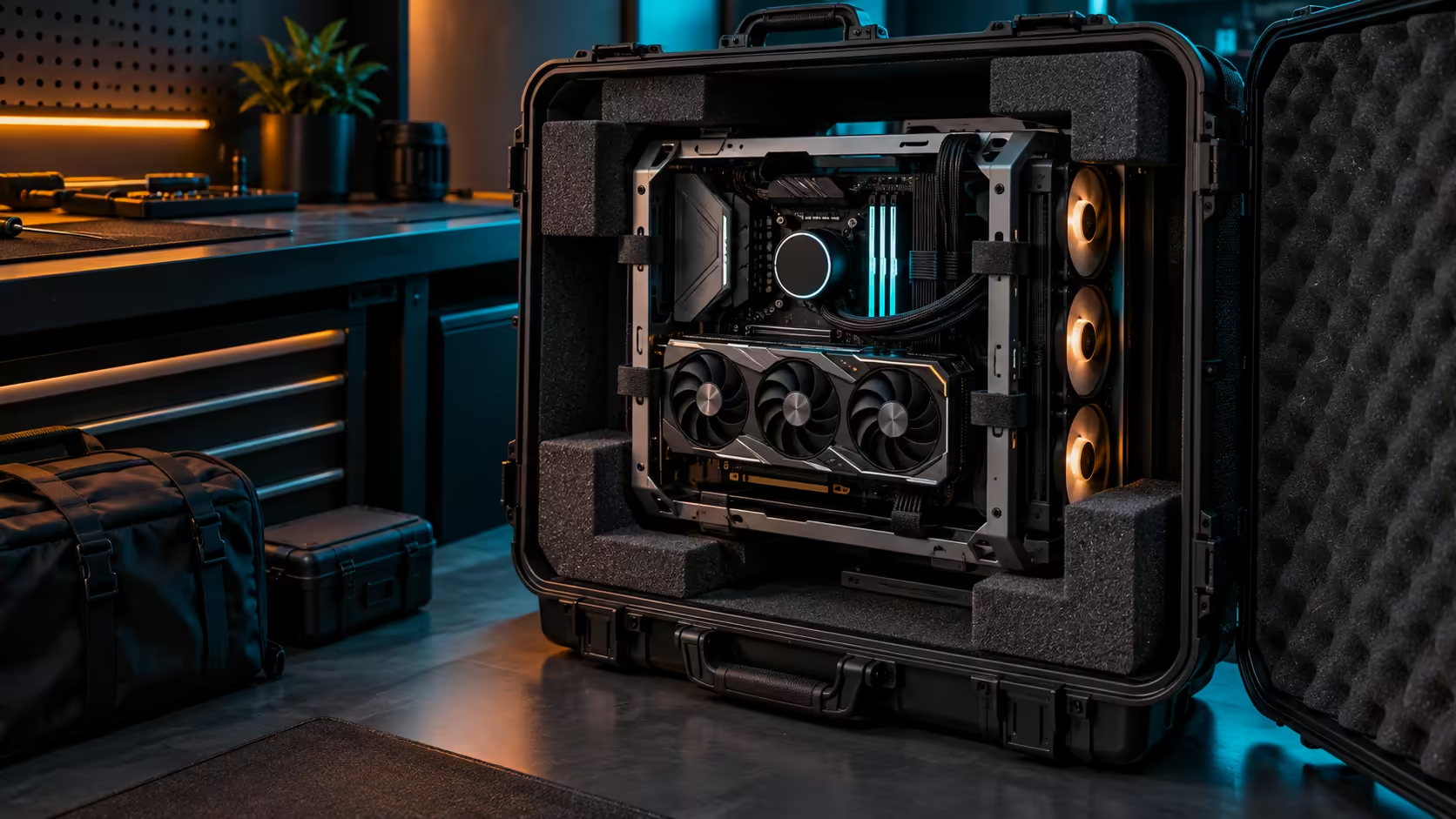
Paying R15,999 for a mid-tower case, before a single component goes into it, only makes sense under specific conditions, and pretending otherwise is how a premium EATX chassis ends up feeling like an expensive mistake rather than a good decision. The honest answer to when it is worth it depends on how long you plan to keep it, what you are putting inside it, and whether the local warranty on a large item genuinely matters to you.
Quick Answer
It pays off when the frame is likely to outlast at least one or two component upgrades, when your build genuinely needs the clearance an EATX-rated open frame provides, and when buying locally rather than importing a similar chassis is worth something to you in warranty terms. It does not pay off if you are building a modest system that will never approach the clearance or cooling headroom on offer, since that budget would do more for the parts inside a cheaper case. The R15,999 ROG GR20 Edition 20 buys 368mm of GPU clearance and a full 360mm cooling bay in 4mm aluminium alloy, which is specifically what you are paying for.
📅 Worth it when the case outlasts the build inside it
Cases have a longer useful life than most other components in a typical build. A graphics card gets replaced every 2 to 3 years, memory and storage get upgraded piecemeal, but a case that fits well tends to stay through several of those cycles. A premium frame's clearance and cooling headroom are exactly the specs that matter most for absorbing future upgrades without a second case purchase.
If you are the kind of builder who upgrades a card or a cooler every generation rather than rebuilding entirely, that longevity is where the extra spend earns its keep. A cheaper case sized tightly to today's parts is the one likely to need replacing at the next upgrade, at which point the premium frame's higher upfront cost looks better in hindsight than it did on day one.
Work out roughly how many upgrades you expect to fit through the same case before you decide. Two graphics card cycles and a cooler swap, spread over 4 to 6 years, is a realistic span for a case that fits well, and dividing the R15,999 over that span makes the annual cost look considerably smaller than the sticker price alone suggests.
🏗️ Worth it when EATX clearance is a genuine requirement, not a nice-to-have
EATX support matters if your board is actually EATX, or if you specifically want the wider layout for more expansion slots or memory capacity. It does not matter if your build uses a standard ATX board, in which case an EATX-rated frame's extra width buys you nothing beyond a larger footprint on the desk.
The same logic applies to the 368mm GPU clearance and the 360mm cooling bay. If your current and next graphics card both sit comfortably under 300mm, and you are not planning a full liquid loop, that headroom is unused capacity you paid for. A full-tower case at a lower price point may offer everything your specific build actually needs, without the open-frame display premium attached. Be specific about "next," too: a vague sense that you might want a bigger card eventually is not the same commitment as an actual upgrade planned within the next year or two.
🇿🇦 Worth it when the local warranty genuinely matters
Freight on a large aluminium box eats a disproportionate share of any saving found by shopping abroad, which is exactly why the warranty attached to a premium chassis is worth more than the same clause would be on a small, cheap accessory. A scratched panel or a bent frame handled by a local retailer costs you a phone call; the identical fault on an imported unit costs you a shipping quote before the dispute has even started.
If you would happily accept the risk and delay of an import to save money, that calculation shifts, though it is worth being honest that a saving of even 15 percent on a large, awkward-to-ship item is often smaller than it first appears once freight and duty are included.
❌ Not worth it for a build that will never use the headroom
A modest build, a mid-range graphics card, air cooling, a standard ATX board, gets nothing from an EATX-rated, 360mm-capable premium chassis beyond the display appeal of the open frame itself. If that visual appeal is genuinely what you want, the price is fair for what it delivers. If it is not, the same rand spent on a better graphics card or more storage in a cheaper case delivers more value to the actual computing experience.
Ask yourself honestly which category the build falls into before adding the case to the cart. A build chosen for performance per rand has different priorities to one chosen to be looked at, and pretending the two are the same decision is how a genuinely good chassis ends up feeling like the wrong purchase six months later.
There is no shame in either answer, and plenty of builders genuinely want both, performance and something worth looking at. The mistake is only in not deciding which one is actually driving the purchase before the money is spent.
Check the current case specials before assuming full price is your only option either way, since a premium frame at a discounted moment changes this calculation meaningfully in its favour.
Frequently Asked Questions
Does a premium case make sense for a modest build?
Generally not on cooling or clearance grounds, since those specs go unused. It can still make sense purely for the open-frame display appeal, if that is genuinely what you want.
How long should a premium case last to justify the price?
Through at least one or two component upgrade cycles, since that is where its clearance and cooling headroom earns back the higher upfront cost.
Is the local warranty really worth paying extra for?
For a large, awkward-to-ship item like a case, yes, generally more than the same feature is worth on a small, cheap component.
Should I wait for a sale rather than buying at full price?
If timing allows, checking current specials is worth it, since a premium frame at a discount changes the value calculation meaningfully.
Ready to decide if a premium frame actually suits your build?
Weigh clearance you will use, upgrade plans and warranty value before paying the higher price.