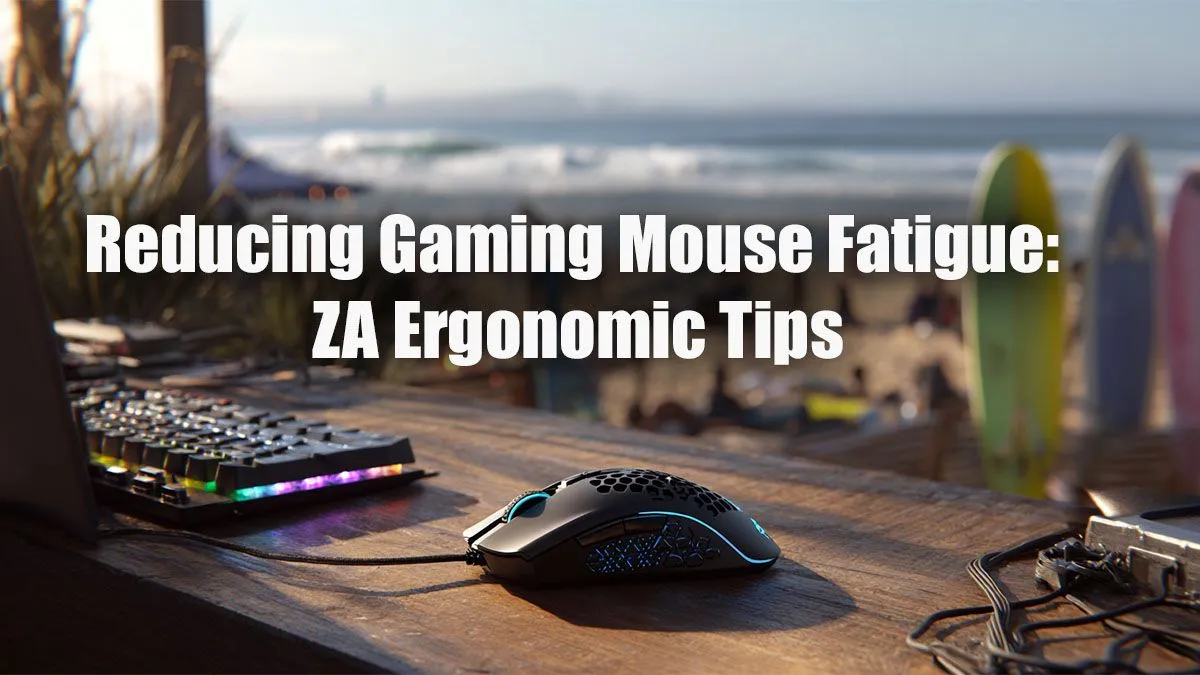
That tell-tale ache in your wrist after a marathon Apex Legends session… we’ve all been there. You’re dialled in, hitting your shots, but your hand starts cramping, turning a potential win into a frustrating loss. This isn't just bad luck; it's gaming mouse fatigue, a common issue for South African gamers pushing their limits. But don’t worry, you don’t have to trade your K/D ratio for comfort. A few smart adjustments can help you stop hand pain for good.
Understanding Gaming Mouse Fatigue
Before we dive into the fixes, what exactly is this nagging pain? Gaming mouse fatigue is a form of Repetitive Strain Injury (RSI). It happens when you make the same small, rapid movements for hours on end… like snapping to a target or frantically looting. This can lead to strain on the muscles and tendons in your fingers, hand, and wrist, causing symptoms like:
- Aching or burning sensations
- Tingling or numbness
- Weakness in your grip
- Cramping during or after gaming
Ignoring this can lead to more serious issues, so let's get proactive and sort it out.
9 Ergonomic Tips to Stop Hand Pain 🚀
You can dramatically reduce discomfort and improve your performance by focusing on your setup and habits. Here are nine practical tips to combat gaming mouse fatigue.
1. Match the Mouse to Your Grip
How you hold your mouse is everything. The three main styles are Palm, Claw, and Fingertip. A mouse designed for a palm grip will feel awkward and cause strain if you're a fingertip user. Understanding your natural grip is the first step to finding a mouse that feels like an extension of your hand. If you're unsure, browse a wide variety of shapes in Evetech's full gaming mouse component section to see the differences.
2. Get the Size and Weight Right
A mouse that's too big or too small forces your hand into an unnatural position. Your hand should rest comfortably over the mouse's body. Weight is also a huge factor. A lighter mouse requires less force to move, reducing strain over long sessions. A featherlight wired gaming mouse offers near-instant response times with minimal heft.
3. Consider Going Wireless
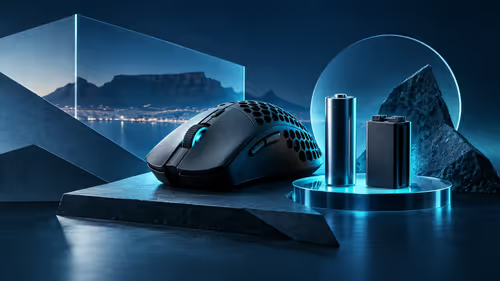
Cable drag is a subtle but constant source of resistance that makes you use more force than necessary. It can snag, pull, and add tension to your movements. Upgrading to a modern wireless gaming mouse eliminates this completely, giving you a smoother, freer glide across your mousepad. ⚡
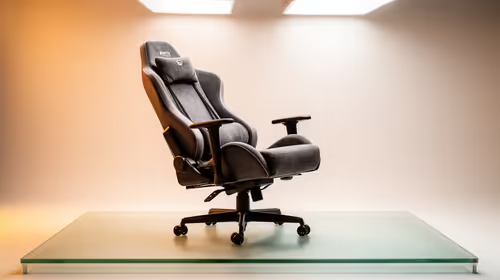
4. Optimise Your Desk Ergonomics
Your mouse is only one part of the equation. Your entire posture matters.
- Chair Height: Sit with your feet flat on the floor and your knees at a 90-degree angle.
- Arm Position: Your elbow should be at a roughly 90-degree angle, with your forearm parallel to the floor. Your wrist should be in a neutral, straight position, not bent up or down.
Quick Posture Check 🔧
Look at your arm right now. Is your wrist floating in the air or bent at a sharp angle on the edge of your desk? If so, you're creating a major pressure point. Adjust your chair height or use a wrist rest to ensure your forearm and hand form a straight, relaxed line from your elbow to the mouse.
5. Take Strategic Breaks
Your muscles need to rest. Pushing through the pain is a recipe for disaster. Use the "20-20-20" rule as a starting point: every 20 minutes, look at something 20 feet (about 6 metres) away for 20 seconds. During this micro-break, take your hand off the mouse and give it a gentle shake.
6. Do Simple Hand Stretches
In between matches or while waiting in a lobby, perform these quick stretches:
- Wrist Extension: Hold your arm out, palm down. Gently bend your wrist up with your other hand and hold for 15 seconds.
- Wrist Flexion: Hold your arm out, palm up. Gently bend your wrist down with your other hand and hold for 15 seconds.
- Finger Spread: Make a fist, then spread your fingers as wide as you can. Repeat 5 times.
7. Fine-Tune Your DPI and Sensitivity
A super-low sensitivity might feel precise, but it forces you to make large, sweeping arm movements that can tire you out. A higher DPI allows you to cover the same screen distance with less physical movement. Experiment to find a balance that feels responsive without causing you to tense up your wrist for micro-adjustments.
8. Relax Your Grip
The "death grip" is a common reaction during intense gaming moments. You clutch the mouse so hard your knuckles turn white. This puts immense strain on your hand. Be mindful of your grip pressure. Remind yourself to relax your hand, especially during downtime like respawning or running across the map.
9. Find the Right Mouse for Your Budget ✨
Ultimately, the best way to prevent gaming mouse fatigue is to use a mouse that is genuinely comfortable for you. You don't need to spend a fortune to get a great ergonomic shape. There are incredible gaming mice under R1000 that deliver fantastic performance and comfort. If you have more to invest, the options for mice under R2000 introduce premium sensors and lighter materials. For the ultimate competitive setup, the premium mice above R2000 offer cutting-edge tech and hyper-refined ergonomic designs.
Ready to End Hand Pain for Good?
Don't let gaming mouse fatigue hold you back from victory. The right ergonomic mouse is an investment in your health and your performance. Check out the best gaming mouse deals in South Africa and find the perfect fit to conquer the competition, comfortably.