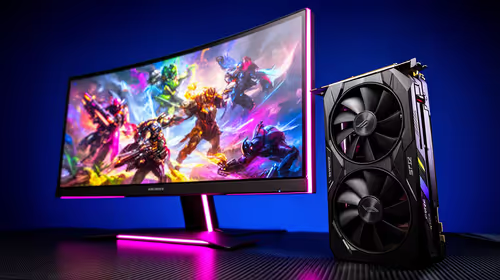
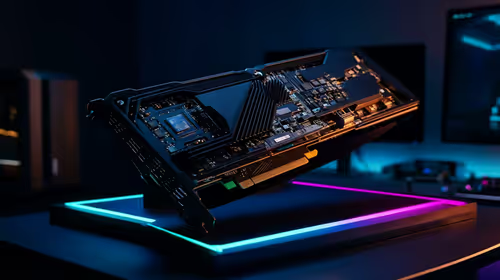
A collectible shroud can make a graphics card appealing before you have measured the space it needs. ASUS Onimusha RX 9070 XT pairs a blue-and-gold design with an existing GPU class, so the buying question starts with your case, power supply and target games rather than the artwork alone.
Quick Answer
This special edition has 16GB of GDDR6 and a 330mm-long, 3.125-slot body. Its specification lists three 8-pin connectors and an 850W PSU recommendation. For a separate local reference, the XFX SWIFT RX 9060 XT dual-fan 16GB was R9,999 in the 27 October catalogue read; that is a different GPU, not an Onimusha quote.
📏 Measure the installed system
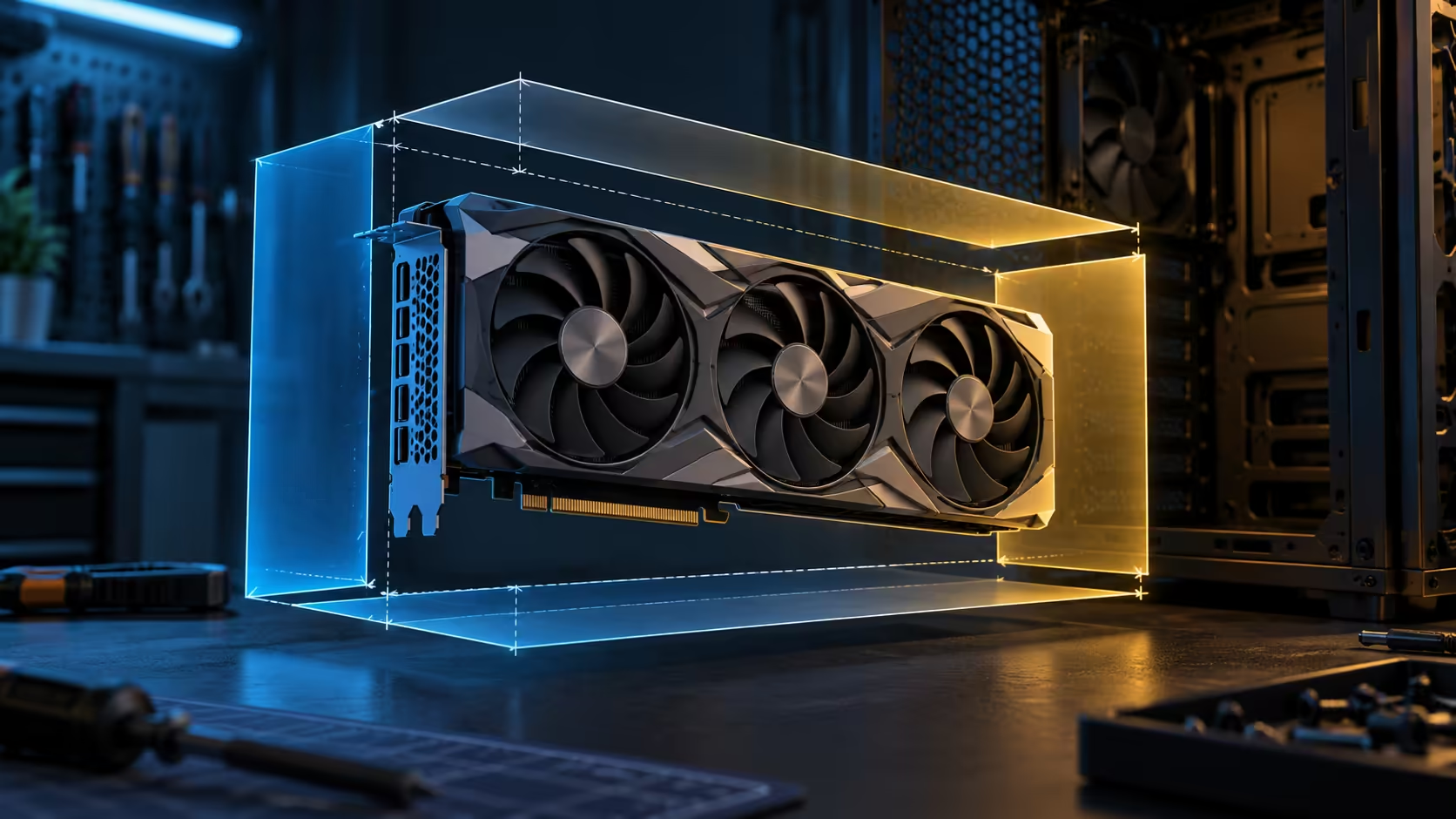
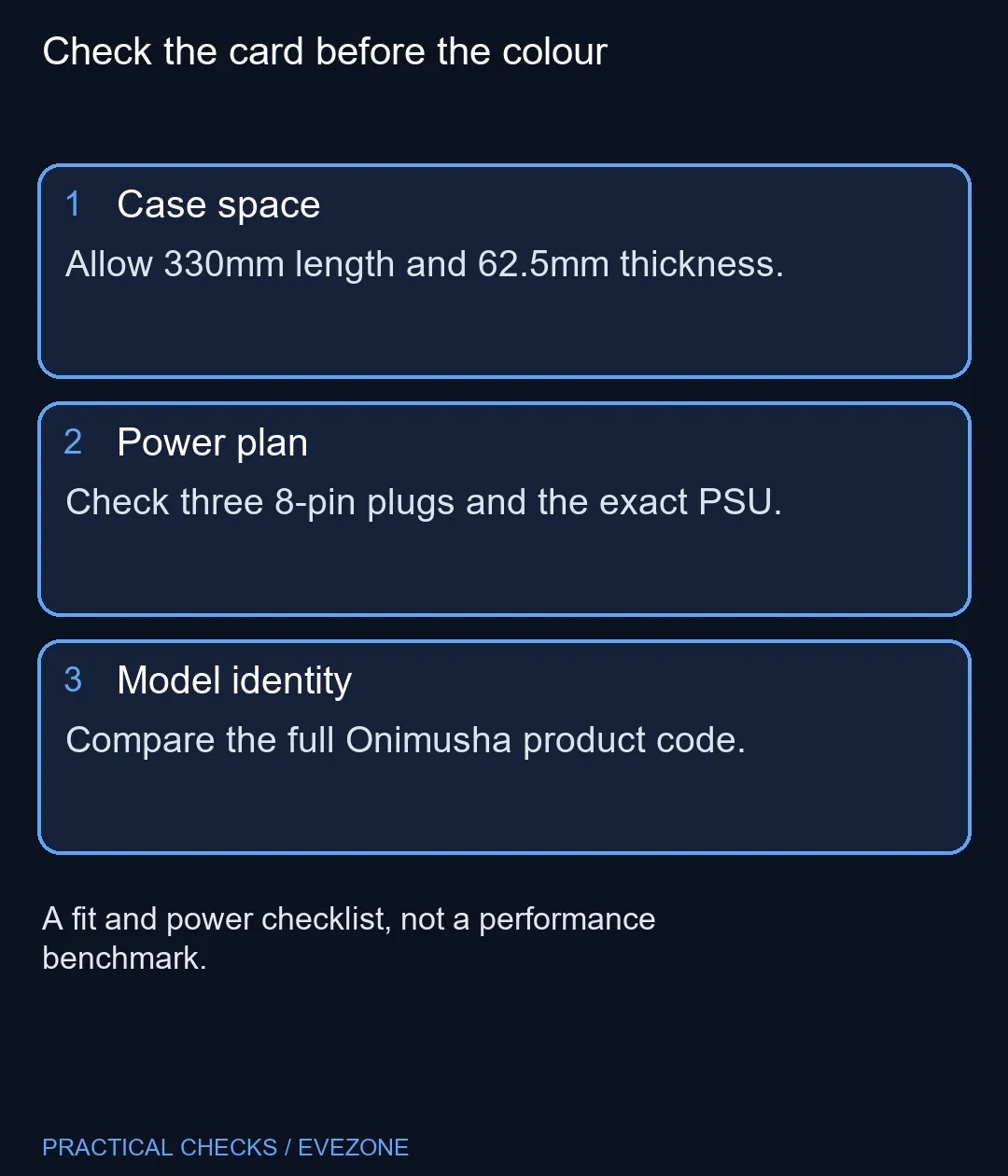
Start at the expansion-slot bracket and measure the usable length inside your chassis. A case headline can describe clearance before a front radiator or fan stack is fitted. Leave room for the actual parts you own, then check the thickness against nearby cards and cables. A nominal slot count is not a substitute for checking the complete space around the cooler.
The stated dimensions are 330 x 140 x 62.5mm. Sketch that volume against your layout before comparing finishes. If a side panel would press against the power leads, the build still needs attention even when the card's far end clears the front fans. Choose a case around accessible connections, rather than relying on a tight fit that makes later maintenance awkward.
🔌 Treat the power recommendation as a system check
ASUS lists three conventional 8-pin power inputs and recommends 850W. Read the power supply's own cabling instructions and confirm that the correct GPU leads are available. Never substitute a modular cable simply because its plug appears to fit; the PSU side must be compatible with the exact unit.
The manufacturer's wattage advice assumes a particular system configuration. Your processor and other components still matter. Browse all power supply when a replacement is actually required, and include that cost in the upgrade budget before deciding how much extra the themed card is worth to you. An unused connector count should be checked physically, not remembered from the original PSU box.
🎮 Separate the theme from the performance decision
The October announcement describes RDNA 4, 16GB of memory and three Axial-tech fans. Those facts identify the product; they do not tell you its frame rate in your own game settings. Compare the GPU class against the resolution you play at and the performance you need, then decide whether the colour treatment adds personal value.
There is also a clock-label trap. The model's detailed table gives an OC boost clock up to 3080MHz and a game clock up to 2540MHz. Those are different clock definitions, not two directly comparable performance modes. The table also lists separate default-mode figures. Avoid treating a larger printed number as a promised sustained gaming speed.
💰 Keep the local comparison honest
Our dated R9,999 example belongs to an XFX RX 9060 XT, not this RX 9070 XT edition. The memory capacities match, but that does not make the GPUs equivalent. Use all amd radeon graphics cards to compare current local options by the complete model name, price and physical dimensions. A lower-cost card can be the sensible choice when it already meets the intended display target.
The release page is dated 27 October while its dateline says 26 October, and earlier themed-card coverage exists. This is a fresh manufacturer announcement, not a claim that the design has never been seen. Neither that announcement nor a global specification proves a South African arrival date. Treat local pricing and any game inclusion as questions for the actual offer before you allocate the rest of your build budget.
Frequently Asked Questions
Is this a new GPU architecture?
It is an Onimusha-themed RX 9070 XT model using RDNA 4, rather than a new graphics architecture.
How much memory does it have?
The model specification lists 16GB of GDDR6 on a 256-bit interface.
What length should my case support?
The card itself is 330mm long. Check usable clearance after fans, radiators and other installed parts.
How many power connectors are required?
The published specification calls for three 8-pin power connectors. Check the PSU cables before buying.
Are 3080MHz and 2540MHz two boost modes?
No. The specification identifies those as the OC-mode boost and game clocks respectively.
Is an SA bundle guaranteed?
The global announcement does not establish local stock, a South African price or your order eligibility.
Building around the blue-and-gold finish?
Compare the complete Radeon model and PSU connections at Evetech, then measure your case before committing to the theme.