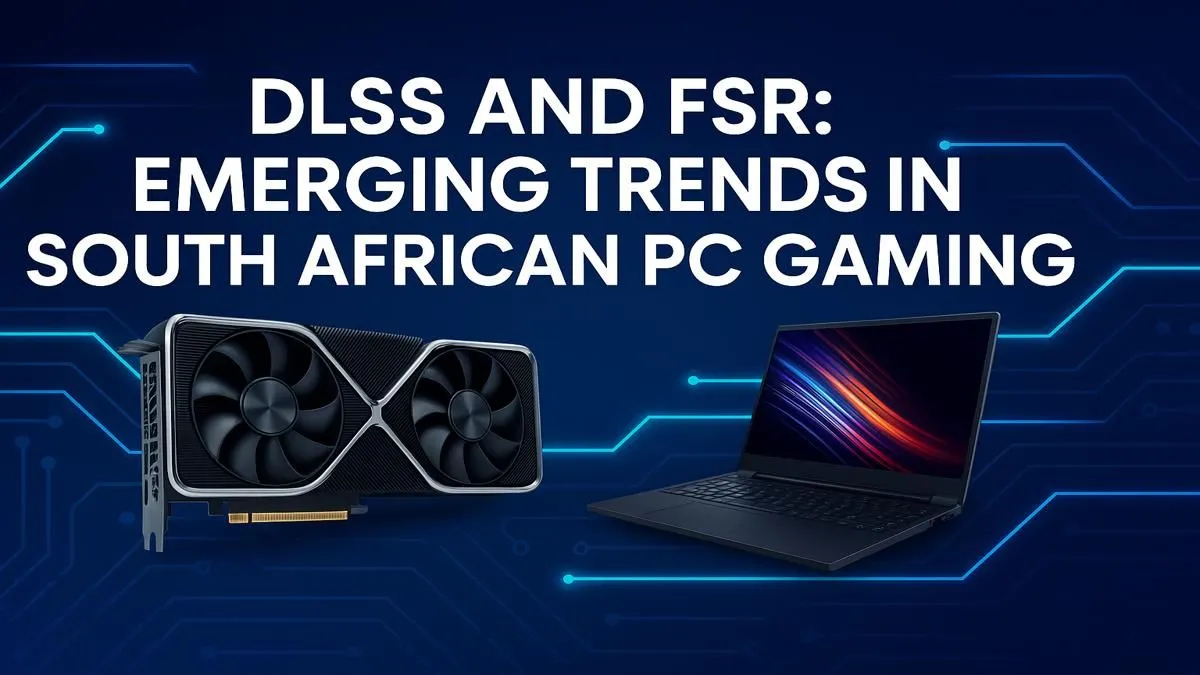
Staring at your FPS counter, wishing for a few more frames to smooth out that Apex Legends firefight? We've all been there. Here in SA, getting the most bang for your buck from your gaming PC is crucial. That's where upscaling tech comes in. The big debate in our local scene is DLSS vs FSR South Africa: NVIDIA's AI magic versus AMD's open-source powerhouse. But which one is actually best for your rig? Let's break it down.
What Are DLSS and FSR, Anyway?
Before we dive into the DLSS vs FSR South Africa showdown, let's quickly get the basics sorted. Both technologies aim for the same goal: to boost your gaming performance. They do this by rendering your game at a lower internal resolution (like 1080p) and then cleverly using algorithms to upscale the image to your monitor's native resolution (like 1440p or 4K).
The result? More frames per second, making your gameplay feel smoother and more responsive. 🚀 The key difference lies in how they achieve this.
- NVIDIA DLSS (Deep Learning Super Sampling): This is the exclusive tech for GeForce RTX GPUs. It uses dedicated AI hardware called Tensor Cores and a deep learning neural network to reconstruct the image. Think of it as a highly trained artist painting in the missing details with incredible precision.
- AMD FSR (FidelityFX Super Resolution): This is AMD's open-source solution. It doesn't require specialised hardware, which means it works on a massive range of GPUs… including AMD's own cards, older NVIDIA cards, and even Intel's new Arc GPUs. It's a spatial upscaler, which is a more direct, less complex approach.
The DLSS vs FSR South Africa Showdown
So, when the pixels settle, which upscaling tech takes the crown for South African gamers? It depends on what you value most: pure image quality, maximum compatibility, or raw performance.
Image Quality: The AI Advantage
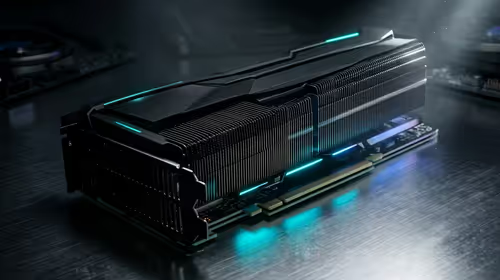
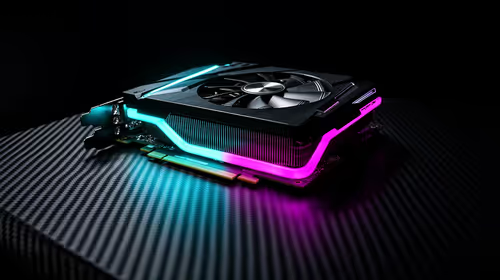
In a side-by-side comparison, NVIDIA's DLSS often produces a sharper, more detailed image, especially in its "Quality" mode. Thanks to its AI training, it can be better at reconstructing fine details like text, distant foliage, and intricate textures. For gamers who want the absolute best visual experience on their high-end rig, the power of a dedicated NVIDIA GeForce RTX graphics card running DLSS is hard to argue with. ✨
Performance & Compatibility: The Open-Source Challenger
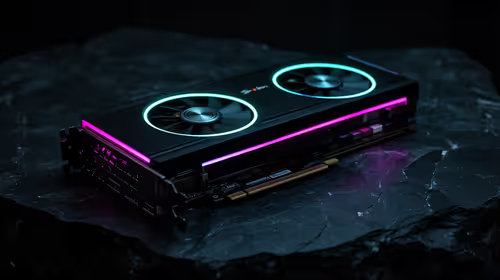
This is where FSR shines. Because it's open-source, it's a fantastic option for gamers on a tighter budget or those running older hardware. If you're rocking a popular mid-range card, FSR gives you a significant FPS boost for free. While its image quality might be a touch softer than DLSS at times, the latest versions (like FSR 2 and beyond) have closed the gap considerably. It makes a powerful case for the value and flexibility offered by AMD Radeon graphics cards.
Pro Gamer Tip ⚡
When you enable DLSS or FSR in your game's settings, experiment with the different modes (e.g., Quality, Balanced, Performance, Ultra Performance). For single-player story games, 'Quality' is often best. For fast-paced competitive shooters where every frame counts, 'Performance' mode will give you the highest FPS boost, giving you that crucial competitive edge.
So, Which is Best for Your Gaming PC?
The truth is, there's no single "winner" in the DLSS vs FSR South Africa debate. The best choice is the one that works for your specific hardware and budget.
- Choose DLSS if: You own or are planning to buy an NVIDIA RTX 20-series card or newer. You prioritise the absolute best image quality and want to leverage cutting-edge features like Frame Generation (on RTX 40-series).
- Choose FSR if: You have an AMD graphics card, an older NVIDIA card (like a GTX 10 or 16-series), or you simply want to play a game that supports FSR but not DLSS. It's the people's champion of performance boosts. 🔧
Ultimately, both technologies are fantastic for South African gamers. They allow us to push our systems further, achieve smoother frame rates, and enjoy higher resolutions without needing to sell a kidney for the absolute top-tier GPU. The best approach is to check out the latest best graphics card deals and find a card that fits your budget and supports the tech you're most excited about.
Ready to Boost Your FPS?
Whether you're Team Green or Team Red, the right graphics card will transform your gaming experience. Explore our massive range of graphics cards and find the perfect GPU to conquer your favourite games.