Just dropped a fat stack of Rands on a new Gen5 SSD? Lekker! You're dreaming of those insane 12,000MB/s loading screens, right? But hold up... there's a sneaky performance thief lurking in your PC case: heat. Without proper cooling, that brand-new drive could slow to a crawl. So, the big question for South African builders is: does your next-gen drive really need a Gen5 SSD heatsink to perform at its peak? Let's dive in. 🚀
Why Do Next-Gen Drives Get So Hot?
Think of a Gen5 SSD like a high-performance engine. To achieve those breathtaking speeds—we're talking twice as fast as Gen4—it needs to burn more fuel. In the world of PC components, "fuel" is electricity, and the byproduct is always heat. The faster the controller and NAND flash chips work, the more heat they generate. Without a way to dissipate that thermal energy, your drive's temperature can skyrocket, especially during intense tasks. It's a fundamental part of how all modern solid-state drives operate.
The Real Risk: Thermal Throttling Explained
So, what happens when your SSD gets too hot? It doesn't just melt (usually!). Instead, it protects itself through a process called thermal throttling. The drive's firmware actively slows down performance to reduce heat generation and prevent damage.
Suddenly, the 12,000MB/s speeds you paid for might drop to 6,000MB/s or even lower during a large file transfer or while loading a massive open-world game. It's the ultimate performance bottleneck, and it means you're not getting what you paid for. This is a crucial factor for any high-speed PCI Express (NVME) drive.
So, Is a Gen5 SSD Heatsink Truly Necessary?
For anyone looking to get the maximum, sustained performance from their drive... yes, absolutely. A Gen5 SSD heatsink isn't just a fancy accessory; it's a critical component for performance.
Here’s a simple breakdown:
- For Gamers & Creators: Loading huge game levels, scrubbing 4K video timelines, or transferring massive project files will push your drive to its thermal limits. For you, effective SSD cooling is non-negotiable.
- For Everyday Users: If you're just browsing, emailing, and doing light tasks, you might not hit the thermal throttle point often. However, most new motherboards come with M.2 heatsinks anyway, so you should always use them.
Brands like ADATA are even shipping their flagship Gen5 drives with robust cooling solutions right out of the box.
Installation Pro Tip 🔧
When installing an M.2 SSD with a heatsink, always remember to peel off the thin, clear plastic film from the thermal pad! It's a tiny step that's easy to forget, but leaving it on will trap heat and make your throttling problems even worse. Double-check before you screw it down.
Types of SSD Cooling Solutions
You've got a few options when it comes to SSD cooling, and the best one depends on your setup.
Motherboard Heatsinks
Most modern AM5 and LGA 1700 motherboards come with built-in M.2 heatsinks. For the majority of users, these are perfectly adequate for taming a Gen5 drive. They are designed to integrate with the board's aesthetics and airflow.
Pre-Installed Heatsinks
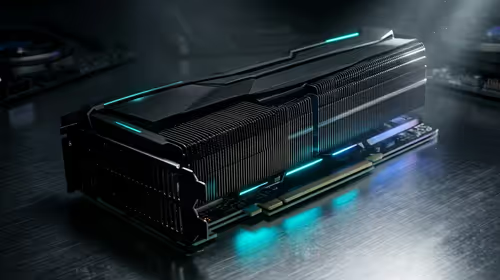
Many top-tier Gen5 SSDs from manufacturers like Kingston or Western Digital include their own custom, often very chunky, heatsinks. These are engineered specifically for that drive's thermal output and are a great all-in-one solution. ✨
Third-Party Coolers
If your motherboard lacks a heatsink or you want to go for extreme cooling, you can buy aftermarket M.2 heatsinks. Some even come with small fans for active cooling, though this is usually overkill unless your case has very poor airflow.
What About External SSDs?
It's a valid question! While internal drives are the focus, what about their portable cousins? High-speed external SSDs that use Thunderbolt or USB4 can also get quite warm. However, you don't need to worry about adding a separate heatsink. Their enclosures are specifically designed as passive heatsinks to manage heat effectively, ensuring you get consistent speeds when you're on the go with your external drive.
The Verdict: Don't Let Heat Steal Your Speed
Ultimately, a Gen5 SSD heatsink is essential insurance for your investment. You wouldn't run a powerful CPU without a cooler, and the same logic now applies to top-tier storage. By ensuring your drive stays cool, you guarantee that you get the blistering, uninterrupted performance you paid for every single time. Ready to make the jump to next-level speeds? Check out the latest Gen 5 (NVME) drives available now.
Ready to Unleash True Next-Gen Speed?
A Gen5 SSD is a massive upgrade, but only if you keep it cool. Don't let thermal throttling cap your performance. Explore our full range of high-performance SSDs and find the perfect storage to power up your rig.